

Stock markets feel the jitters as Biden-Trump rematch looms large
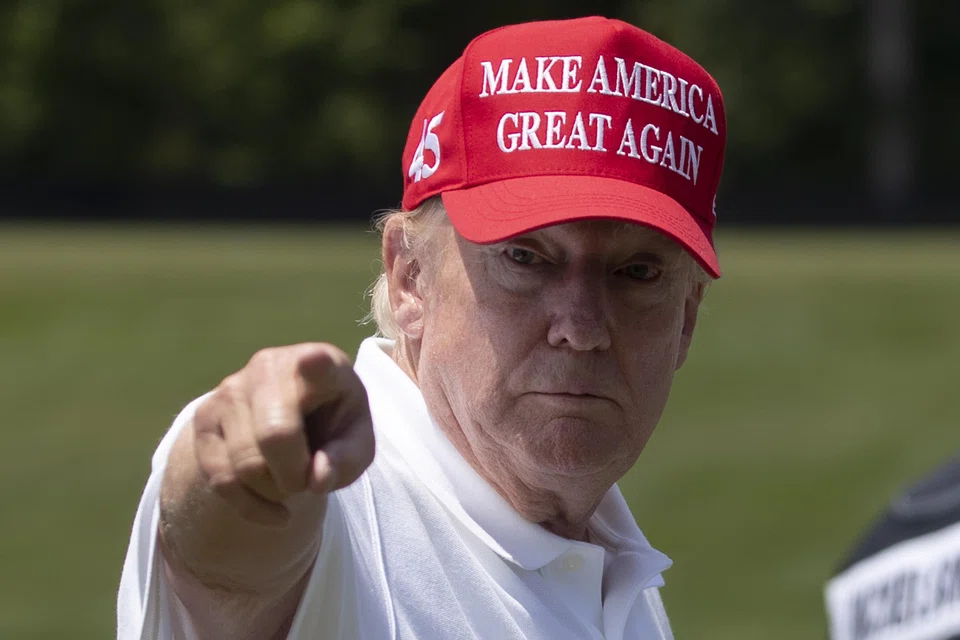
IT’S no secret that former US president Donald Trump brings volatility wherever he goes, including to nearly every sphere of public life as well as the stock market.
The rally in the S&P 500 stalled in the months before Trump squared off against Joe Biden at the last presidential election in November 2020, and some of the index’s pandemic gains were given back around the time that Trump’s supporters attacked the US Capitol in Jan 2021.
With a potential rematch between Biden and Trump on the cards for next year’s election, the jitters are likely to be more severe.
There was a mild selloff after Fitch Ratings said the financial risks associated with political instability would intensify amid growing concerns about Trump’s insistence to run for the presidency again.
It is not Trump’s anti-business policies that the stock market and credit agencies fear, but rather it’s the instability – personal, political and international – that he brings with him.
The stock market can, and has lived, with the election of anti-business figures. The market prefers government interventions that can be mathematically discounted – no matter the amount of taxes or fines involved – to the impossibility of discounting the impact of political instability.
Trump is instability personified. The 77-year-old Republican is under indictment in four different criminal cases, including a sweeping case that accuses him of seditious conspiracy to overturn the results of the 2020 election, and a state indictment for attempting to overturn the state results in Georgia.
This tally dwarfs the legal jeopardy faced by any other president, including Richard Nixon. And yet, according to polling firm Real Clear Politics, Trump is commanding 54 per cent of the Republican primary vote, compared with 15 per cent for his nearest challenger, Florida governor Ron DeSantis.
On a recent drive through southern Virginia, Tennessee, Arkansas and Texas, the only political paraphernalia on view were Trump flags and signs such as “Let’s Go Brandon”, the quasi-profane slogan mocking Biden.
“Trump’s Maga (Make America Great Again) cohort remains intact, and they are going to go out and vote in the primaries,” said Quincy Krosby, chief global strategist at brokerage LPL Financial.
“The notion that all the trials and tribulations facing Trump would keep him from gaining the candidacy – that’s a mistake.”
Fitch Ratings reportedly invoked the Jan 6 insurrection as a primary cause of its downgrade of US sovereign debt when challenged by the Biden administration to explain why it perceived growing risk of lending to the US.
The “governance” issues that Fitch used as a euphemism for the attempted coup in its official report would only multiply if Trump were re-elected as president next year.
In his first term at the White House, Trump cozied up to the likes of Russian President Vladimir Putin and was harsh in his treatment of migrants.
On economic policy, Trump and Biden diverge so drastically that it could complicate corporate planning. The contrast between Trump’s climate-change scepticism and Biden’s green-energy plans could paralyse capital expenditure closer to the election, if it did end up as a rematch between the two candidates.
If Trump wins, him being the leader of the world’s largest economy will destabilise global politics once more. If he loses, however, that could trigger more political violence. Concerns about either outcome could dent any gains in the stock market as the primary season wears on.
There’s also a third risk: Trump has refused to sign a pledge of loyalty to the Republican Party, which could result in him launching a bid for the White House as an independent if the Grand Old Party denies him the nomination.
The possibility of third-party candidates getting the nod is another market concern, said Krosby. Blue-blooded conspiracy theorist Robert F Kennedy could be almost as terrifying for investors as Trump is.
On the other hand, one candidate that the markets may embrace is the renegade senator Joe Manchin. The West Virginian was a thorn in the side of the Biden administration during the negotiations about the infrastructure bill.
The stock market likes it when power in Washington is split between the Democrats and Republicans, because that effectively freezes policy in place. Unthinkable as it may seem at the moment, a Manchin administration would likely be a White House divided.
“He’s a relic of a conservative Democrat, he feels there’s no room in the party for him,” said Krosby of Manchin’s chances. “He represents a part of the Democratic party that seemingly doesn’t exist any more.”
On the Republican side, Glenn Youngkin of Virginia could be a more palatable – and less likely to be imprisoned – alternative to Trump.
It’s a sad day for some investors that the identity of a presidential candidate could go so far as to affect the sovereign bond’s credit ratings.
“You think of third-world countries as having political risk. You don’t think of the US having political risk,” said JD Joyce, president of financial advisory Joyce Wealth Management in Texas.
If there’s anything that could spook the stock market more than Trump in the White House again, it could be if he ends up picking Kennedy as his running mate for the vice-presidency.
TRENDING NOW

First Resources blames El Nino, outside fires for Kalimantan hotspots amid haze scrutiny

High Court rules against Julius Baer’s Singapore trust arm in US$50 million family trust dispute

Singapore key exports jump by higher-than-expected 68.4% in September, led by non-electronics

MSCI proposes downgrading Indonesia to standalone market status

