Tariffs on Chinese cleantech jeopardise the green transition
WITH historic heat waves sweeping across the United States and other parts of the Northern Hemisphere, June is expected to be the 13th consecutive month of record-breaking global temperatures. The primary cause, of course, is the enormous amount of greenhouse gases (GHGs) in the atmosphere. Despite the existential threat posed by rising atmospheric concentrations of GHGs, emissions continue to increase at a faster pace than previously anticipated.
On one front, however, progress in the fight against climate change has exceeded expectations. Amid the global shift from internal combustion engines to electric vehicles (EVs) and the accelerated adoption of solar and wind power, demand for renewable energy is rapidly increasing in the US and the European Union (EU).
This increased demand has been fuelled by significant declines in the real prices of solar panels, wind turbines, batteries and EVs. In the US, this can be attributed in part to the clean-energy subsidies included in President Joe Biden’s Inflation Reduction Act and, more significantly, to low-cost Chinese imports.
Alarmingly, new tariffs imposed by the US and the EU on imports of solar panels, EVs and other equipment, threaten to derail this progress. While estimating the cost of the clean-energy transition is a difficult task, even conceptually, the global electricity sector alone is projected to require US$3.5 trillion in capital investment annually between 2021 and 2050. Western countries have demanded that China pay its fair share of these costs, but their own trade policies are starkly at odds with their objectives.
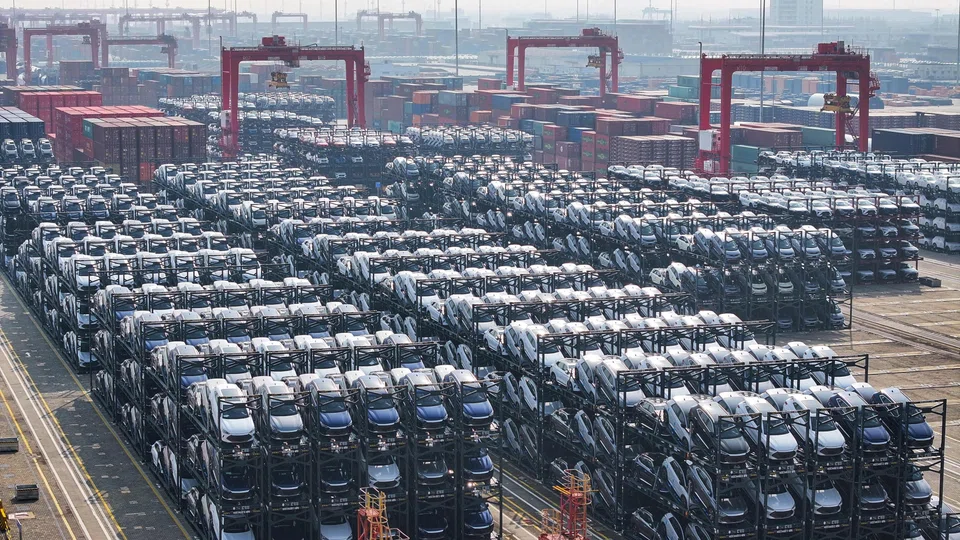
Although the disproportionate targeting of cleantech imports from China dates back more than a decade, the trend accelerated significantly under former US president Donald Trump and has continued under Biden. In May, the Biden administration imposed a 100 per cent tariff on Chinese EVs, along with new levies on a range of other Chinese goods, including solar cells and lithium-ion batteries.
These measures aim to protect American workers and critical domestic industries. But they risk undermining the administration’s climate agenda, particularly its efforts to raise the share of renewables to 100 per cent of US electricity by 2035 and the share of EVs to 50 per cent of new car sales by 2030.
The new US tariffs could extend beyond China’s national borders. In response to Western tariffs, some Chinese manufacturers have moved to South-east Asia in recent years. Earlier this month, the US International Trade Commission decided to investigate claims by American solar-cell companies seeking to impose countervailing and anti-dumping duties on South-east Asian manufacturers. This decision comes despite opposition from US solar-power developers who rely on imported equipment for domestic production.
Meanwhile, the European Commission has imposed provisional tariffs on Chinese EVs after an eight-month investigation found that China’s “unfair subsidisation” of its EV industry undercuts EU competitors. The new EU tariffs, while not prohibitive, average 31 per cent, which is substantially higher than the duties on conventional car imports from other trading partners.
To be sure, while historically low labour costs and economies of scale have helped reduce the price of Chinese solar panels and EVs, generous government subsidies – often in the form of cheap credit – have also played a significant role. But it remains unclear how blocking these low-cost imports, as many Western politicians propose, would benefit workers and consumers in the US and EU. Do American and European policymakers prefer that their own taxpayers, instead of Chinese citizens, bear the costs of clean-energy subsidies? Recall that Western countries wanted China to pay its fair share of the energy transition.
Admittedly, promoting climate policies by emphasising their potential to create green jobs for domestic workers could be an effective political strategy. But we should recognise that these arguments are political, not economic.
Although US tariffs may help create jobs in the solar-panel industry, those would be offset by job losses in the solar-energy installation sector, which relies on low-cost equipment. Similarly, some EV production jobs would disappear if tariffs led to higher prices for battery imports. Meanwhile, many export jobs would be cut when China and other countries inevitably retaliate against Western restrictions.
With US unemployment at 4 per cent, policymakers and voters are currently more concerned about inflation than jobs. Removing tariffs is the surest way for Western governments to lower energy and transportation prices, thereby reducing inflation. This is yet another example of how international trade could lower the costs of the clean-energy transition – if we were to embrace it.
The writer, professor of Capital Formation and Growth at Harvard University, served as a member of president Bill Clinton’s Council of Economic Advisers. He is a research associate at the US National Bureau of Economic Research.