

In taxing wealth, how far can Singapore push property owners?
While inequality data has revived calls for wealth taxes, the government remains focused on immovable assets

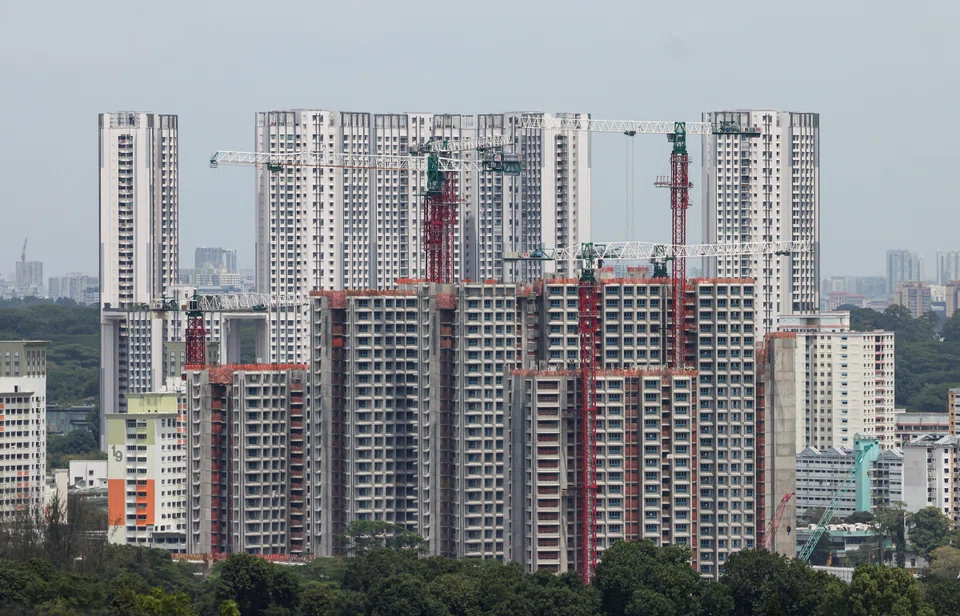
[SINGAPORE] Singapore’s first-ever release of official wealth data has revived calls for greater taxation of assets, with inequality being a prominent political and social concern.
In this year’s Budget debate, Members of Parliament suggested reinstating estate duties, which had been abolished in 2008, or introducing a tax on net assets.
The government, however, seems committed to taxing wealth indirectly, primarily through taxes on property and luxury cars.
In 2022 and 2023, for instance, property tax rates and stamp duties were raised, as was the Additional Registration Fee (ARF) for luxury cars.
The oft-repeated argument against a direct wealth tax is that financial assets are highly mobile. Without coordinated action by other jurisdictions, wealth can be easily shifted elsewhere to dodge such taxes.
In contrast, property and vehicles are fixed and visible, making them more practical targets.
In this year’s Budget debate, Finance Minister and Prime Minister Lawrence Wong reiterated this, pointing out that there are also progressive taxes on wealth through property and vehicle taxes.
“We will continue to study ways to moderate excessive wealth concentration – carefully and responsibly,” he added.
The question, then, is what new ways may be possible.


Not that equal
Just days before Budget 2026, the Ministry of Finance (MOF) released an occasional paper that revealed wealth data for the first time.
Singapore’s wealth Gini coefficient was 0.55 – in other words, more unequal than not. The Gini coefficient is an inequality measure where zero represents perfect equality and one represents perfect inequality.
Still, as noted in the paper, this may underestimate the true degree of wealth inequality. Wealth at the top may be underreported, as certain assets – equity in private companies or overseas – are hard to track and value.
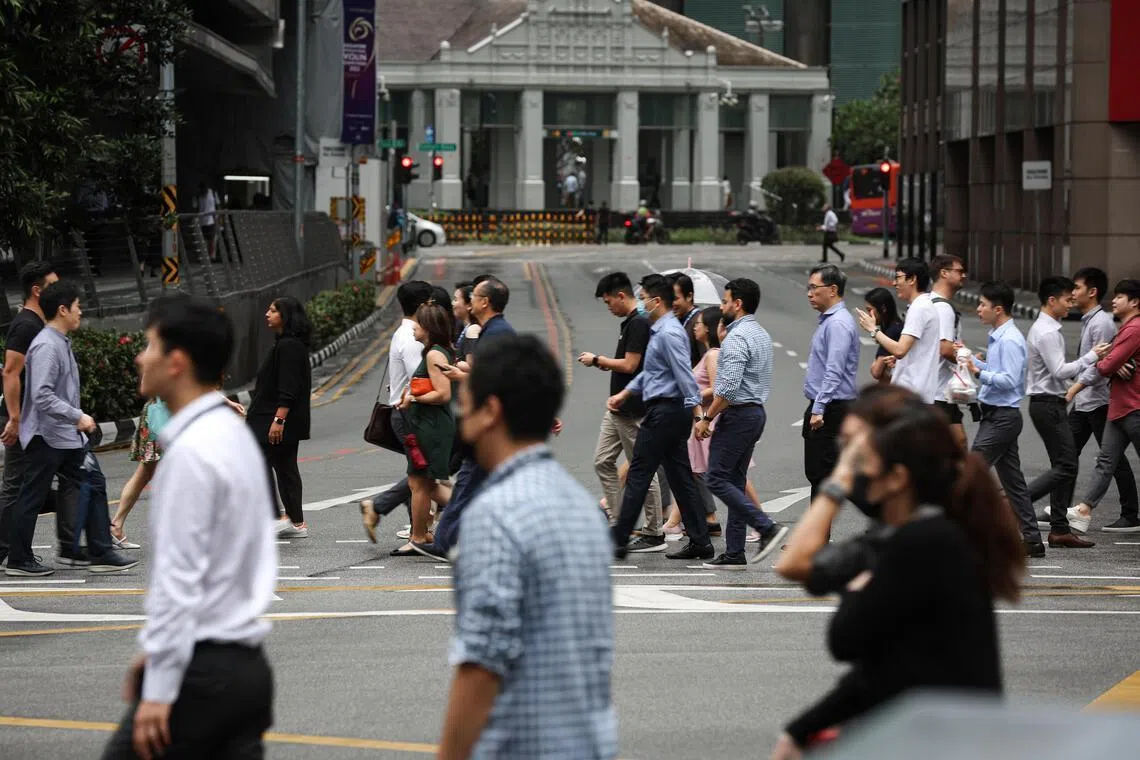
About a third of Singapore’s total household wealth is held by just the top 5 per cent of resident households, said Senior Minister of State for Finance Jeffrey Siow during the Budget debate. The top 1 per cent holds about 14 per cent of the country’s total.
Property equity forms more than half of household wealth overall. For the top fifth of households, it accounts for 58 per cent. Net Central Provident Fund balances account for 15 per cent, and other financial equity for 27 per cent.
Reinstate estate duties?
Property-related suggestions continued to feature in the three-day Budget debate, as MPs on both sides of the House called for greater taxation to address wealth inequality.
Some ideas went beyond the usual levers. Workers’ Party MP Louis Chua, for one, proposed a reinstatement of estate duties.
However, observers share the government’s caution about taxing mobile assets, whether through estate duties or direct wealth taxes.
Much of the wealth that is held by the truly affluent sits beyond the reach of conventional tax instruments, observers note. It is held in trusts, family offices, private equity and offshore structures that are difficult to detect, let alone tax.
“Both the structures and the assets may be overseas, and these are much harder to detect,” says Edmund Leow, tax partner at Dentons Rodyk and senior counsel.
Reinstating estate duty is therefore more complicated than it might seem.
While anti-avoidance provisions could be included in such a law, these would be administratively complex, says Leow. The cost of collection may thus be disproportionate to the revenue raised.
Drew & Napier deputy CEO and tax partner Ong Sim Ho argues that stamp duties are more effective in taxing wealth.
While estate duty has a fixed tax base – the value of assets held at death – stamp duties apply each time a property changes hands.
From an enforcement standpoint, stamp duty is highly cost-efficient as it follows the conveyancing process, Ong adds. It is also very difficult to avoid through the use of trusts, family offices or offshore structures.
“Stamp duties work precisely because they attach to the transaction; they’re difficult to avoid and highly efficient to enforce.”
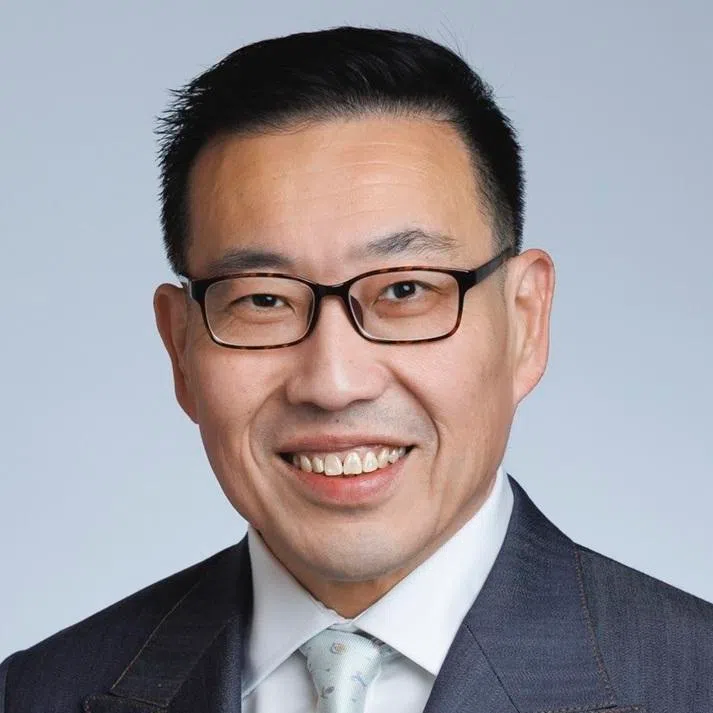
In 2008, then finance minister Tharman Shanmugaratnam gave other reasons for abolishing estate duties. For one, the tax – inherited from the British and designed to rebalance opportunities across generations – was no longer fit for purpose.
“It was especially relevant at the time when the bulk of wealth comprised land that was passed down through the family,” he said in his Budget 2008 speech. “Today, however, wealth is being created in many more ways and by a wider group of entrepreneurs, many of whom start off with little.”
What about other approaches? In this year’s debate, WP’s Chua suggested a Switzerland-style lump-sum tax based on lifestyle expenditure rather than declared income or assets.
This, he argued, could capture wealth that is difficult to reach through conventional asset taxes. It targets those whose declared income or assets may be hard to fully ascertain, but whose living standards reflect significant means.
The government’s caution regarding wealth taxes, however, is not only about implementation or effectiveness.
In 2008, Tharman also noted an economic rationale for abolishing estate duties: This would make Singapore more attractive to wealthy individuals and their assets, benefiting the broader economy.
Fear of flight
That concern remains vital today. It is not just capital that can take flight, but the rich themselves.
As PM Wong cautioned this year: “Capital and talent are mobile, and if we rely solely on ever-higher taxes for this segment, eventually, the broad middle will also have to shoulder the burden. And we risk undermining competitiveness, enterprise and job creation.”
Dentons Rodyk’s Leow notes that even if estate duty were successfully designed, risks remain. “Wealthy people are very mobile, and some may leave if estate duty is reintroduced.”
Sivakumar Saravan, head of tax for Asean at Acclime, is similarly cautious about broader wealth taxes. Singapore, he says, has already embraced the principle that those who are better off should contribute more to the wider community.
He notes that property taxes on high-end owner-occupied homes can reach 32 per cent of annual value, while additional buyer’s stamp duty (ABSD) can hit 30 per cent for local buyers.
As for vehicles, buyers of luxury cars often pay taxes exceeding the vehicle’s open market value, once ARF, excise duties and Certificate of Entitlement (COE) premiums are combined.
A poorly designed wealth tax could prompt relocation, Sivakumar warns – particularly for entrepreneurs with unrealised wealth tied up in company shares but limited cash flow.
“Any form of wealth tax must not be counterproductive,” he adds, noting that France and Sweden have repealed or scaled back wealth taxes due to capital flight, administrative complexity and limited revenue yield.
Rather than simply extracting more tax, Sivakumar suggests that policies can be designed to steer how wealth is deployed.
Singapore is already moving in this direction. Family offices applying for fund tax incentives under Sections 13O, 13OA or 13U of the Income Tax Act must invest at least 10 per cent of assets under management, or S$10 million – whichever is lower – in mainly qualifying local investments.
Whither car taxes?
Even as the government continues to focus on cars and property, it is unclear how much further these can be taxed.
Taxation of luxury cars may have hit a ceiling, says automotive industry veteran Victor Kwan, associate professor of practice at the Singapore University of Social Sciences.
He notes that since the last ARF increase in 2023, sales of luxury marques such as Bentley, Ferrari, Lamborghini and Rolls-Royce have more than halved, with no sign of recovery.
Additionally, unlike property, cars only depreciate and are eventually scrapped. Owners therefore build no equity and make no capital gains.
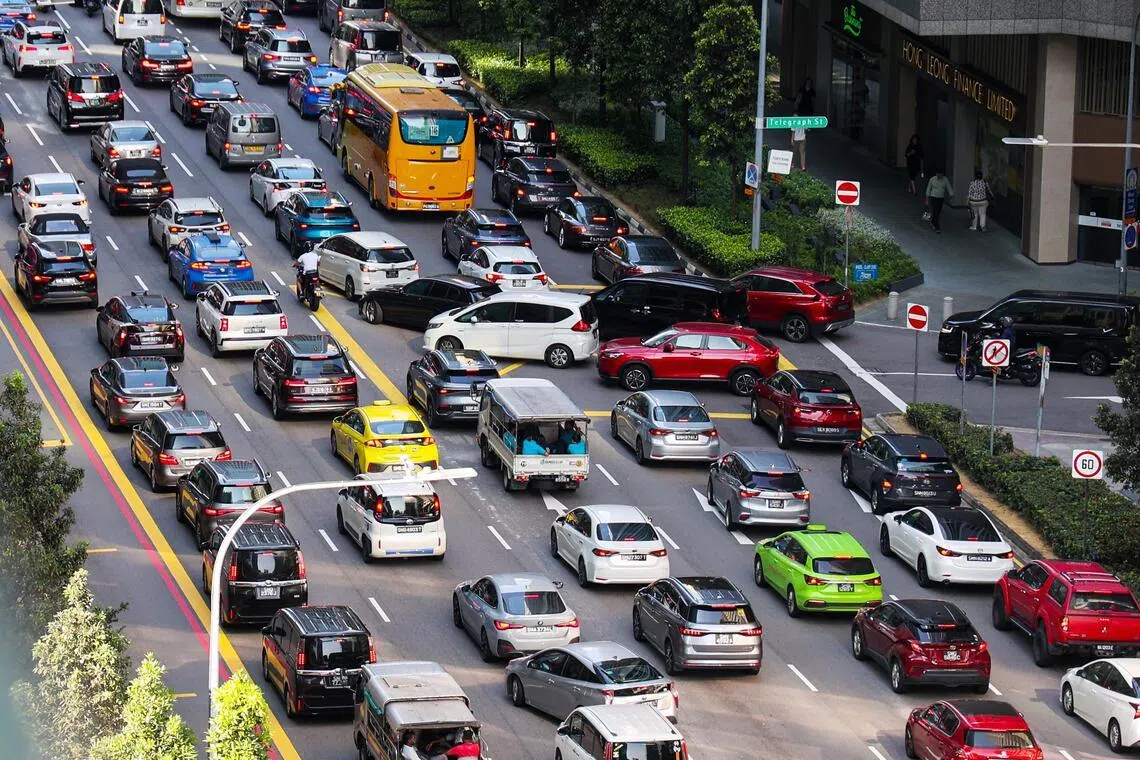
Even if property buyers have to pay more taxes, they can still expect their asset to appreciate, he notes. “But for cars, the increase in taxes is just pure expenses, so they will at some point just stop buying.”
Still, there may be room for refinement. Prof Kwan notes that the government is reviewing the COE system, with MP proposals including surcharges for cars above a certain open market value and discounts for cheaper ones.
Such changes, if they happen, would amount to a form of progressive wealth taxation, he says.
Hitting a wall?
Property-based taxes may also have limited room to run – and pushing them further risks hitting the wrong people, observers say.
Taxing property is certainly easier, and also helps curb the property market, says Dentons Rodyk’s Leow. “But the government has already implemented many forms of taxation on property, so it is not clear how much more can be done.”
Lee Nai Jia, director of property insights platform Property Doctors, warns that pushing property taxes further could hit the wrong people, such as those in the “upgrader segment” – that is, households moving from public to private housing.
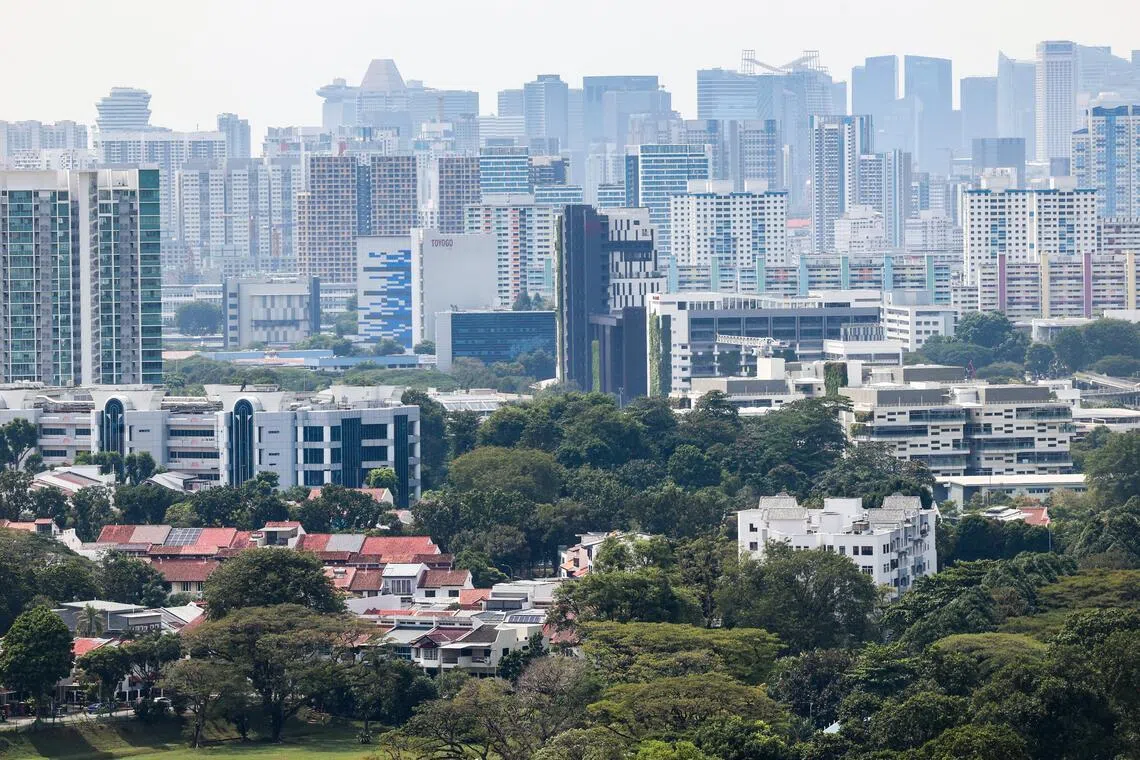
This group may be asset-rich on paper, but they are not necessarily cash flow-strong, says Dr Lee. They are already feeling the layered effects of higher property taxes, ABSD and financing constraints.
“(Higher taxes) will eat into one’s disposable income,” he adds. “There is a perception threshold, and beyond a certain point, high property taxes start to feel heavy even if the policy makes sense economically.”
Retirees face a similar challenge, notes OrangeTee Group chief researcher and strategist Christine Sun. “These people are asset-rich but may lack sufficient liquidity or regular income to accommodate the rising property tax obligations.”
Sing Tien Foo, provost’s chair professor at the National University of Singapore (NUS) Business School’s Department of Real Estate, notes that annual property tax does not have incremental rates for second and subsequent investment properties, unlike ABSD.
However, he does not see a need for change. Property tax is not a tool to curb speculative demand, and ABSD serves that function more effectively, he argues.
Sharpening, not just raising
Rather than hiking taxes, there is room to sharpen how property gains are treated, say some watchers.
Sun points to resale HDB flats and executive condominiums as one unexplored area. Many owners of such properties received generous government subsidies and thus see significant capital gains upon resale – a windfall that is currently untaxed.
Singapore could consider a capital gains tax when such properties are sold above a certain price, she suggests.
This could serve a dual purpose: taxing some of this windfall, and narrowing the gap between those who bought subsidised flats early and those now entering the market at much higher prices.
In Parliament, WP MP Kenneth Tiong called for property taxes to be based not on annual value – derived from imputed rental income – but capital value. This would more directly reflect a property’s true market worth, he argued.
Both Dr Lee and Prof Sing, however, are sceptical.
Dr Lee warns that capital values are more volatile than slower-moving rental data. “Once we base (it on) capital values, we may introduce more volatility into the system, and that’s probably not what Singaporeans typically want.”
Prof Sing agrees, noting that a more expensive property typically commands a higher rental value, so the two systems should, in theory, yield broadly similar outcomes anyway.
From a legal implementation standpoint, Drew & Napier’s Ong ranks taxes on dividend and investment income as the most workable, followed by deemed rental income on vacant properties.
A capital-gains tax on property disposals would be the hardest, he says. It would need more legislative changes and be more costly to collect.
How mobile is mobile?
If Singapore has limited room to increase property taxes, should it consider direct wealth taxes after all?
EIU economist Tay Qi Hang, for one, does not believe that capital flight is as much of a worry as it once was. He argues that the information landscape has shifted materially since both Singapore and Hong Kong abolished estate duty in 2008.
The coordinated tracking of wealth across borders is now far more accessible, he explains, citing the Common Reporting Standard for financial account information and beneficial ownership registers that identify controlling parties in legal entities.
A well-crafted inheritance tax – with robust anti-avoidance provisions and high exemption thresholds to protect middle-class home equity – could capture large multi-generational wealth transfers that currently pass undertaxed.
“Singapore likely has a larger buffer than policymakers often suggest,” Tay adds.
“The ultra-rich park their money here for our exceptional geopolitical stability, rule of law and strong institutions – characteristics that will not disappear if we impose a moderate, well-designed wealth tax.”
OCBC chief economist Selena Ling does not rule out revisiting the idea, but urges caution about timing. “I would never say never, but the question is how to do so without scaring away investors,” she says.
“If the global landscape is deteriorating or global policy is tightening, then there could be some policy room – but it would have to be done very sensitively, since wealth and capital flows can be fickle and shift quickly.”
Decoding Asia newsletter: your guide to navigating Asia in a new global order. Sign up here to get Decoding Asia newsletter. Delivered to your inbox. Free.
Copyright SPH Media. All rights reserved.
TRENDING NOW

Once staunchly pro-China, Malaysian Chinese businesses are now distancing themselves from Beijing

Looking beyond looming CEO succession, should UOB potentially pursue a transformative merger?

Could stablecoins be the future of money?

Grab CEO’s wife Chloe Tong on life with Anthony Tan and finding her purpose

