THE LEVEL GROUND

Time to cool EC demand: drop deferred payment scheme, lengthen MOP, tighten resale restrictions

Moderating growth will benefit eligible buyers without access to abundant liquidity

Summarise
Leslie Yee
Published Mon, Mar 30, 2026 · 11:55 AM
    • Buying a new executive condo unit offers a path to private homeownership for higher-income locals.
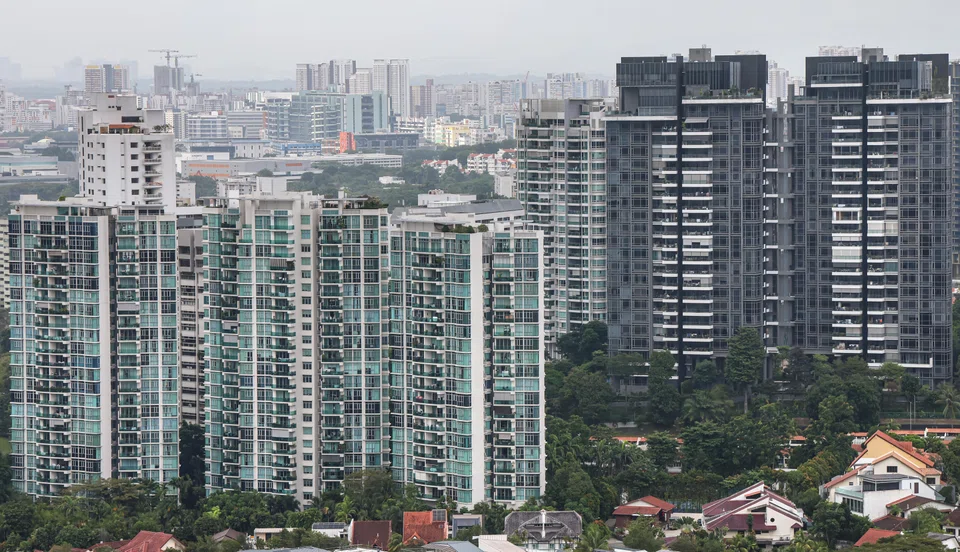
    • Buying a new executive condo unit offers a path to private homeownership for higher-income locals. PHOTO: YEN MENG JIIN, BT

    BUYERS snapped up 529 units – about 92 per cent of the 572 apartments – of Sim Lian’s Rivelle Tampines executive condominium (EC) project on its launch day on Mar 21 at an average price of S$1,893 per square foot (psf).

    While prices have risen strongly, there are sound reasons to buy new EC homes. Prices of new EC units are about 20 to 30 per cent lower than those of comparable condos, and eligible buyers can also tap a housing grant of up to S$30,000 from Central Provident Fund.

    Nonetheless, should measures be introduced urgently to cool new EC demand?

    In early March, National Development Minister Chee Hong Tat said that Singapore is reviewing its EC policy given the concerns over affordability.

    ECs, which are a hybrid of public and private housing, were introduced in 1995 to provide an option for higher-income Singaporeans who aspire to own private housing.

    Typically, ECs are built by developers on 99-year leasehold land bought at state tenders, and offer condo features. Developers set selling prices of the new apartments, but income and borrowing limits apply to buyers, who also face some resale restrictions. 

    Those eligible to buy EC units from a developer include couples comprising two Singapore citizens or a citizen and a permanent resident (PR), as well as singles who are citizens and at least 35 years old.

    An income ceiling applies to new EC buyers – a couple cannot exceed the monthly household income ceiling of S$16,000.

    A buyer of a new EC home is subject to a minimum occupation period (MOP) of five years during which he must occupy the flat and cannot rent out the entire unit.

    In the five years after the MOP, the EC home can be sold to Singaporeans or PRs, or rented out whole. Subsequently, the said unit can be sold to anyone, including non-PR foreigners, just like a condo unit.

    Historically, buying a new EC unit has been effective in generating wealth. 

    Stretched affordability

    However, at today’s prices, the wealth-creation opportunity from buying a new EC home may largely accrue to eligible buyers who have abundant liquidity.

    Take a three-bedroom EC unit of 900 square feet (sq ft) that is priced at S$1,900 psf or S$1.71 million. Such a home costs about 8.9 times the annual income of S$192,000 – the annualised income of a household earning S$16,000 a month.

    This price-to-income ratio could indicate highly stretched affordability. And that gets even worse for potential buyers looking for larger-sized new EC homes.

    At Rivelle, the share of three-bedders, four-bedders and five-bedders were 42 per cent, 51 per cent and 7 per cent of total units, respectively.

    Importantly, based on the highest loan-to-value (LTV) limit of 75 per cent, a buyer of a S$1.71 million home needs to fork out S$427,500 in equity. The LTV limit determines the maximum amount an individual can borrow from a financial institution for a housing loan.

    Worse, a buyer of a new EC unit might need to cough up even more in equity because a mortgage servicing ratio (MSR) cap of 30 per cent of a borrower’s gross monthly income applies to loans for the purchase of new EC homes. MSR refers to the portion of a borrower’s gross monthly income that goes towards repaying all property loans, including the loan being applied for.

    Additionally, for any home loan, the borrower’s total debt servicing ratio – the portion of gross monthly income that goes towards repaying the monthly debt obligations, including the loan being applied for – should not exceed 55 per cent.

    Perhaps, it’s timely to roll out measures to cool new EC demand, thereby moderating growth in new EC prices to benefit eligible buyers without access to abundant liquidity.

    Deferred payment scheme

    One way is to drop the deferred payment scheme (DPS), which can be offered for new uncompleted EC homes but not new uncompleted condo units.

    Under DPS, a buyer of an uncompleted EC unit pays 20 per cent of the purchase price fairly quickly, with the remaining 80 per cent payable possibly three to four years later at around the time of a unit’s completion.

    According to comments shared by Huttons Asia on Rivelle’s sales at its launch, an estimated 71 per cent of buyers opted for the DPS.

    Buyers may act more prudently when using the progressive payment scheme (PPS) as opposed to the DPS. Under the PPS, after the first 20 per cent of an uncompleted home’s purchase price is paid, other payments are made based on the project or unit achieving various key construction milestones. 

    A buyer of an uncompleted new home may draw down on a loan sooner when using the PPS instead of the DPS. 

    Might using DPS to pay for an uncompleted home bring more risk to the financial system? After paying 20 per cent for a home, a buyer could face difficulties raising the remaining 80 per cent three to four years later. This can arise because of losing a job or difficulty selling the current home due to market weakness.

    Minimum occupation period

    Second, impose a longer 10-year MOP for buyers of new EC homes.

    In perspective, the MOP for Housing & Development Board (HDB) Plus and Prime flats is 10 years.

    A longer MOP for new EC buyers will help emphasise that EC homes should mainly be for owner-occupation and not investment.

    For one thing, buyers eyeing more of an investment angle should focus on getting a condo unit instead of an EC unit.

    Income ceiling

    Lastly, apply an income ceiling to Singapore citizens and PRs buying resale EC homes in the five-year period after a unit’s MOP.

    With HDB Plus and Prime flats, a household income ceiling applies to eligible resale buyers.

    Applying an income cap to resale EC buyers can temper new EC prices.

    Savvy homebuyers consider the ease of exit when making a purchase. Restricting the pool and purchasing power of potential resale buyers will make many new EC buyers think harder about paying lofty prices for new EC homes.

    The income ceiling for buying a new EC unit may be raised soon. Ahead of or concurrent with such a move, consider rolling out measures to cool demand.

    New EC homes are becoming increasingly unaffordable for many high-income locals. Let’s fine-tune policies so that high-earning locals seeking a good-quality home for owner-occupation can cost-effectively achieve their private-homeownership dreams by owning an EC unit.