



Trade uncertainty is increasing the risk of a US recession
Without the specifics of the Trump administration’s tariff plan, corporations cannot make long-term adjustments such as the expensive and complex work of reorganising supply chains
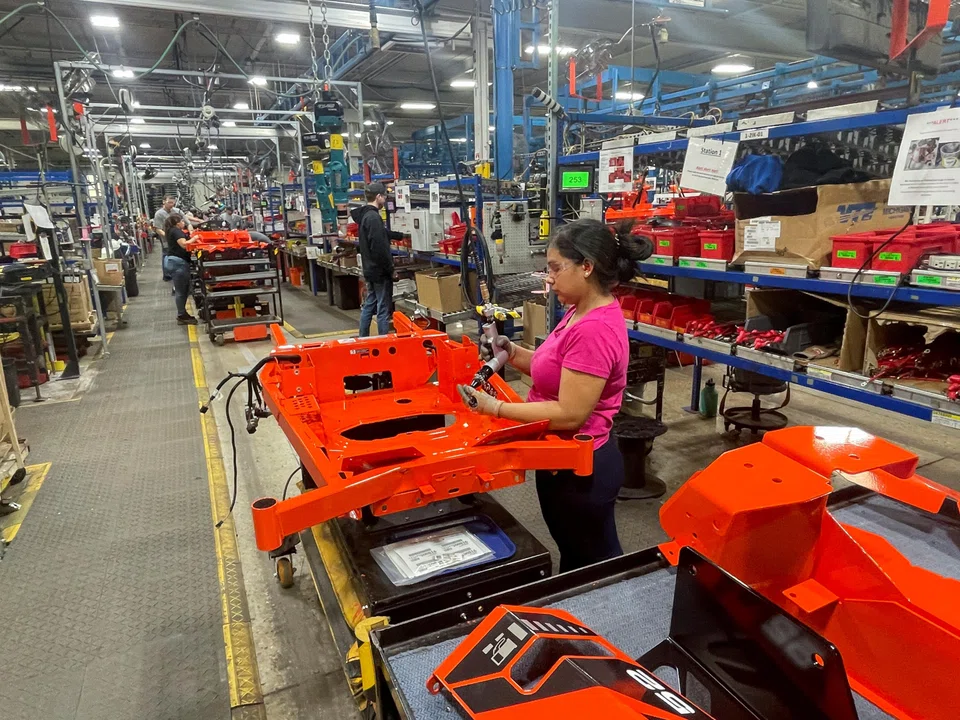
THE trade war may have killed the US economic expansion before a single tariff shot was fired.
US Federal Reserve chair Jerome Powell, JPMorgan Chase chief executive officer Jamie Dimon, veteran investor Warren Buffett and other veteran observers of American business and markets are united in this impression. Seldom in their long careers have the rules of the economic universe been so unclear. “Uncertainty” is the watchword at the dawn of the second Trump era.
“Tariffs are less a question of ‘if’, and more ‘when’ and ‘how high?’” said economists at brokerage Morgan Stanley, in a note to clients.
Those are big questions. Consumers and businesses cannot plan major purchases because it is impossible to budget using prices that could change by one-quarter or more overnight.
Sentiment surveys suggest wallets are set to go into paralysis. While factory-order and retail-sales data have held up so far, there are signs that purchasing managers are rushing to get orders in before the price hikes begin to take effect, likely on Apr 2 – the day US President Donald Trump has designated “Liberation Day”.
Wall Street strategists have long maintained that US corporations can figure out a way to grow earnings through any economic regime, as long as the rules are clear. “Markets hate uncertainty,” the old Wall Street adage says.
Think of how difficult it must be for a procurement executive to operate in the fog of the trade war. For example, the Trump administration has repeatedly warned that it will impose tariffs on imported copper, but has not specified how large those tariffs would be.
If a US manufacturer could project what additional costs were entailed in continuing to buy copper from African mines versus shifting to domestic suppliers, they could adjust orders accordingly.
Without the specifics of the Trump administration’s tariff plan, corporations cannot make long-term adjustments, such as the expensive and complex work of reorganising supply chains. Instead, with tariffs of some kind almost certain, manufacturers may stockpile materials, as was suggested by trends in the February durable-goods order data.

But a spike in one month’s sales due to stockpiling inevitably foreshadows a slowdown in later months. They will likely delay orders and possibly reduce capital expenditures elsewhere so that they are not caught off guard or without reserves when and if Trump’s latest threat is carried through.
A US consumer considering a car purchase faces similar uncertainty. Last Wednesday (Mar 26), the Trump administration said it would levy 25 per cent tariffs on all imported vehicles.
That will likely put European and Asian cars out of most consumers’ reach unless, as Hyundai Motor recently disclosed, the manufacturers decide to make more vehicles in the US.
But consumers still do not know if American carmakers will raise prices a little, as typically happens when price competition ease; or raise prices a lot because of metals tariffs or retaliation from American trading partners.
The economic toll of tariff uncertainty
Uncertainty about tariffs and the potential impacts on consumer prices is already taking an economic toll. Readings of consumer sentiment are in free fall, with the Conference Board’s confidence index hitting its lowest level in 12 years.
The fact that those years included a pandemic that shut down more than half the US economy for weeks reveals what a destructive force uncertainty is. At least, during those restrictive lockdowns, consumers and businesses understood the economic rules.
A recent consumer survey from insurance firm Allianz Life Insurance Company of North America indicated that more than seven in 10 Americans anticipate tariffs, driving up cost of living expenses over the next 12 months or so.
Some strategists have said that fears of a recession occasionally become self-fulfilling prophecies, but these usually fade away.
“The issue with soft data is, it’s very emotional driven,” said Oliver Pursche, senior vice-president at financial advisory Wealthspire. “Consumers are thinking: ‘If this happens, then the other thing might happen; and if the other thing happens, then this will happen.’ But nothing has happened yet.”
“Consumers are thinking: ‘If this happens, then the other thing might happen; and if the other thing happens, then this will happen.’ But nothing has happened yet.”
Oliver Pursche, senior vice-president at financial advisory Wealthspire
As Powell noted in his press conference, Americans sometimes tell pollsters that they are feeling bad about the economy, even as they splash out on cars and houses regardless.
The pallid complexion of economic data has prompted strategists at money manager UBS Global Wealth Management to warn of sustained stockmarket volatility.
A recession is a daunting scenario for most investors. Even after the recent correction, the S&P 500 is roughly 5 per cent from an all-time high, trading around 5,700. Should the recession fears continue to mount, the broad index could fall a further 15 per cent and go below 5,000, warned technical strategists at brokerage Bank of America Global Research.
There is reason to hope that countervailing forces will prevent uncertainty from bringing on a recession.
“There’s a lot of things happening politically around the world and economically that are on the surface very unsettling,” said Pursche. “But there are also some good things happening. If Russia and Ukraine end up having a ceasefire and the war ends, that’s a positive. From a corporate perspective, the prospect of lower taxes and less regulation is positive.”
Perhaps, on Apr 2, the rules of the new global trade regime will become clear. For the momentum-driven economy and markets, that might already be too late.
Decoding Asia newsletter: your guide to navigating Asia in a new global order. Sign up here to get Decoding Asia newsletter. Delivered to your inbox. Free.
Share with us your feedback on BT's products and services
TRENDING NOW
8 public officers referred to police over property buys near unannounced MRT stations: Chan Chun Sing
Retrenched PMETs who return on lower pay see median 25% wage cut

Grab CEO’s wife Chloe Tong on life with Anthony Tan and finding her purpose

Vietnam’s northern provinces, not Hanoi or Ho Chi Minh City, are powering near 10% GDP growth

