

A trillion-tonne threat hangs over critical minerals
Managing a growing mountain of waste rock is one of the biggest obstacles to getting our hands on precious ore
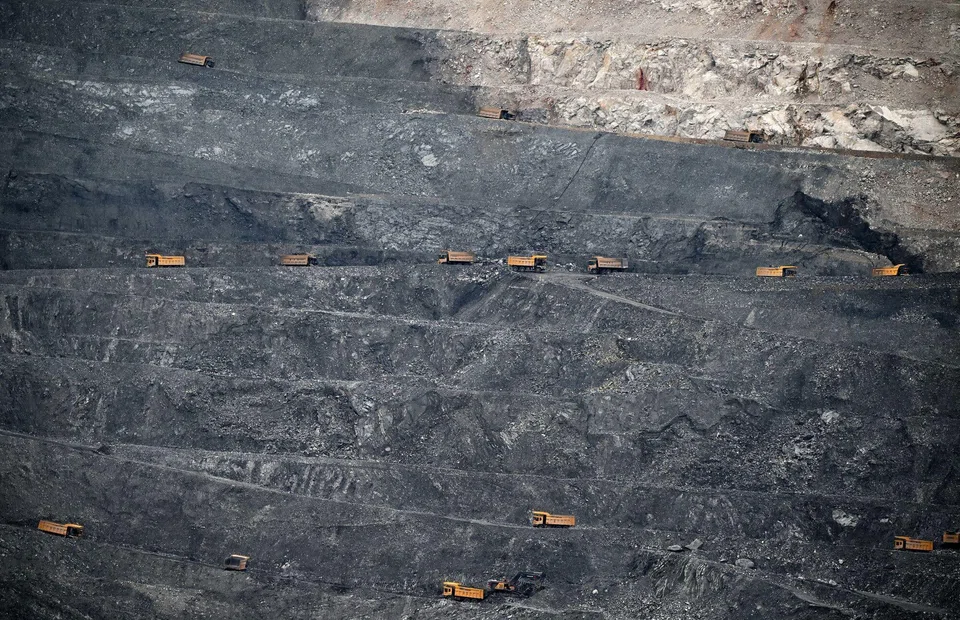
YOU might think that the business of mining is digging up valuable minerals. In fact, it’s almost the opposite.
Most of the rock that miners blast, shovel and truck out of the ground is useless waste – first the overburden of worthless material that has to be dug away to get to the ore body, then the tailings left over when the ore has been ground up and processed to extract its useful elements. To produce a teaspoonful of gold these days, you often need to remove an Eiffel Tower’s worth of material from the earth.
Managing that growing mountain of dross – likely more than a trillion tonnes at present, and forecast to double by 2050 – is one of the biggest obstacles to getting our hands on the critical minerals that the world will need over the coming decades.
The collapse of mine walls and waste heaps can bury or trap workers, send toxic minerals into waterways, and block access to precious deposits. A warming planet is bringing heavier downpours, along with more volatile cycles of dry and wet spells, further destabilising the fragile equilibrium that holds such piles of rock together.
The world’s second-biggest copper mine saw a brutal illustration of this reality recently. At Grasberg, a vast pit atop a mountain in the Indonesian half of New Guinea island, 800,000 tonnes of mud and rock swept through underground tunnels on Sep 8, killing two people and leaving five missing. Activity at the mine, which produced about 3.5 per cent of the world’s copper and 1.8 per cent of its gold last year, has been halted and won’t be back to normal until 2027, said operator Freeport-McMoRan last week.
It’s still far too early to understand the exact causes of this disaster, but one culprit is clear: water.
Grasberg is in one of the wettest spots on the planet, with one access road near the mine sometimes receiving more than 12 metres of rainfall a year. Though the underground cavern where the flow of wet material happened is well below the bottom of the 550 m-deep open pit, rain inevitably permeates far below the surface. Once there, it can force open microscopic cracks, fracturing the rock. The process is only accentuated by the often freezing temperatures of the Papuan highlands.
Miners aren’t ignorant of this process. Because it’s such a high-risk activity, vast ingenuity and expense is spent on understanding and monitoring the slopes that hold waste rock and mine walls in place.
Looked at one way, the 45 failures of tailings dams during the 2010s – the largest number of such accidents in any decade since the 1970s – are testament to the inadequacy of our safety systems. When you consider the vastly greater volumes of material getting discarded now, however, it’s a miracle that the figure isn’t any worse.
The problem is likely worst around the roughly 35,000 different sites where these tailings are stacked. Such waste is particularly troublesome because it’s already been through processing plants, which increase the concentrations of toxic elements and grind particles into a fine silt that’s about as stable as mud.
When mineral deposits are exhausted, no one wants to take over the multi-decade liability of managing these piles. Responsibility is often lumped with governments, who will occasionally contract new companies to squeeze a few extra drops of precious minerals from the waste.
In Zambia, the US embassy ordered the evacuation of staff from the copper-mining city of Kitwe in August after a tailings dam being reprocessed by Sino-Metals Leach Zambia, a state-owned Chinese company, collapsed in February. The embassy described the disaster as the sixth-worst such accident in history, contaminating downstream communities with arsenic, cyanide and uranium. The company and the Zambian government say these assessments are an exaggeration.
What’s clear is that we’re not prepared for how much worse this situation could get. The grades of key ore deposits have been declining in recent years – by as much as 40 per cent since 1991 in the case of copper, according to BHP Group – while the amount of overburden that needs to be removed to get to them is rising.
That means that the amount of material we’re digging up is rising faster than the amount of useful minerals we’re extracting, with a record 28.74 billion tonnes removed in 2023, according to S&P Global.
Many of these minerals, such as copper, lithium, and rare earths, are expected to be critical for a world transitioning to clean energy. Geopolitical rivals trying to localise their supply chains are likely to increase demand even further. More stringent monitoring is going to raise costs, which are already high enough to constrain supply below levels the world needs. The rules under which these waste dumps are managed will often be based on historical climate records, rather than ones that reflect the increasingly unstable conditions the world is moving into.
The engineers who failed to account for how warmer air could overwhelm storm-water systems and inundate cities once thought safe are facing the same problems managing the trembling berms where a trillion tonnes of rock are stacked. If you live downstream of a mine, the coming decades are going to be risky ones.
TRENDING NOW

ComfortDelGro appoints two new independent directors

Once staunchly pro-China, Malaysian Chinese businesses are now distancing themselves from Beijing

NoonTalk needs continued financial support from CEO Dasmond Koh, auditors warn

DP Architects sets the benchmark for sustainability disclosure and design

