As Trump and Powell saga plays out, it’s the Fed’s independence that gives it credibility
The US president has vowed to name the next central bank chief soon – an unprecedented move that could roil markets and weigh on the greenback
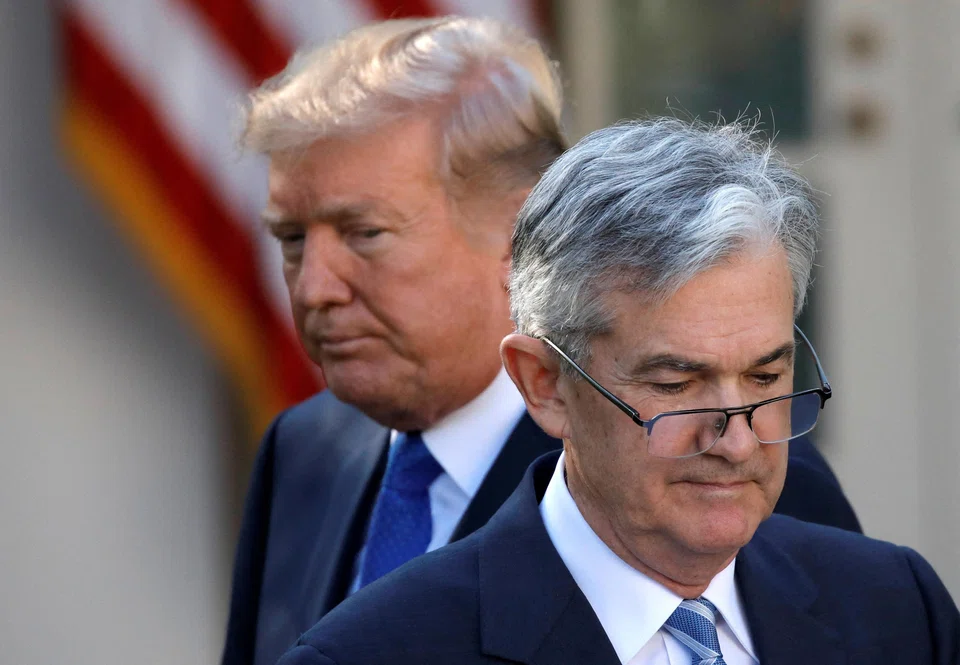
IN ONE of US President Donald Trump’s many attempts to flout the norms of American democracy, the populist Republican leader is now busy trying to wrest control of the central bank from Federal Reserve chair Jerome Powell – a move that could prove even more self-defeating than his vindictive tariff policies.
The US stock market took a dive early on Wednesday (Jul 16) after the president reportedly told a meeting with Republican congressional figures that he would launch an effort to oust Powell from his job. Stocks stabilised later in the session, when Trump denied the reports that he had a plan to fire the Fed chief.
Later that day, the president seemed to suggest that he could still seek Powell’s removal before the central banker’s term ends in May 2026.
His administration would fire the 72-year-old Powell, Trump said, only if there was evidence of fraud. That was an oblique reference to an investigation Trump has authorised into cost overruns in the reconstruction of the central bank’s headquarters in Washington.
Republican Senator Thom Tillis was among those who warned Trump that firing Powell would undermine the independence of the Fed, which is technically not even under the White House’s purview.
In his protest, Tillis echoed many Wall Street economists in saying that the central bank’s independence is what gives it credibility – and the Fed’s credibility is what gives the central bank its power to support the economy and the stock market when needed.
“Expectations for a highly dovish successor as Fed chair are likely to weigh on the US dollar pre-emptively. ”
Lorenzo Di Mattia, the manager of Sibilla Global Fund
Most observers view the probe as a pretext for Trump’s more immediate differences with Powell. Trump’s legal advisers have seized on the building controversy because of a clause allowing the Fed chair’s dismissal “for cause”.
For once, the heart of the dispute is about policy, not personalities. The president has been pressuring Powell for months to resume interest-rate cuts, in order to backstop the US economy while his disruptive tariff policy takes effect.
He has criticised Powell for many things, among them being too late with rate hikes to fight inflation and being too late to cut interest rates to save the economy.
Powell has consistently resisted that pressure since pausing rate cuts late last year. He has often argued that as tariffs are often inflationary, it would be irresponsible to cut rates until the price effects become clear.
Trump’s belief that forcing Powell out would allow any successor to gee up the US economy is likely mistaken, as Tillis and other analysts have noted.
Ouster unlikely for now
An outright firing of Powell is unlikely, if only because “the courts would likely step in”, said economists at UBS in a note to clients. “Should the president attempt to remove the chair, clarity from the courts would likely be needed to resolve the issues in prior precedents and limits of extending ‘for cause’ protection.”
Leaders are often described as lame ducks when their authority is diminished by the election of a successor. That has never been a problem at the Fed, where successors have never been publicly discussed in advance of the change.
In this case, the Trump administration is attempting a hobble-the-duck strategy. After the stock market baulked at the president’s previous vow to fire Powell, his administration has come up with a plan that may allow his will on monetary policy to supersede Powell’s.
Trump has promised to name Powell’s successor in the next month or two, long before Powell’s term ends next May. Indeed, Treasury Secretary Scott Bessent recently confirmed that the search for a successor is already under way. Candidates include another Trump administration economic official, Kevin Warsh.
This unprecedented pre-emption would mean that the Fed-chair-in-waiting could assume the power of the “jawbone” usually reserved solely for the Fed leader.
When Powell and his predecessors jawbone the market, they tweak monetary policy via public statements alone. Monetary policy, of course, is one of the principal drivers of economic and market behaviour, because of the importance of credit in most businesses and lives.
Keeping credibility intact
In theory, the voice of the person who is setting the course for a four-year term beginning in 2026 would ring out more loudly than that of the lame-duck incumbent.
Another possibility is Trump’s attempted schism in the Fed causes all sorts of chaos everywhere. Discordant voices could spark volatility in stock, bond and currency markets. One strategist said the slide of the US dollar to a multiyear low against other currencies is likely to continue, if the shadow chair emerges.
“Expectations for a highly dovish successor as Fed chair are likely to weigh on the US dollar pre-emptively,” said Lorenzo Di Mattia, the manager of hedge fund Sibilla Global Fund. After the changeover in May 2026, the greenback could spike if the “appointee proves less dovish than feared”, he added.
Powell has steadfastly refused to be drawn into any sort of contest with Trump over rate cuts. In exasperated but steady tones, Powell has personified the scientific approach of the Fed by explaining his policy position patiently without invoking the name of Trump.
Morgan Stanley economists said in a note that Powell will likely weather Trump’s onslaught of pressure, and keep the central bank’s credibility intact. Trump’s appointee may be more obliging to the president, and, hence, less convincing to global markets.
The Fed’s “reaction function”, or data dependency, “will not change notably between now and May”, they wrote. After that, however, all bets are off.