Is Trump doing a Kissinger?
Detente with Russia could isolate China
ONE of the turning points in the Cold War was the US opening to China in the aftermath of then-president Richard Nixon’s visit to Beijing in 1972.
The diplomatic opening was part of a strategy architected by then-US secretary of state Henry Kissinger. Dr K, as he was known, was pursuing a policy at the centre of which was an effort to divide the communist bloc, and to pit the Soviet Union against China.
Under this policy, the US benefited from the split between the two communist superpowers, and created incentives for Moscow to improve its relationship with Washington by launching a process of American-Russian detente.
The end result was a new balance of power, resulting in a more stable international system under which both Moscow and Beijing improved their relationship with Washington. That proved to be the beginning of the end of the Cold War close to two decades later, and the ensuing integration of China into the global economy.
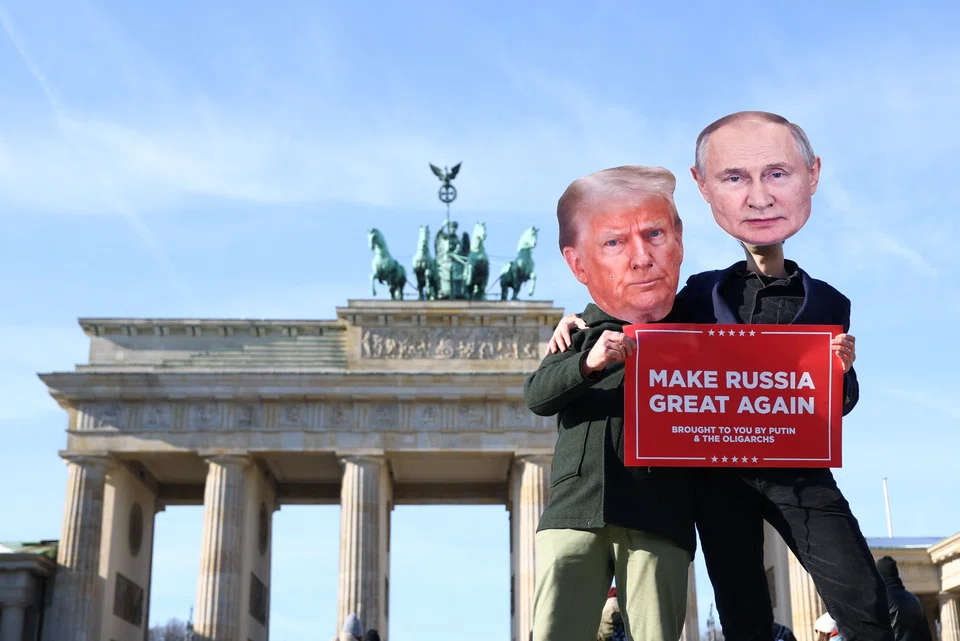
Will US President Donald Trump, a fan of Nixon’s realpolitik foreign policy, repeat his old trick today through his opening to Russia?
In general, Trump’s view of the international system is similar to that of the 19th-century European statesmen who assumed that the balance of power, maintained by the great powers at the time, provided for stability – a goal that they had pursued successfully until the Great War brought an end to international peace.
From this perspective, shared today by Trump, the current three great powers – the US, Russia and China – are the dominant forces in the international system, and amount to a sort of a global directorate.
In this system, other states, whether it is Ukraine or for that matter Taiwan, are secondary players that need to accept the dictates of the three superpowers so as not to challenge the international status quo.
The American detente with Russia fits into this narrative. There is no need for the two superpowers to enter into a conflict over the future of Ukraine.
Instead, the two could reach a deal that would allow them to maintain their interests in Ukraine and its European neighbourhood.
Russia would ensure that Ukraine gives up some of its territory and refrains from joining the North Atlantic Treaty Organization, while the US need not spend its military and economic power protecting Ukraine – not to mention the possibility of having access to that country’s minerals.
And as seen from the White House, the benefit of the opening to Russia is that it could create the conditions that would lead to a break-up of the Russian-Chinese axis that evolved against the backdrop of the war in Ukraine.
The administration of former president Joe Biden saw that axis as an alliance between two authoritarian regimes driven by an anti-American ideology.
The Trump administration believes that Moscow and Beijing strengthened their ties in the face of what they saw as America striving for global pre-eminence.
But an America that is willing to divide the world between the great powers, and recognises the interests of Russia as well as China, should be seen as less than a threat and more as a potential partner.
Trump hopes that by bringing an end to the war in Ukraine and offering Russia the prospect of renewed diplomatic and economic ties with Washington, President Vladimir Putin would be incentivised to reassess his temporary partnership with China – much the same way that the Chinese drew away from Russia after 1972.
And similar to how opening towards China provided the US with more diplomatic and military leverage over the Soviet Union, the improving ties between Washington and Moscow today would place the Americans in a stronger position to negotiate, bargain and make deals with Beijing.
The hopes among some China hawks in Washington is that, with its focus shifting from Ukraine, the Trump administration will now embrace a more aggressive posture towards China.
But, if anything, America’s willingness to press Ukraine to accept a deal with Russia may be an indication of things to come in East Asia.
Like in the case of Ukraine, Trump doesn’t believe that Washington’s core interests lie in defending a thriving democracy and in the struggle against authoritarian regimes like Russia and China.
Taiwan, like Ukraine, is, according to Trump, a secondary player on the international chessboard that needs to adapt itself to the rules drawn by the big boys.
In fact, Trump has claimed that Taiwan is spending too little on its military and is too content about the prospects of the US coming to its aid in a war with China.
Moreover, he also accused Taiwan of unfairly gaining control of the manufacture of semiconductors for smartphones.
Like in the case of Ukraine and its minerals, Taiwan’s semiconductor industry could prove to be an “economic chip” as part of an American effort to tame Taipei.
From the perspective of Trump, a big trade deal with China’s leader Xi Jinping should be a central US geo-strategic and geo-economic goal – and with Russia being neutralised, the Chinese would be more open to reaching such a deal with Washington. And Taiwan won’t be allowed to torpedo that.