

Trump heading to the Persian (Arabian) Gulf: Investment and diplomacy
His trip to the Middle East would provide him with an opportunity to show off concrete successes
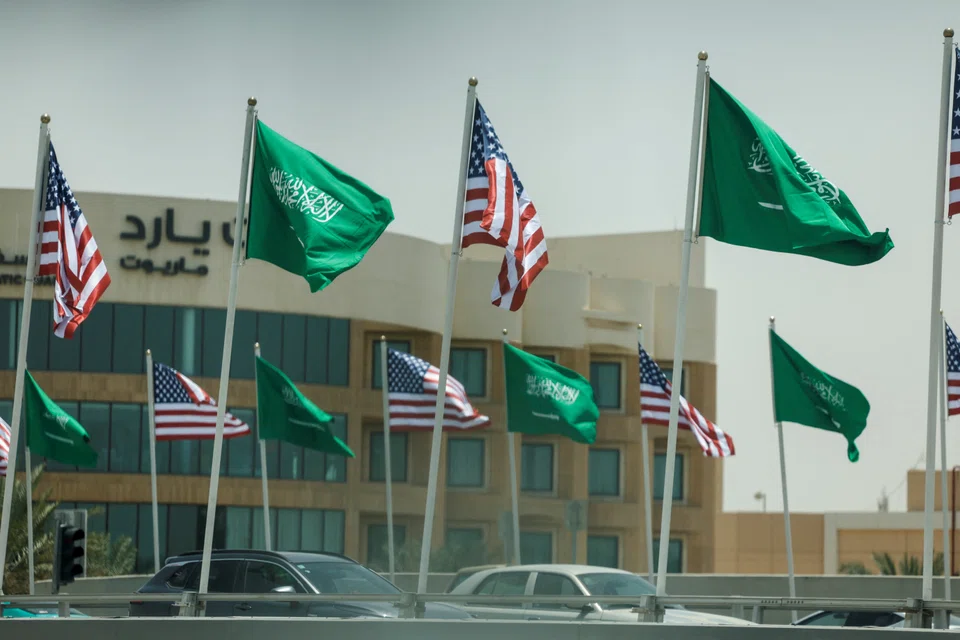
HE MAY soon be calling it the Arabian Gulf. But on May 13 US President Donald Trump will be landing in what is known now as the Persian Gulf for an official trip with stops in Saudi Arabia, Qatar and the United Arab Emirates (UAE).
This would be the first major trip of Trump’s second term (he did travel earlier to Pope Francis’s funeral in Rome), focusing on business deals in the region as he also tries to bring an end to the war in Gaza and to negotiate a nuclear pact with Iran.
In a way, at a time when he is facing so many challenges at home and abroad, the trip to the Middle East would provide him with an opportunity to show off concrete successes.
Topping the list would be pledges by Saudi Arabia to invest US$600 billion in the US in the next four years and by the UAE to spend US$1.4 trillion over 10 years.
On the agenda
On the agenda will be Israel-Gaza war ceasefire talks, oil, trade, investment deals, and the potential for new policy developments in the areas of advanced semiconductor exports and nuclear programmes.
Trump has long enjoyed a close relationship with Gulf Arab states, in particular the UAE and Saudi Arabia, where his children have several business ventures and real estate deals.
Trump has personal ties with Saudi Crown Prince Muhammad bin Salman (MBS) as the two shared the president’s first foreign leader phone call in his second term. The leaders discussed their visions for bringing stability to the Middle East, regional security and ending terrorism, as well as economic projects, in that January phone call.
This trip is a replay of the inaugural foreign trip of Trump’s first term when the Saudis welcomed him with a lavish ceremony and billions of dollars in investments.
During his 2017 trip to the Persian Gulf, Trump secured a deal for Saudi Arabia to purchase US$350 billion worth of arms from the US over 10 years, on top of U$110 billion arms deals that were clinched before he entered office in 2016. The latest defence spending pledge by the Saudis this year is already nearly double the figure.
Saudi Arabia is now hosting the negotiations that Trump hopes will end the Russia-Ukraine war, making the kingdom ever more geopolitically important to Washington.
Qatar, at the same time, has played a central role in negotiations between Israel and Hamas over ceasefires in the Gaza War and hostage releases.
Trump has some important goals for the region in his second term, including ending the fighting in Gaza, stopping Iran’s advances towards becoming a nuclear military power, and persuading Saudi Arabia to normalise relations with Israel by joining the so-called Abraham Accords.
But the Saudis are reluctant to establish relations with Israel as long as the fighting continues in Gaza and the Israelis refuse to commit themselves to the establishment of an independent Palestinian state.
The Trump administration has been actively engaged in talks with Iran over its nuclear programme. The negotiations are supported by the UAE and Saudi Arabia that are concerned that a war between the US and Iran would destabilise them and the entire region.
At the same time, Saudi Arabia wants its own civilian nuclear programme and has asked the US for approvals and assistance in this direction. In the past, any US support for a Saudi nuclear programme had been contingent on Saudi Arabia normalising diplomatic relations with Israel. Not this time.
The presidential visit is attracting several Wall Street and Silicon Valley investors to Saudi Arabia. A Saudi-US investment forum scheduled to take place on May 13 in Riyadh will include guests such as BlackRock CEO Larry Fink and Palantir CEO Alex Karp. Tesla CEO Elon Musk, Meta head Mark Zuckerberg, OpenAI CEO Sam Altman, Citigroup CEO Jane Fraser, Boeing CEO Kelly Ortberg and White House AI czar David Sacks are also among those expected at the event in Riyadh.
A major topic in the talks Trump will hold with the Arab leaders will be the future of Gaza. The US president has vowed to bring about an end to the war, while also suggesting that the US could take control of the war-ravaged Strip. He has described it as “important real estate” which he said he wanted to develop into a Middle Eastern Riviera. Saudi Arabia, the UAE as well as other Arab states are opposed to the idea.
The US has continued to push for ceasefire in Gaza, most recently floating a 21-day cessation of hostilities and release of some hostages. But Israel last week approved expanding fighting and territorial control in Gaza.
Trump is not scheduled to visit Israel during this trip – a decision that disappointed the Israeli leaders who are also concerned over the possible outcome of the US-Iran nuclear negotiations.
Both the Israelis and the Americans have vowed not to allow Iran to acquire access to nuclear military capability. But officials in Jerusalem are worried that Trump wants to avert a military confrontation with the Islamic Republic and would be willing to reach a deal with Tehran that would not be acceptable to Israel.
Gulf leaders’ summit
On May 14, MBS is set to host a Gulf state leaders’ summit where Trump will have an opportunity to share America’s economic cooperation proposals with top Arab officials. The meeting is being organised by the Saudi prince, who has invited the leaders of the other Gulf Cooperation Council countries – UAE, Bahrain, Kuwait, Oman and Qatar.
Trump then heads to Qatar, where he will visit a US military base, and the UAE on separate legs of the trip.
Leading up to this term’s first foreign trip, Trump has promised a “very, very big announcement” before he sets off, without revealing the contents.
TRENDING NOW
Indonesia begins cutting natural gas exports to Singapore from Oct 24: reports

Singapore’s central gas buyer affirms Indonesia’s role as ‘important partner’ amid export review warning

KKR founders among investors buying 42% of Peter Lim’s Valencia; club valued at US$1.4 billion

NEA issues notices to 10 Singapore-based companies, including Wilmar and APP, over haze

