

For Trump, the hottest property on earth lies in the Arctic
A potential US-Russia deal shows the region’s rare earths and vast energy reserves are turning it into the next big geopolitical prize
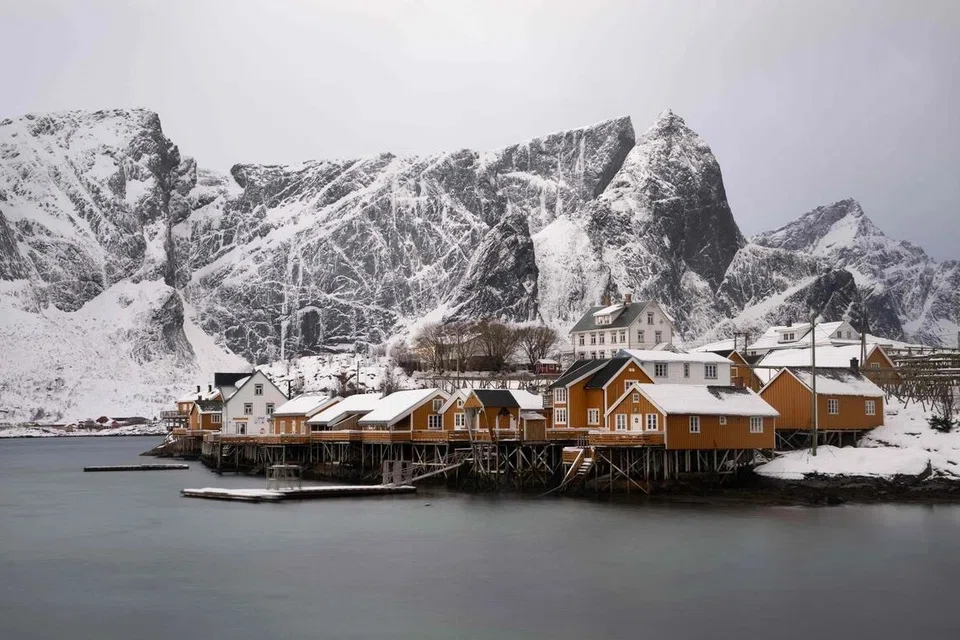
OVER the past months, top US and Russian officials reportedly held a series of hush-hush meetings. The two sides have apparently agreed that in exchange for peace in Ukraine, American companies would get exclusive rights to energy, raw materials and strategic metals across Russia and in the Arctic.
The report seems credible enough, even if the leaks about the deal taking shape may have come from European states which worry that the US is preparing to sell out Ukraine – leaving Europe to face an emboldened President Vladimir Putin.
And it follows news earlier this year that the American oil giant ExxonMobil and Russia’s state energy company Rosneft discussed ExxonMobil’s return to the Sakhalin gas project in a far eastern region close to Siberia, pending government permission on both sides.
There is every likelihood that the permission may come. Donald Trump’s foreign policy approach, to put it simplistically, has always been “make dough, not war”. Moscow has long recognised this, and seems to be dangling inducements. Available accounts suggest Trump has taken the bait.
But any potential deal on the Arctic sits uneasily with America’s Nato allies. Rather than acting as Europe’s steadfast ally, the US is increasingly recasting itself as a neutral mediator between Russia and Western Europe.
Another sore point: the latest US National Security Strategy (NSS) omits the dedicated Arctic chapter found in the Biden administration’s version and adopts a tone that many in Europe interpret as dismissive. In contrast, the Biden administration had vowed to work with Arctic allies to uphold security in the region by improving maritime domain awareness, disaster response capabilities and icebreaking capacity to prepare for increased international activity in the region.
Trump supporters counter that the NSS still treats the Arctic as a core American interest. They argue Trump’s disdain for Europe reflects his belief they are willing to fight Russia to the last Ukrainian without expending any of their own blood or treasure.
Besides, Trump’s horror at the mounting human cost of the tragedy – on both Ukrainian and Russian sides – is genuine and authentic.
One of the most exciting developments
Whatever way you look at it, the Arctic for Ukraine deal, if it comes to fruition, will carry profound geoeconomic and geopolitical implications.
Already, ice melt from global warming is opening up two major trade routes through the Arctic from Europe to Asia – the frigid Northwest Passage, along the northern border of Canada and Alaska, and the North-east Passage or Northeast Sea Route (NSR) that runs along the northern border of Russia.
Powerful icebreakers capable of cutting a path through ice as thick as 5m are also making it possible for trade to be routed through areas once considered unpassable.
In 2024, a record 38 million tonnes of cargo was shipped on the NSR and 2025’s figure is expected to end higher. Some estimates say that cargo movement along the route could touch 100 million tonnes by 2030.
Logistics, however, is only part of the story. The Arctic contains vast reserves of rare earths, lithium, nickel and other critical minerals – resources currently dominated by China, which have given it leverage over the US in trade talks.
“The Middle East has oil, China has rare earths,” Deng Xiaoping said in 1992. And even near-allies of China, as Russia has tended to be in recent years, are aware of their vulnerabilities on this score.
The region is also believed to hold 13 per cent of the world’s undiscovered oil and 30 per cent of its untapped natural gas. There may be another reason Trump is eyeing the Arctic: America’s AI boom demands massive amounts of electricity to cool burgeoning data centres, which can operate more cheaply in colder climates.
A bonanza
On Nov 4, President Putin instructed his Cabinet to prepare a full-scale road map for the long-term development of rare earth and mineral mining and production in Russia.
A deal would be a bonanza for Moscow. Most of Russia’s natural gas is produced in western Siberia with the Yamal Peninsula alone having enough gas to supply Europe through most of this century. Significant new gas finds continue to be reported across the Arctic continental shelf frequently.
Until Russia invaded Ukraine in 2022, Russian gas produced in Yamal and western Siberia flowed to Europe through pipelines. But Europe has steadily weaned itself away from that dependency, and is unlikely to resume it in a hurry, which means Asian markets will become critical to Russia.
Faster Arctic shipping routes would also benefit China, Japan, South Korea and Taiwan, cutting shipping time to Europe by up to a fortnight and avoiding choke points like the Malacca Strait and Suez Canal.
Here, South Korea is one of the Asian nations best positioned to benefit.
Before the Ukraine war, Russia had ordered 15 icebreaking LNG tankers from Hanwha Ocean, formerly known as Daewoo Shipbuilding. Following sanctions, Hanwha had to sell many of the vessels elsewhere and seek new buyers for the ice-class LNG vessels. A boom could now await Korean ship builders.
South Korea – already studying an Arctic Route Special Act – sees strategic opportunity, especially given the 3,000km shorter journey from Yamal to Busan compared with transporting gas from Qatar. Its 2026 draft budget also allocates substantial funds for the construction of ice-class ships.
India, whose eastern seaboard could potentially benefit from an opening of the Arctic Route, is in the game. At their Dec 5 summit, Putin and Narendra Modi agreed to deepen collaboration on Arctic matters, work towards increased use of the Northern Sea Route, and for Indian mariners to undergo training in Russia in navigating Arctic waters – an arrangement that Russia has also recently extended to China’s seafarers.
Reshaping trilateral dynamics
Who knows, if the Russia-US concord advances, even Alaskan oil can travel along the same route to Asia – prospects that undoubtedly excite the Trump administration, which has recently opened up vast tracts of Alaska’s hitherto preserved areas for energy development.
The big geopolitical question is where a US-Russia Arctic deal would leave China.
Recent years have seen a growing alignment in the Beijing-Moscow worldview, and with Russia increasingly isolated – especially after its invasion of Ukraine – the two have found common ground on a host of issues.
The Feb 4, 2022, communique signed during Putin’s summit with President Xi Jinping, days before Russian troops invaded Ukraine, spoke of promoting “greater interconnectedness between the Asia-Pacific and Eurasian regions” and pledged to “continue consistently intensifying practical cooperation for the sustainable development of the Arctic”.
In turn, Russia has had to concede greater access to the Arctic to China, which has officially declared itself to be a “near-Arctic State”.
Cooperating with the US there and holding out the prospect of joint development from which both can prosper offers Russia a chance to resist Chinese pressure for enhanced access to the Arctic. It also gives Moscow an opening to drive a wedge within the Western alliance.
For Singapore, a global maritime hub, the stakes are high. With maritime activities contributing more than 6 per cent of GDP and employing 140,000 workers, any diversion of Asia-Europe traffic away from the Strait of Malacca would be deeply consequential.
“Geography and things that happen far, far away have a profound impact on our opportunities,” Foreign Minister Vivian Balakrishnan mused at a conference organised by the Singapore Institute of International Affairs in February, mentioning the record tonnage handled by Singapore ports in 2024.
“So we’re still in that business. But we also know that with climate change, if the Arctic opens up, the shortest route will not be the Strait of Malacca. It will be the Arctic.” THE STRAITS TIMES
Decoding Asia newsletter: your guide to navigating Asia in a new global order. Sign up here to get Decoding Asia newsletter. Delivered to your inbox. Free.
Share with us your feedback on BT's products and services
TRENDING NOW

Once staunchly pro-China, Malaysian Chinese businesses are now distancing themselves from Beijing

Looking beyond looming CEO succession, should UOB potentially pursue a transformative merger?

Could stablecoins be the future of money?

Grab CEO’s wife Chloe Tong on life with Anthony Tan and finding her purpose

