Trump-inspired turmoil may be positive for some less well-known markets – including Singapore
While the S&P 500 and Nasdaq 100 have fallen more than 6% since the beginning of the year, the Hang Seng China Enterprises Index is up nearly 22%

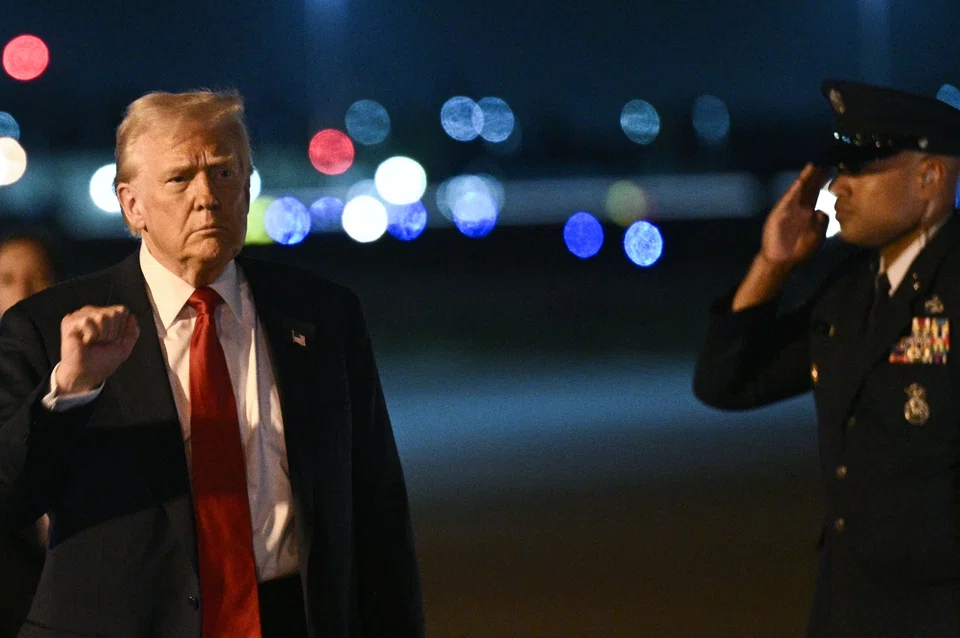
[SINGAPORE] When US President Donald Trump was elected in November last year, inflation had subsided, the Fed was cutting rates, and growth was proving to be remarkably robust.
This column opined then that it was probably only a matter of time before steady wage growth would alleviate the pain of sharply higher prices that US consumers had suffered since 2022. Even if Trump simply did nothing, he might soon have been in a position to claim that his re-election had brought about an economy that works for ordinary people.
This was never going to happen, of course. Trump had railed against globalisation, free trade, illegal immigrants and profligate government spending during his campaign. Since getting back into office, his administration has fired government employees, started trade wars with friends and foes alike, and upended longstanding global alliances.
Within a month of his inauguration, US stocks began pulling back from all-time highs amid growing fears of stagflation or even an outright recession.
The nervousness seemed to intensify last week, with investors shrugging off further signs that US inflation is easing and focusing instead on indications that consumer confidence is sagging in the face of Trump’s chaotic policymaking.
Even with the sharp rebound on Friday (Mar 14), the S&P 500 ended last week down 2.3 per cent. The Nasdaq 100 fell 2.5 per cent.
Markets around the globe were not spared from the selling pressure. The Stoxx Europe 600 (Stoxx 600) dropped 1.2 per cent last week. The Hang Seng Index (HSI) and Hang Seng China Enterprises Index (HSCEI) were down 1.1 per cent and 0.4 per cent, respectively.
Here in Singapore, the Straits Times Index (STI) ended the week 2 per cent lower.
A somewhat different picture comes into focus if one zooms out, though. Since the beginning of the year, the S&P 500 and the Nasdaq 100 have declined 6.7 per cent and 6.2 per cent, respectively.
On the other hand, the Stoxx 600 is up 8.3 per cent. Even more impressive, the HSI and HSCEI are up 19.4 per cent and 21.8 per cent, respectively. The STI is up 1.3 per cent.
While the Trump administration’s policies have created a lot of uncertainties for the world, they haven’t been negative for all global markets.
In Europe, for instance, anticipation of a big loosening of fiscal spending seemed to have attracted a wave of international capital.
Meanwhile, China’s own efforts to stimulate its economy, and the strides it is making in exciting new fields such as artificial intelligence and electric vehicles, are also drawing more global investment flows.
Should investors buy the dip in US stocks? Or, is the recent underperformance of the US market a sign of what’s to come in the months ahead?
No recession yet
On the face of it, Trump’s headline policies already appear to be having an impact on analysts’ earnings forecasts of US-listed companies.
Financial market data provider FactSet said in a note on Mar 7 that 259 companies that are part of the S&P 500 index cited the word “tariff” or “tariffs” during their earnings calls for Q4 2024. This was the highest number over the past 10 years.
The previous record-high number during the past 10 years was only 185 companies, which occurred during the second quarter of 2018.
These companies were concentrated in the materials, industrials, consumer discretionary and consumer staples sectors. Not surprisingly, these were also the sectors that had seen the largest cuts in earnings per share estimates for Q1 2025.
Based on its latest data, FactSet said S&P 500 companies are expected to report year-on-year earnings growth for Q1 2025 of 7.3 per cent. At the beginning of the year, Q1 2025 earnings growth was expected to come in at 11.6 per cent.
This slower pace of earnings growth doesn’t appear to be worrying the US corporate sector yet. In fact, only 13 companies cited the term “recession” during their earnings calls for Q4 2024 – well below the five-year average of 80 and the 10-year average of 60.
Still, I cannot help but wonder if all the uncertainty the Trump administration is sowing will eventually test the vaunted resilience of the US economy, and gradually erode the pre-eminence of its currency and capital market.
Don’t get me wrong. Trade tariffs, geopolitical upheaval and recession risks are bad news for the whole world.
Yet, Trump seems less concerned than he was during his first term about the negative effects of his policies on the US economy and market. On the other hand, longtime allies of the US as well as its strategic competitors are scrambling to adapt and reposition themselves.
The relatively strong recent performance of stocks in China and Europe, despite all the trade uncertainties and geopolitical pressures they face, suggests it is unwise for investors to focus exclusively on the US market.
Going by Bloomberg data, the HSCEI and Stoxx 600 are trading at less than 12 times and 16 times earnings, respectively. The S&P 500 is trading at more than 24 times earnings.
The way I see it, global capital that has been channelled into the US market through increasingly widespread indexation may gradually find its way to less well-known markets amid the current turmoil.
Singapore’s attractions
Against this backdrop, the Singapore market stands a good chance of grabbing its fair share of global investor attention.
While elevated profitability at DBS, OCBC and UOB – which account for more than half the STI – will gradually normalise as interest rates soften, these three banks are still in a strong position to return cash to investors in 2025 through dividends and share buybacks.
Meanwhile, the real estate investment trusts (Reits) look set to make a comeback as analysts begin anticipating lower interest rates and financing costs in the coming months.
Last week, despite the heightened nervousness in the market, the iEdge S-Reit Leaders Index – which includes names such as CapitaLand Integrated Commercial Trust, Mapletree Logistics Trust and Keppel DC Reit – rallied more than 4.4 per cent.
Then there is the value unlocking theme, which has raised the profile of companies such as Sembcorp Industries, Keppel and Hongkong Land over the last few years.
The possibility of more global capital flowing to this region might also dovetail with the current national effort to enliven the local market. Among the initiatives announced by the Monetary Authority of Singapore last month were that it will allocate S$5 billion to fund managers investing in Singapore stocks, including stocks that are not part of major market indices.
Last week, the Singapore Exchange said stocks with market capitalisations of between S$1 billion and S$3 billion have attracted S$71 million of net institutional inflows since the beginning of the year. Their average daily turnover increased 35 per cent to S$67 million in 2025 (up to Mar 12), from S$50 million in 2024.
Among the stocks that fall into this “mid-cap” category are Haw Par Corp, Hotel Properties, iFast, Sheng Siong and StarHub.
While the Trump administration’s policies could mean higher risks for the world, they could also mean more opportunity for investors in some of the world’s far flung markets.
The Mark To Market column will take a break next week.