Trump is launching a trade offensive: Or is he?
Tariffs will strengthen the US dollar, reducing global demand for American exports
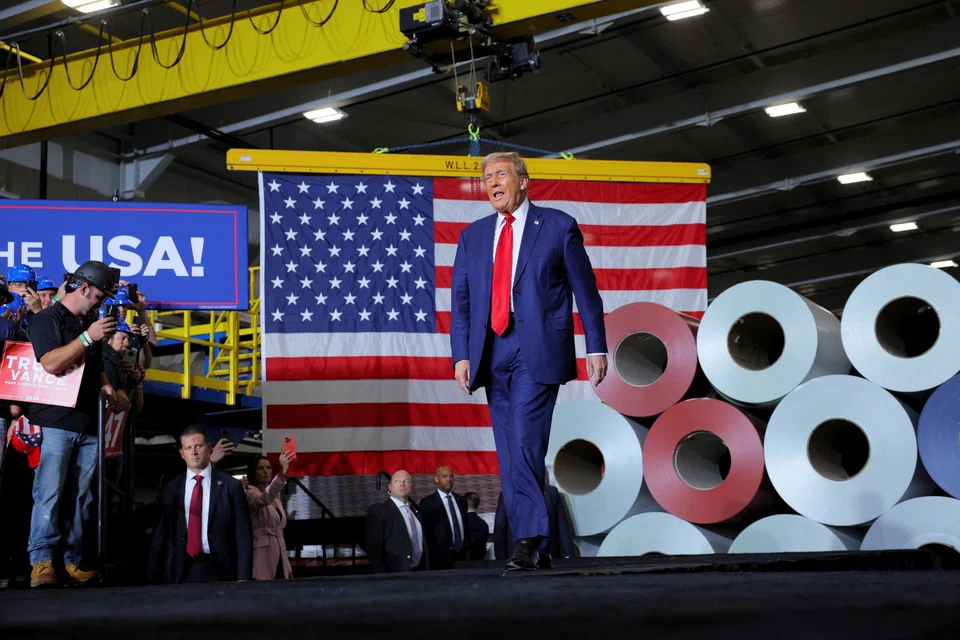
IN HIS first address before a global audience, US President Donald Trump told delegates at the World Economic Forum in Davos, Switzerland, last week that he wasn’t bluffing, and that he was going to pursue an aggressive mercantilist agenda.
“We are going to be demanding respect from other nations,” the president said, requesting that central bankers cut interest rates and foreign companies increase their investment in the US, while the European Union (EU) was asked to buy more American oil if it wanted to avoid US tariffs.
A very assertive US president then doubled down on his demands, threatening to double the tax rates on foreign nationals and companies if their governments imposed what he considered to be “discriminatory” taxes on American companies.
And he would impose tariffs of up to 25 per cent on Canada and Mexico, over issues such as migration and drug smuggling, as early as next week, risking a continental trade war. According to some reports, the president wants to revise the US-Mexico-Canada free trade agreement to encourage more manufacturing in the US.
President Trump has already threatened to impose 25 per cent tariffs on Colombian goods coming into the US, as retaliation for Colombia rejecting US military flights carrying migrants back to the South American country. He dropped the threat on Sunday after Bogota agreed to accept its deported citizens.
China, at the same time, could face levies of up to 100 per cent if it refuses to agree on a deal to sell at least 50 per cent of the TikTok platform to American companies.
His predecessors had “allowed other nations to take advantage of the US”, President Trump said. “We can’t allow that to happen anymore,” he insisted, in the same week in which he pulled the US out of the World Health Organization (WHO) and exited the Paris climate accord.
It’s a new international economic order where President Trump’s US sets the rules in America’s favour. He would reduce the US trade deficit, reconstruct the American manufacturing sector, and create a new stream of revenues for the US government.
Indeed, President Trump has suggested that the 19th century was America’s golden economic era, when tariffs ignited forceful growth and increased the federal government’s revenues.
Hence, an “external revenues service” would guarantee that foreigners – and not America’s taxpayers – would pay the federal government’s bills. Or, as President Trump promised, he would impose “tariffs and tax foreign countries to enrich our citizens”.
This kind of rhetoric raises the spectre of trade wars, geo-economic fragmentation and a complete breakdown in the diplomatic channels to settle economic disputes. That could wipe out 7 per cent of global gross domestic product over the long run, according to a study issued by the International Monetary Fund.
To the relief of the Davos delegates and global investors, President Trump refrained from imposing tariffs on imports on his first day in office.
On his second day in office, President Trump, however, repeated his threat to impose a 10 per cent tariff on Chinese products as soon as Feb 1, to punish Beijing for failing to block the flow of fentanyl to America. He also talked about an additional 60 per cent tariffs on Chinese goods.
But President Trump seems subsequently to be holding in abeyance his plans to impose tariffs on China, and has signalled that there is room for talk with Chinese leaders, at least until Apr 1, when China trade practices will be reviewed by the new US administration.
Speaking about his China tariffs plan in an interview last week, Trump said: “I’d rather not have to use it, but it’s a tremendous power over China.”
That kind of talk has led many observers, including leading business executives, to conclude that President Trump is using the threat of trade war as part of a transactional bargaining strategy – very much like what he did during his first term in office.
According to this view, President Trump supposedly wants to use powerful economic force, representing America – the world’s largest market – to extract concessions from trade partners and rivals.
Tariffs were an “economic tool; that’s it”, said Jamie Dimon, chief executive officer of JPMorgan Chase, at the World Economic Forum gathering in Davos. “If it’s a little inflationary, but it’s good for national security, so be it. Get over it.”
Dimon and other business executives are hopeful that Treasury Secretary Scott Bessent will recognise that high tariffs would “lead to a stronger US dollar and retaliations that will increase costs, slow growth and upset markets”, as former US Trade Representative Robert Zoellick suggested recently.
Zoellick and others hope that Secretary Bessent would use President Trump’s tariffs threats to negotiate more balanced trade relations, including possibly leading to an international accord under which China would reduce its current account surplus and the US cut its deficit. That could help balance the international economic system, as opposed to economic wars that trade disputes could ignite.
But as in the case of his first use of tariffs since inauguration against Colombia, observers such as Zoellick and others on Wall Street may be wishfully thinking that President Trump will back off his threatened tariffs, as he has in the past, as part of the bargaining process.
Instead, President Trump – who referred to himself as the “tariff man” and who suggested that “tariffs” was the most beautiful word in the English language – may be willing to move swiftly on such taxes, which he sees as an effective punishment for nations that don’t buy into his agenda, without allowing for drawn-out talks.
The bottom line is that tariffs would not help achieve President Trump’s ambitious goals. Neither would they narrow America’s trade deficit. Instead, they would strengthen the US dollar, which in turn would reduce global demand for American exports.
Tariffs could also hurt the US manufacturing sector as US companies end up suffering from higher input costs, not to mention that the costs of tariffs are mostly borne by American consumers, since are a form of tax on Americans through higher import prices.