

Trump vs the international trade order
The system he proposes would be complicated and difficult to administer
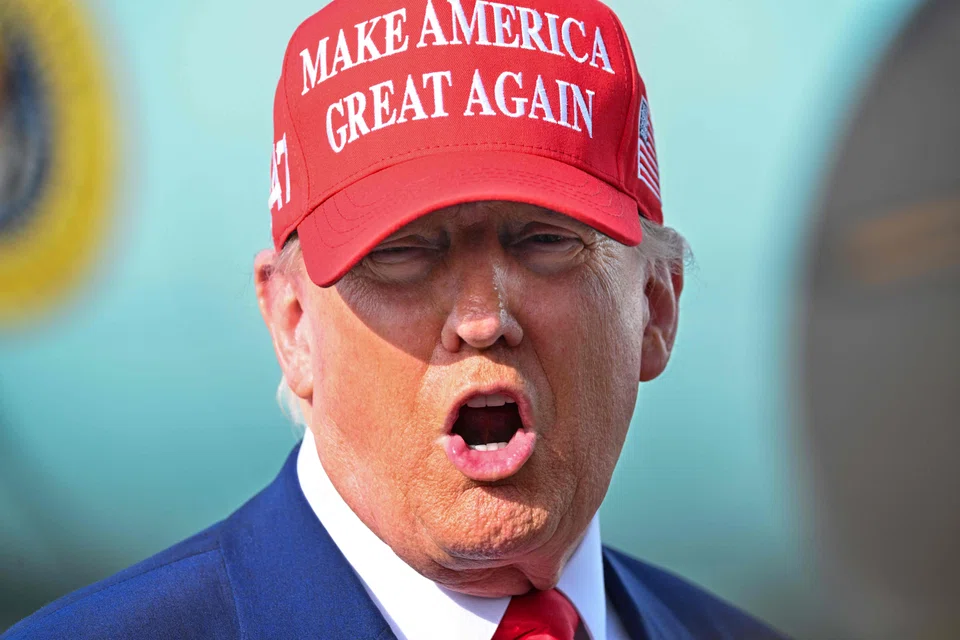
US PRESIDENT Donald Trump’s announcement of a new policy of taxing foreign imports at the same rate that other nations apply to American products, billed as “reciprocal trade policy”, has the potential of delivering a shock to the International trade order.
Last Thursday (Feb 13), he ordered federal agencies to look into adjusting tariffs to those of other countries, stopping short of actually imposing the tariffs immediately.
“On trade, I have decided for purposes of fairness, that I will charge reciprocal tariffs, meaning whatever countries charge the United States of America, we will charge them, no more, no less,” he said in the Oval Office.
The president has said that the move is required to even out America’s “unfair” trade relationships with other countries and stop them from taking advantage of the US on trade.
The US trades with more than 200 countries, territories and regional groups, and many of the nations with the highest tariff rates on US products today include its partners such as Japan, Vietnam, Brazil, Argentina, the European Union (EU) and India.
India’s Prime Minister Narendra Modi met the US president at the White House on Feb 13. Trump has expressed irritation with India’s tariffs on Harley-Davidson motorcycles.
He has also pointed out the 10 per cent tariff that the EU charges on American cars – four times the 2.5 per cent duties that the US assesses on imported European vehicles.
Challenging WTO rules
A reciprocal tariff treatment would increase some 2.6 million duties for imports from these countries, and in the process, challenge the trade rules set up by the World Trade Organization (WTO) and the global trade system that have been built up since the end of World War II.
The WTO’s principle of “most favoured nation” status requires member nations to guarantee equal tariff treatment to other members unless they have free trade agreements in place, in which case they are not supposed to discriminate against each other.
So what the president is proposing is to change that system in favour of one under which new duties would be determined unilaterally by the US beyond the rate it has negotiated with other members.
The decision is likely to lead to negotiations with governments whose economies depend on exports to the US, and possibly ignite trade wars if these governments decide to raise their own tariffs in retaliation.
At the same time, American companies would be lobbying for exemptions from the new rules.
Overall, the system proposed by Trump would be complicated and difficult to administer and is expected to create uncertainty among foreign and American businesses. Some of them did heave a sigh of relief that the tariffs were not immediately imposed.
Trump admitted on Thursday that applying tariffs would raise consumer prices in the short term, although he expressed doubts that they would create inflationary pressures.
The president has a legal authority to impose tariffs, including the International Emergency Economic Powers Act, invoking national security considerations, which allows him to bypass possible domestic legal or congressional constraints.
Since entering office, his tariff threats have upended relationships with several countries, including Canada and Mexico, in addition to violating WTO rules.
The president’s trade policies run contrary to the free trade philosophy that have guided Republican and Democratic administrations that assumed that free trade benefits US economic interests, and in that context, that low tariffs would allow American consumers and businesses to import cheap products.
Trump, on the other hand, insists that reciprocal trade strategy would help restore American manufacturing might and reduce US trade deficits.
It’s not clear yet whether US trade partners would bring WTO cases against Washington, and in any case, that is unlikely to have any effect on Trump’s decisions.
In tailoring the tariffs to specific countries, administration officials are expected to consider tariffs imposed on US products, foreign regulations, exchange rates and taxes, including Europe’s value-added tax.
Tool to raise government revenue
The question on the minds of foreign officials is whether the US would be willing to reach deals that would avert the imposition of the tariffs, such as the suggestions by the EU to reduce its import tariff on cars and to increase purchases of American energy.
But it is more likely that Trump may want to keep the higher tariffs rather than to negotiate them away.
Indeed, he has suggested that tariffs can serve as a tool to raise government revenue to counter-balance reductions in income tax. He sees tariffs less as a negotiating tool and more like the kind of policy he is determined to pursue as part of his economic nationalist strategy.
TRENDING NOW

MSCI proposes standalone status for Indonesia; Jakarta stocks plunge 8%

Palm oil stocks slide after Singapore begins looking into which firms responsible for haze

High Court rules against Julius Baer’s Singapore trust arm in US$50 million family trust dispute

Why is the haze so bad in South-east Asia this year?

