Trump wants US allies to ‘do something’: What happens if they won’t?

Some in Washington want to bid farewell to Europe and the Middle East, but the strategic realities may force America to remain involved there
Summarise
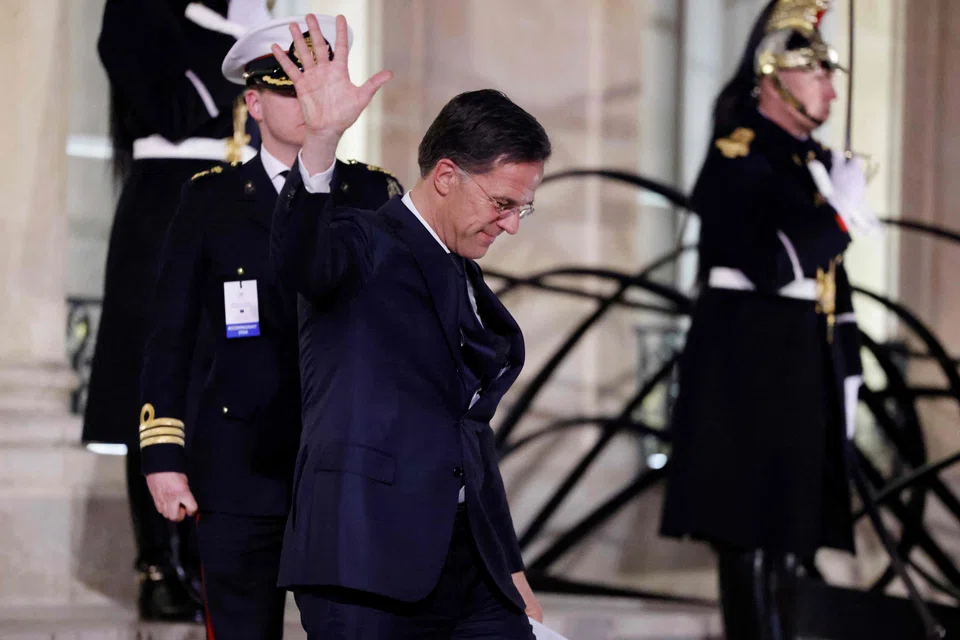
    • Nato Secretary General Mark Rutte. The Europeans have been facing the likelihood of having to meet their own defence obligations since the end of the Cold War.
    • Nato Secretary General Mark Rutte. The Europeans have been facing the likelihood of having to meet their own defence obligations since the end of the Cold War. PHOTO: AFP
    Published Wed, Feb 19, 2025 · 05:00 AM

    AMERICAN president Donald Trump is challenging the post-Cold War international system as it evolved under Democratic and Republican administrations by demanding that US allies in Europe and the Middle East take care of their own strategic interests instead of relying on Washington to do that for them.

    In a nutshell, Trump is essentially saying: “We don’t want to be in the business of resolving historical conflicts in Eastern Europe or dealing with old tribal fights in the Levant. Instead, our core geostrategic interests lie in East Asia where we confront our main global threat, China. You’re on your own, guys!”

    In a major blow to Ukraine and its supporters in Europe last Wednesday (Feb 12), President Trump announced that he had agreed with Vladimir Putin to hold talks that would bring an end to the war in Ukraine.


    And President Trump’s secretary of defence, Pete Hegseth, told his European colleagues that, if anything, Washington agrees with Russia’s core demands: That Ukraine territorial integrity was an “illusory” goal, and that there would be no Nato membership for Ukraine, and no US support for its defence against Russia.

    Those comments shocked Ukraine and America’s European allies, worried that Washington was preparing to sell out Kyiv to placate Moscow as Russian and American officials were ready to negotiate Ukraine’s future in Saudi Arabia without its participation in the talks.

    In fact, it seems that the Trump administration is pressuring the Ukrainians to sign over half of the country’s critical minerals as a price of American support in the negotiations.

    President Trump delivered similar shock waves in the Middle East a week earlier, when he proposed during Israeli Prime Minister Benjamin Netanyahu’s visit to Washington a plan to transfer the Gaza Strip’s close to two million Palestinian inhabitants to Jordan and Egypt.

    The proposal not only runs contrary to core demands by the Arabs, including by Saudi Arabia, to establish an independent Palestinian state in the Gaza Strip and the West Bank that would follow an end of the war between Israel and Hamas.

    The notion of settling hundreds of thousands of Palestinians in Jordan and Egypt is seen as an existential threat by these countries and has been rejected by the Saudis and other Arab governments.

    But the message that President Trump has sent to America’s Arab allies was quite similar to the one he delivered to his Nato partners: The time has come for you to maintain stability and keep the peace in your geographical neighbourhoods.

    In the European context, that means that Germany, France, Britain and the other Nato members – who are major economic powers – need to increase their contribution to the North Atlantic Treaty Organization (Nato) and their defence spending in general. They should begin forming a strategy aimed at defending Ukraine and containing Russia, thus allowing the Americans to shift their attention and resources from the Atlantic to the Pacific.

    The Arab countries, on the other hand, need to come up with a plan to help end the war in Gaza, to economically reconstruct the area, and to deploy peacekeeping troops to maintain order there. Otherwise, Washington would give the green light to Israel to continue fighting in Gaza and begin relocating its population.

    In a way, neither America’s Nato allies nor Arab partners should have been surprised by President Trump’s recent moves that in many ways reflect changes in American geo-strategy that started before the former television reality show host began advancing his nationalist “America First” agenda.

    The so-called “Pivot to Asia” started under the administration of president Barack Obama in response to the economic and military rise of China and the need to protect US interests in the Indo-Pacific region; and the notion that the Europeans were not spending enough on defence has been the conventional wisdom for years in Washington.

    Similarly, the disastrous outcome of the Iraq and the Afghanistan wars and the failures of the “regime change” and “democracy promotion” endeavours in the Middle East and the numerous Israeli-Palestinian “peace processes” have created public and elite pressure to begin a process of gradual disengagement from the region.

    The Europeans have been facing the likelihood of having to meet their own defence obligations since the end of the Cold War. Now that there is talk about the possibility of major cuts to US presence in Europe, the alarm is sounding in European Union capitals at a time when Russia continues in its efforts to divide the Western alliance.

    Indeed, some of the frontline states, such as Poland and the Baltic states, have been increasing their defence spending and preparing for the possibility of a war with Russia.

    At the same time, Western European governments have focused on incremental changes, as they continue to see the US as the pillar of Nato that would come to their assistance in the event of an existential threat from Russia.

    In the Middle East, Washington is hoping that its pressure would, indeed, not only force the Arab states to “do something” in Gaza as soon as possible. US officials expect that a strategic alliance between Israel and Saudi Arabia and the other Arab states would prove to be effective in terms of containing the threat of Iran. Hence, there would be no need for US military intervention in the region.

    Some of the Arab states have responded to President Trump’s pressure by advancing plans for post-Hamas Gaza and making commitments to provide economic aid and military assistance to a self-ruling body in Gaza.

    But what happens if nothing comes out of these plans, or for that matter, if Iran comes close to acquiring nuclear military capability?

    An attack by the US and/or Israel on Iran’s nuclear sites would result in Iranian military retaliation against the US, which would make the idea of American disengagement from the region sound impractical.

    Similarly, under the principle of “extended deterrence”, the US remains the strategic guarantor of its European allies against a Russian nuclear attack and it is unlikely that the Trump administration would challenge this commitment should the Europeans fail to contain the Russian threat.

    This means America remains the “balancer of last resort” in Europe, ensuring that no great power in the continent is able to dominate it and in turn, pose a strategic threat to the US.

    In other words, while some in Washington want to bid farewell to Europe and the Middle East, the strategic realities may force the US to remain involved there. It would be difficult to say goodbye.