

Trumpists spoil for another dead-end government shutdown
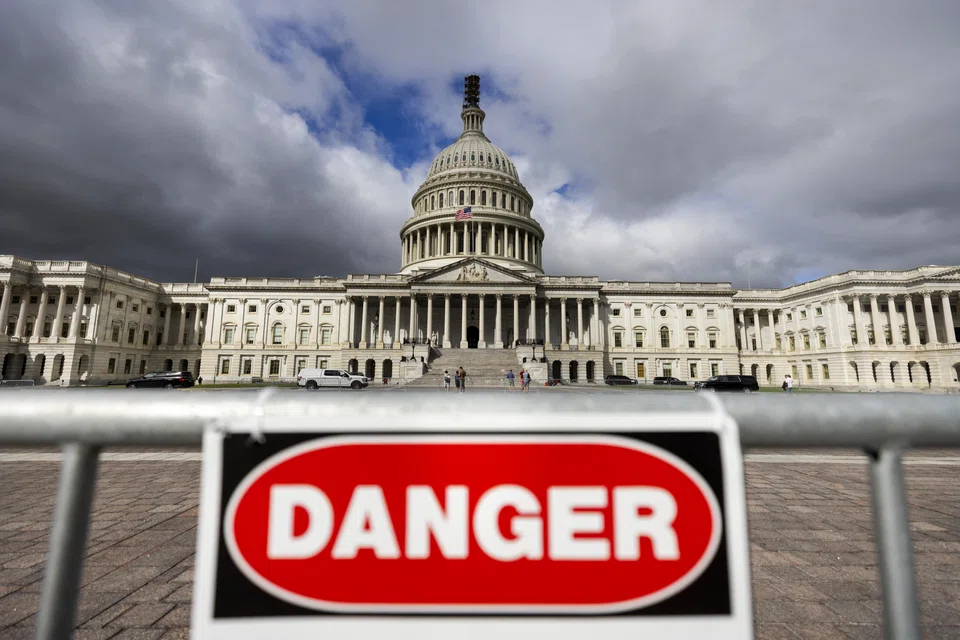
THIS week, leaders of the Republican-controlled House of Representatives are trying to persuade a small group of right-wing rebels to support legislation that would provide short-term funding to the US federal government.
The current spending law expires on Saturday (Sep 30). So unless House Speaker Kevin McCarthy succeeds in defusing the demands of these Trumpist lawmakers – who seek to make aggressive spending cuts – the government will shut down at 12.01 am on Sunday, with hundreds of thousands of federal workers set to be furloughed.
The current stand-off is part of another brinkmanship game that has become part of the Budget legislative process in Washington. The process is meant to determine how to allocate a certain amount of money, with this being stipulated by law or agreement between the parties.
Last year, under pressure from House Republicans who threatened to force America to default by not raising the statutory limit on debt, President Joe Biden signed legislation that set caps on the government’s so-called “discretionary spending”. This is spending that does not include entitlement programmes, particularly the retirement programmes Social Security and Medicare.
Now, a small group of far-right Republicans, most of whom are supporters of former president Donald Trump, argue that those caps are too high.
They want to cut federal discretionary spending back to the 2022 level. That would mean cutting more than US$100 billion from government agencies each year. The US spends more than US$6 trillion every year.
Both Democrats and Republicans agree not to make any cuts in entitlement programmes, and are also not inclined to cut spending on military and veterans’ benefits. This means that most of the cuts would have to be in spending on domestic social and education programmes, such as public education and assistance to the poor.
Blocking the way
Last week, the Trumpist Republican group twice blocked a vote to advance the defence appropriation bill – one of 11 spending bills that have yet to clear the House – and demanded that the US cut spending on aid to Ukraine. Yet they also seek to increase spending on immigration enforcement, and reject the idea of reversing the tax cuts made under the Trump administration.
McCarthy recognises that with a narrow 221-212 majority in the House, the Republicans do not have much room to manoeuvre, since any Budget appropriation agreement would have to be made with the Democrats who also control the Senate.
Most opinion polls suggest that voters are going to blame the Republicans for a possible government shutdown, which could hurt the party in the coming congressional and presidential election.
According to an article in The Washington Post, Goldman Sachs economists estimate that in combination with imminent student loan repayments and ongoing strikes, a government shutdown could shave off more than 1 per cent of annualised economic growth in the fourth quarter.
The shutdown itself is expected to cut 0.2 per cent of annualised gross domestic product growth per week – mostly from reduced government spending, but also spillovers to businesses.
McCarthy thus seeks to achieve a short-term spending deal – for two weeks to two months – so that the government can remain funded while negotiations on the Budget continue.
The goal is to eventually pass a continuing resolution, with which spending in the new fiscal year can continue at the prior year’s level.
But the Trumpists, led by Florida Representative Matt Gaetz, have indicated that they would not support a continuing resolution. They are ready to have a showdown with the Biden administration, even if it means shutting down the government.
Moreover, Gaetz and his allies insist that they could challenge McCarthy’s authority and call for him to be discharged, if he decides to take steps to compromise with the Democrats.
Despite the Republican rebels’ talk about cutting spending and reducing the deficit, the consensus in Washington is that their proposals would do little to erase the national debt – which has risen with interest rates, with the deficit doubling in a year to US$2 trillion.
This deficit will continue to grow unless both the Republicans and Democrats decide to impose cuts on the entitlement programmes – expected to cost more than US$3 trillion over the next decade – and reduce spending on defence. Don’t hold your breath.
TRENDING NOW

Two Singapore-listed palm oil firms named in Greenpeace report on Indonesian plantation fires

Singapore Airlines flight returns to San Francisco after ‘unruly’ passenger incident

Singapore looking into which companies responsible for haze-causing fires: PM Wong

Deluge IPO 3.86 times subscribed ahead of SGX debut

