Trump’s India squeeze to push Russian oil further into the shadows
In the shadow market, Russian crude’s country of origin would be obscured, meaning it could end up in many places
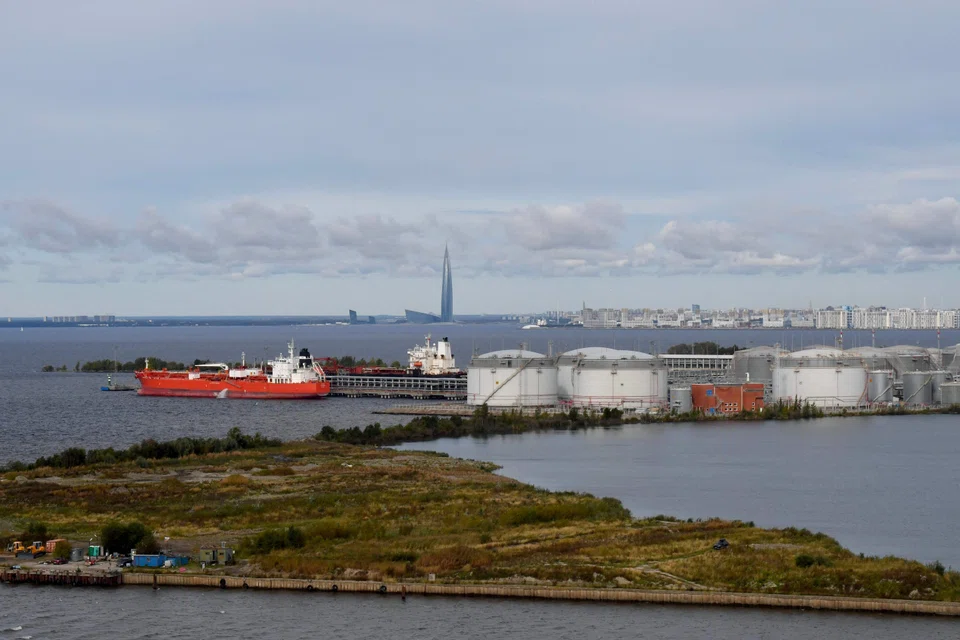
[LONDON] Donald Trump is putting more pressure on India to slash its Russian oil purchases. This could deprive Moscow of vital revenue, but it will mostly just push more Russian oil into an increasingly large shadow market.
The US president said last Wednesday (Oct 15) that Indian Prime Minister Narendra Modi had pledged to stop buying oil from Russia, an agreement India has yet to confirm.
The South Asian country has become a major trade buyer of Russian oil since Moscow’s invasion of Ukraine in 2022. It purchased 1.9 million barrels per day (bpd) of Russia’s crude in the first nine months of 2025, 40 per cent of its total exports, according to the International Energy Agency.
This US pressure on New Delhi comes as Kyiv has been striking Russia’s energy infrastructure. Moreover, Trump appears to be focused once again on resolving the conflict in Ukraine after negotiating a ceasefire in Gaza. He announced last week that he and Russian President Vladimir Putin will be meeting for another summit after a “successful” phone call.
This all suggests that we may be entering a new stage in the West’s efforts to squeeze the Kremlin. So barring a breakthrough at the upcoming summit, the pressure on India to trim its Russian crude purchase is unlikely to let up.
A financial hit
India probably will acquiesce to US pressure as part of a broad trade deal.
Washington has already hit Indian goods with a 25 per cent import tariff in retaliation for New Delhi’s purchases of Russian oil. Indeed, some Indian refiners are already preparing to cut Russian oil imports, though any drop will not be visible before December at the earliest.
Meanwhile, Indian refiners face another challenge. The European Union will impose a ban on imports of fuel refined from Russian crude as at Jan 21 next year. Europe accounts for more than a third of India’s diesel and aviation fuel exports.
The new US and EU measures will likely be financially painful for India’s refineries, as they have been enjoying healthy margins by buying Russian crude at significant discounts to international prices.
And the two countries’ energy markets are already heavily intertwined.
Private refiner Reliance, which operates one of the world’s largest refining complexes in western India, last year signed a giant 10-year deal with Russian state-owned oil firm Rosneft to supply nearly 500,000 bpd of crude.
Rosneft also owns a 49 per cent stake in another major Indian refiner, Nayara Energy, whose 400,000 bpd Vadinar refinery relies exclusively on Russian oil imports. It already faces EU and British sanctions, which have caused it to reduce its operating rates, though it is unlikely to fully cease importing Russian crude.
China to the rescue?
But let us assume that India can severely cut its Russian oil purchases, even if it cannot reduce them to zero. What would happen to the Russian crude volumes India stops buying?
First, Chinese refiners may opt to increase their purchases, particularly if the discount with international prices widens.
China remains the biggest buyer of Russian oil, importing 2.1 million bpd between January and September via land and sea, roughly 18 per cent of the country’s total crude imports. It has also tightened its energy ties with Moscow this year and is importing liquefied natural gas from a heavily sanctioned Russian plant.
Yet, Beijing has historically refrained from relying on one country for more than 20 per cent of its oil imports. So, by that measure, refiners would likely have little capacity to increase Russian barrels that India could reasonably be expected to reduce.
Moreover, Trump is also putting pressure on China to reduce Russian oil purchases amid simmering trade tensions between the world’s two largest economies. Beijing might therefore be wary of further provoking Washington, particularly given that it can already buy crude at attractive prices.
Into the shadows
Any remaining Russian barrels will thus likely move into the rapidly growing shadow market.
Russia has developed a vast network of ageing tankers to evade international sanctions. In September, 69 per cent of Russia’s seaborne crude exports were carried on “shadow fleet” tankers, according to the Centre for Research on Energy and Clean Air.
This vast trade scheme often uses ship-to-ship oil transfers in mid-ocean to obscure the oil supplies’ origins.
It is therefore likely that any Russian oil that would typically have gone to India directly will simply end up in the shadow market. At that point, its country of origin would be obscured, meaning it could end up in many places, including India.
To be sure, the loss of a major market such as India will certainly narrow Russia’s pool of buyers, forcing it to sell oil at bigger discounts, eating into Moscow’s revenue. Already, lower oil and gas prices are hitting Moscow’s budget.
But the West’s efforts to squeeze Russia’s vast oil industry are unlikely to lead to a drop in Russian production or exports. They may simply reduce visibility in what is becoming an increasingly opaque market. REUTERS