Trump’s moves on the Korean peninsula are examples of how not to do diplomacy
By alienating Seoul while courting Pyongyang, he risks dismantling vital US-Asian strategic alliances
US PRESIDENT Donald Trump’s administration has spent much time in recent months reassuring Asian allies of enduring US support for the region.
However, those efforts were almost cancelled out in a single stroke when he, diplomatically speaking, shot himself in the foot in his extraordinary interventions over South Korea.
Europe has long been the primary target for his tirades against US allies. But Seoul got a strong taste of this tough love on Aug 17.
The US president cut short the annual bilateral military drills hours before they were due to begin, amid his criticism of the cost of these exercises and South Korea’s relationship with its northern neighbour.
Seoul is understandably smarting at these remarkable developments.
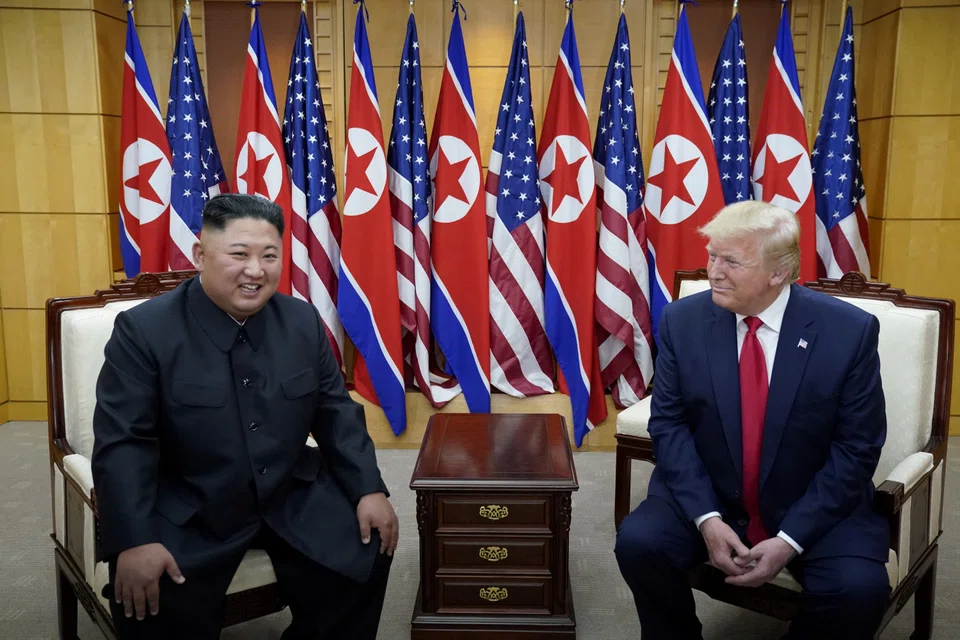
The wounds were aggravated, given his later confirmation that he will try to meet Chairman Kim Jong Un, the supreme leader of North Korea, around November when he travels to Shenzhen, China for the Asia-Pacific Economic Cooperation summit.
Against longstanding US diplomatic protocol, Trump also publicly stated that Washington believes North Korea has 57 “very powerful” nuclear weapons.
These events confirm how much the traditional partnerships of the US with its allies, whether in Asia, Europe or beyond, have changed in the Trump era.
His team is demanding wider concessions from allies, in return for US collaboration, whether that be military assistance for the unpopular Iran war, or more favourable economic terms such as slashing tariffs on US imports.
Even if one agrees that he has legitimate concerns about the bilateral exercises in Seoul, his manner of expressing this in such a public and condescending way is self-defeating.
Speaking at the Oval Office, referring to South Korea, the US president said: “We have 39,000 soldiers over there, guarding you from Kim Jong Un, your next-door neighbour, and you’re not going to help us on a very easy military operation in Iran. That’s strange.”
As ever, his statement needs more context. Currently, there are about 28,500 US troops in South Korea, going by figures from the US Congress. Seoul is scheduled to pay Washington some US$1.1 billion in 2026 of the estimated US$5.5 billion to US$6 billion that it costs to station them in the country.
Beyond embarrassing South Korea diplomatically, Trump’s tirade has set back the recent and extensive efforts by his team to reassure Asian allies about US intent in the region.
At July’s Asean Foreign Ministers’ Meeting in the Philippines, for instance, Secretary of State Marco Rubio pledged some US$2.5 billion in strategic investments in South-east Asia.
US Secretary of War Pete Hegseth’s keynote speech at Singapore’s Shangri-La Dialogue in May, meanwhile, emphasised the centrality of the region to Washington, amid an “imminent” security threat from China.
Yet, much of the success of that outreach, which was also designed to ease tensions over issues such as Trump’s tariffs, has now been undercut in what amounts to a diplomatic masterstroke – in reverse.
Trump’s overtures to North Korea
Asian allies have queried the logic of re-engaging Kim, after Trump’s first three meetings from 2017 to 2021 failed to produce any diplomatic breakthrough.
The prospect of delivering a sustained de-escalation of tensions in the world’s last Cold War-era frontier – through the prize of verifiable and comprehensive North Korean denuclearisation – is slim.
Since Trump’s summits with Kim, Pyongyang’s weapons programme has only grown in size and sophistication, potentially widening the negotiating differences between the two sides.
Today, as in Trump’s first term, the central challenge over any meaningful diplomatic process with Kim is differing US and North Korean interpretations of what exactly would constitute “denuclearisation” on the peninsula.
To Trump, this appears to mean unilateral disarmament.
Yet, for Kim, it seems to be a metaphor for a negotiation process in which Pyongyang is treated as an equal to the US, which would give him further propaganda victories.
In this context, he will continue to be wary about committing to specific time frames – wanting to win further concessions from Trump before reducing Pyongyang’s nuclear capabilities – let alone committing to full denuclearisation.
Like Trump’s first term, it is far from clear what, if any, possibility there is to move the process forwards.
One reason Pyongyang will not move far or fast in its positioning is that Kim, not Trump, emerged as the bigger beneficiary of their previous engagements.
The North Korean leader made few concrete concessions, while Trump, during his first term, called off joint military exercises between US and South Korea in 2018.
The US president also held out the prospect of easing of sanctions on Pyongyang if it did “something meaningful” on denuclearisation.
Trump’s takedown of South Korea is a masterclass in how not to do diplomacy, and, in combination with his turn to Pyongyang, the damage he is doing to US alliances in Asia is significant and may outlast his second term.
The writer is an associate at LSE IDEAS at the London School of Economics