Trump’s opening salvo on tariffs: Is he declaring war or applying a negotiating ploy?
It would be more appropriate to envision him as a mercantilist who always tries to test the boundaries of each action and eventually respects their limits
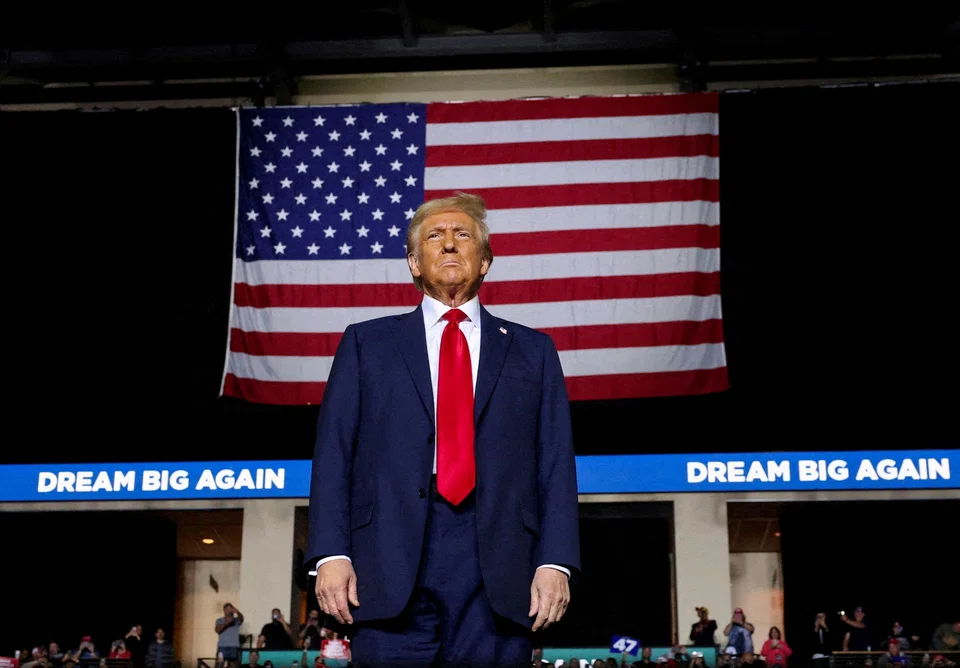
US PRESIDENT-ELECT Donald Trump announced on social media late last Monday (Nov 25) that he would slap tariffs of 25 per cent on Canada and Mexico and an additional 10 per cent on China.
So was Trump sending a clear message to America’s trade rivals and partners that he would govern as he campaigned, as a mercantilist? He is in charge, including of the economic agenda, and was committed to fulfil his campaign’s populist vows.
The financial markets took the prospect of the new tariffs in stride. Shares of car makers were hit hard but the fall in the Canadian dollar and Mexican peso was muted and the major broad indexes of stock pushed higher on Tuesday following Trump’s comments.
So do the markets know something that we don’t? The conventional wisdom is that investors had learned lessons from President Trump’s first term in office when he launched geo-economic threats on social media, sparking big swings in stocks that would unwind when negotiations took place, and then he would de-escalate. The conclusion: He produces a lot of bluster that he then walks back.
So is Trump a disrupter when it comes to trade – or perhaps we should consider his nomination of hedge fund manager Scott Bessent as his Treasury secretary and expect Trump 2.0 to embrace the kind of market-friendly policies it did during Trump 1.0?
Selecting Bessent – who is hawkish on deficits and circumspect about tariffs – as the top economic person in the administration would suggest that the president-elect would put priority on market-friendly policies aimed at boosting economic growth and holding down inflation and interest rates. Which is another way of saying that Trump isn’t going to launch a series of trade wars whose outcomes run contrary to those goals.
At the same time, Trump has nominated as his US Trade Representative Jamieson Greer, a trade lawyer who served as chief of staff to the US Trade Representative in Trump’s first term and is an assertive trade warrior.
Bessent was known to belong to the school of thought that regards trade tariffs as a bargaining chip although he recently seemed to adopt a more protectionist perspective.
Indeed, he wrote in an op-ed last month that, “used strategically, tariffs can increase revenue to the Treasury, encourage businesses to restore production and reduce our reliance on industrial production from strategic rivals”.
But instead of wondering whether a President Trump would be a trade warrior or a free trader, it would therefore be more appropriate to envision him as a trade haggler, a mercantilist who always tries to test the boundaries of each action and eventually respects their limits.
From that perspective, last week’s threatening rhetoric was an attempt to see how governments and markets react to his policies and implement them in accordance.
In the case of Mexican and Canadian markets, Trump’s main concern has been that China has been using Mexico as a way into the American consumer markets and US companies put production in Mexico as a means of coping with deteriorating US-China relations.
So perhaps president-elect Trump is preparing a path to renegotiating the United States-Mexico-Canada Agreement in a way that would favour US economic concerns. He is putting pressure on the two US neighbours to consider that as an option in the future after he enters the White House instead of having those punishing tariffs imposed on them. We got a bargain!