

Trump’s revamped tariff wall is solidifying with new statutes
Fresh tariffs resulting from the US’ forced labour investigations reveal a troubling direction of travel
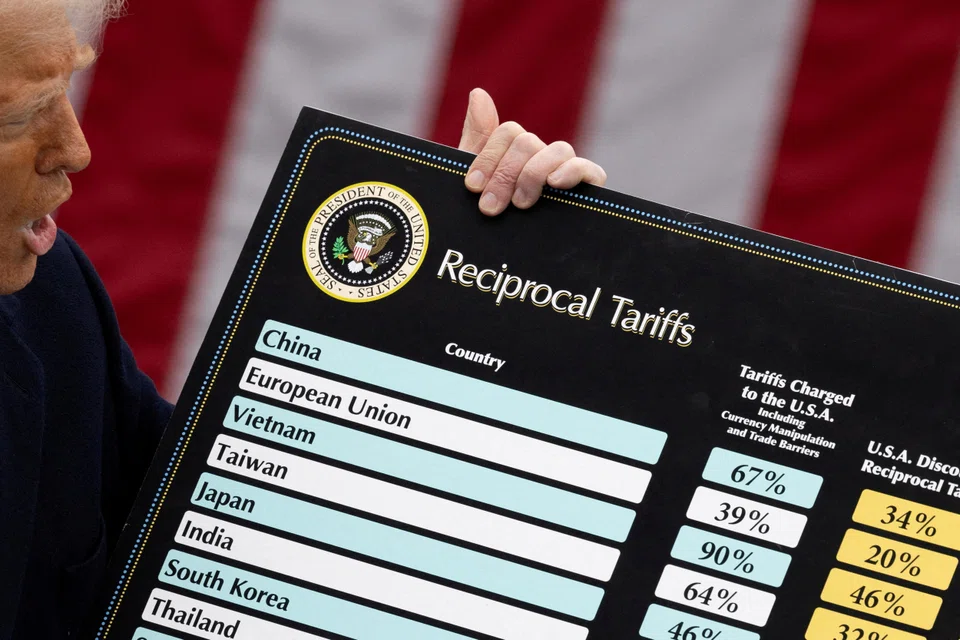
[SINGAPORE] Amid the expiration of the Section 122 tariffs and a flurry of threats that failed to materialise, it is tempting to dismiss US President Donald Trump’s tariff plans with a now-infamous acronym: Taco, or “Trump Always Chickens Out”.
As a Bloomberg Economics analysis found, 39 of the 63 tariff threats made between November 2024 and July 2026 were either withdrawn or have yet to be imposed.
These can be attributed to economic considerations or legal challenges, especially after the Supreme Court ruling in February 2026 that denied the International Emergency Economic Powers Act (IEEPA) as a justification for tariffs.
However, it is premature to assume that all of Trump’s tariff threats are hollow. Under the auspices of Section 301 of the Trade Act of 1974, the investigations into forced labour, excess capacity and lax copyright enforcement contain far more procedural certainty than the IEEPA tariffs.
On Jul 24, 2026, the forced labour investigation resulted in 10-12.5 per cent tariffs for 60 US trade partners, including Singapore. More of such investigations are in progress or planned.
The use of Section 338 of the Tariff Act of 1930, better known as the Smoot-Hawley Tariff Act, also points to an alternative legal basis for protectionist ad hoc tariffs.
While temporarily derailed, Trump’s tariff policy has evolved to become more differentiated. Though there remain open questions about the tariffs’ overall economic impact and legality, they pose a challenge to trade activities that regional governments cannot ignore.
The rise and fall of IEEPA
Trump wields tariffs as both an economic and diplomatic tool, with goals ranging from raising government revenue to creating leverage at the negotiating table. This has called for a legal rationale that is flexible enough to justify tariffs on dozens of countries, and fast enough to justify more individual, ad hoc tariffs that can be launched at whim.
The IEEPA, which authorises the US president to regulate international commerce in the event of a national emergency, met both of these needs.
By declaring issues such as bilateral trade deficits and drug flows to be national emergencies, Trump could fulfil his need for flexibility and speed in deploying tariffs.
This act became the basis for many tariffs, from the “reciprocal tariffs” on Liberation Day in April 2025 to various ad hoc ones launched against parties such as China and Canada in February 2025 and India in August 2025.
However, the framework crumbled following the US Supreme Court decision in 2026. Rather than ruling on whether those situations constituted actual emergencies, the Court declared that IEEPA does not authorise the president to impose tariffs in any instance.
Yet this ruling proved to be only a temporary setback, as the Trump administration promptly recalibrated their tariff approach.
Rebuilding the tariff wall
In March 2026, the Office of the United States Trade Representative (USTR) launched investigations under Section 301 into accusations of forced labour and excess capacity in 60 and 16 US trade partners, respectively.
These tariffs are ostensibly meant to recreate the flexibility and widespread use of IEEPA tariffs.
Only the results of the forced labour investigation have been announced so far, with all 60 trade partners receiving tariffs between 10 and 12.5 per cent. Nonetheless, other investigations are underway.
In May, the USTR launched an investigation into alleged failures in intellectual property enforcement in Vietnam. A separate investigation into pharmaceutical pricing practices in Germany started in June.
The recent usage of Section 338 to impose a new 50 per cent tariff on roughly US$20 billion of Canadian imports further demonstrates how the Trump administration might revisit a century-old statute to pursue his policy goals.
There are structural similarities between Section 338 and Section 301, with both authorising the president to impose tariffs based on discriminatory practices against US economic activities.
A key difference is that Section 338 does not mandate a lengthy investigative process, making it a swifter and more suitable diplomatic tool.
A longer-term challenge
One reprieve for South-east Asian governments amid an otherwise erratic US trade policy is its increasingly discriminate application. By carving out extensive product exemptions, the policy seeks to avoid triggering widespread economic disruption.
The Section 301 forced labour investigation, for instance, had a 75-page long list of exemptions, and the final verdict saw the list swell to nearly 300 pages.
Singapore reported that only one-third of its exports to the US will be affected by the forced labour tariffs. In Thailand and Vietnam, roughly half of their total export value and export volume, respectively, will be affected.
Still, the tariffs will impact industries such as frozen seafood in Thailand, but their overall economic impact is likely to be limited.
Furthermore, these tariffs are by no means legally bulletproof. It remains unclear whether the Court will agree that Congress ceded its tariff authority to the president under Section 301 and Section 232 for such widespread purposes.
There are also questions over whether Section 338 tariffs require a prior investigation, or if the statute has been superseded by subsequent trade law or agreements.
Yet, governments should not underestimate these new tariffs. Despite the presence of public hearings, commentators have voiced growing suspicions that the outcomes of Section 301 tariff investigations are predetermined.
As US Treasury Secretary Scott Bessent remarked, Section 301 tariffs are meant to “get us back to the same tariff level (as under IEEPA)… in a less direct and slightly more convoluted manner”.
Over time, because Section 301 tariffs seem more likely to hold up to legal scrutiny, more of these tariffs could accumulate and cover larger portions of a country’s export profile.
Granted, not all of Trump’s tariff threats may eventually be implemented, and it remains to be seen whether Section 338 will be deployed against South-east Asian economies. Yet, the structures to support a post-IEEPA tariff approach are already coalescing.
South-east Asian governments should recognise the danger and intensify their efforts to diversify their trade connections and reduce their vulnerability to such disruptions.
The writer is an associate research fellow with the US programme at the S Rajaratnam School of International Studies, Nanyang Technological University, Singapore
TRENDING NOW
World’s largest offshore wind platform by Seatrium consortium on track to be completed by 2028
Is stamp collecting enjoying an analogue revival or are its best days over?

GovTech retrenches another 38 staff in second round of layoffs
MBS adjusted property Ebitda falls 20.6% in Q3 with fewer high-roller visits, weaker hold

