

Trust is not branding: What Indonesia’s recent market turbulence really reveals
In a global financial system that prizes transparency, data reliability and predictability, institutional credibility matters
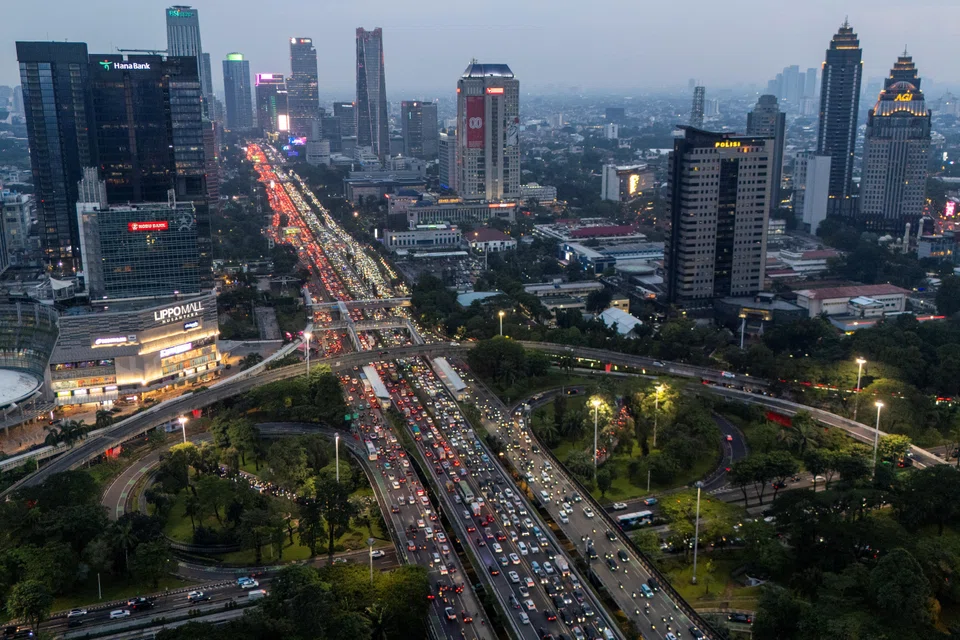
INDONESIA has had a bruising start to the year.
A string of high-profile startup scandals has shaken confidence in the country’s once-celebrated tech ecosystem. Global index provider MSCI has warned that Indonesia risks being reclassified as a frontier market, triggering a sharp sell-off in equities and pressure on the rupiah.
Most recently, Moody’s revised Indonesia’s sovereign rating outlook to negative, citing concerns around policy predictability and governance.
At first glance, these developments appear unrelated. Startup fraud sits in the private markets; MSCI deals with public equities; sovereign ratings are the domain of macroeconomists and debt investors.
But taken together, they tell a more coherent – and more uncomfortable – story. This is not a crisis of growth, talent or ambition. It is a crisis of trust.
Only a few years ago, Indonesia’s technology champions were showcased as symbols of national progress. Venture capital flowed freely, founders were celebrated as nation-builders, and “growth at scale” was the prevailing mantra.
“Indonesia’s challenge is not to ‘create’ trust, but to translate relational trust into institutional credibility, without dismantling the networks that allow the economy to function.”
That optimism has now been punctured by allegations of weak internal controls, double book-keeping and governance failures across several high-profile startups.
Importantly, this is not an indictment of technology or venture capital as asset classes. Risk capital, by definition, backs ideas that may fail. Many Indonesian startups have delivered genuine social and economic value.
What failed was not technology, but governance.
During the boom years, corporate controls were often treated as a formality. Independent commissioners existed on paper but lacked authority. Audits were cursory. Legal and compliance functions were expected to keep pace with deal velocity, not slow it down.
When liquidity was abundant, these weaknesses were easy to ignore. When conditions tightened, they became impossible to hide.
When trust erodes, markets react
The consequences did not remain confined to the startup ecosystem. MSCI’s intervention was a reminder that global capital is both vast and unforgiving.
Its warning was not that Indonesia is collapsing, but that foreign investors may struggle to buy, sell and price Indonesian equities in a transparent and predictable way.
For rules-based funds managing trillions of dollars, that distinction is irrelevant. Risk is risk.
The result was swift: Index adjustments were frozen, funds rebalanced, equities sold off, and the rupiah fell to near-record lows as capital exited.
Shortly thereafter, Moody’s flagged similar concerns at the sovereign level. What began as questions about governance in startups had, in the eyes of global markets, become a country-level issue.
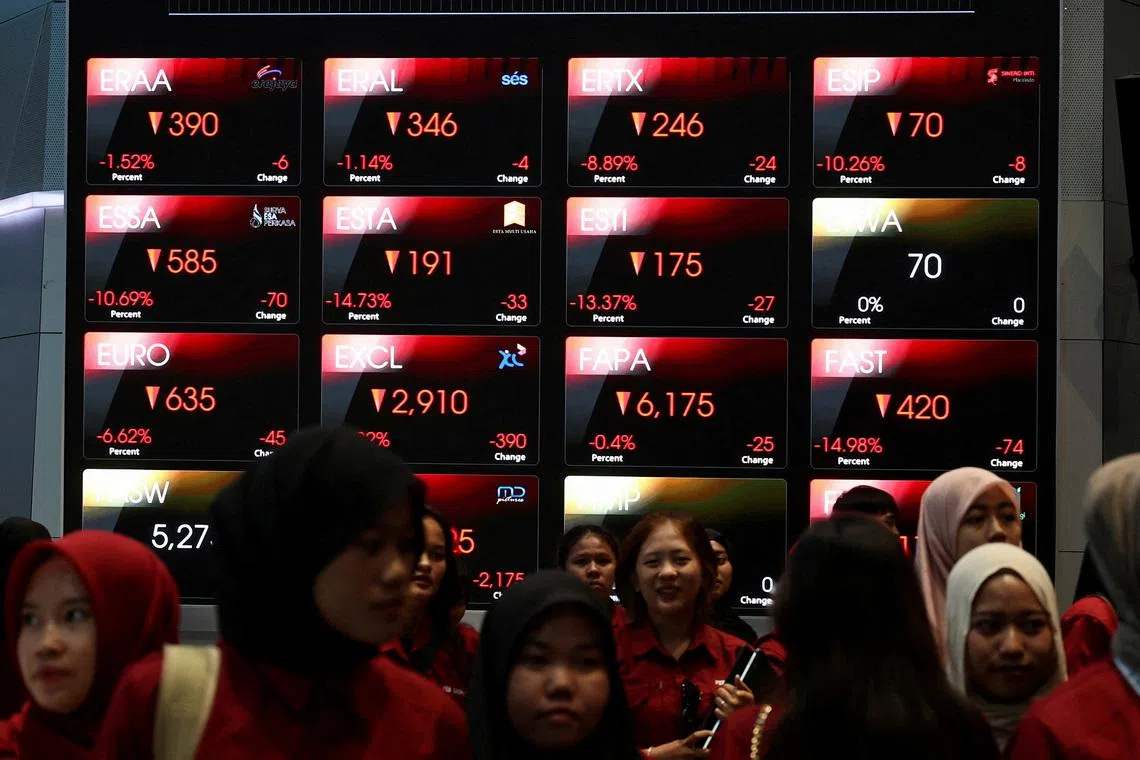
And so, the trust failures compounded, because markets do not treat opacity as an isolated flaw. Once it appears systemic, markets escalate their response.
There is a tendency to talk about trust as an abstract or moral idea. Something adjacent to branding, reputation or environmental, social and governance factors. That framing is outdated.
Trust is liquidity. It affects borrowing costs, exit valuations and capital flows. It determines whether investors lean in during periods of volatility or step back.
In today’s environment, where capital is more selective and geopolitics more fragmented, trust has become a macroeconomic variable.
Crucially, trust is forward-looking. Ratings agencies and index providers are less concerned with yesterday’s financial results than with tomorrow’s decision-making.
Once policy predictability, institutional credibility or governance standards are questioned, risk premiums rise, even if fundamentals remain sound.
Different trust architectures
It is tempting, particularly from outside Indonesia, to frame this moment as evidence of a “trust deficit”. But that diagnosis misses something important.
Indonesia does not lack trust. It has a different trust architecture.
In Singapore, trust is primarily institutional. It resides in courts, regulators and predictable processes. Outcomes are impersonal and legible to outsiders. You do not need to know the minister, the judge or the deputy governor’s uncle. You only need to know the rules.
Indonesia’s trust evolved under different historical and political conditions. Where institutions have been inconsistent and laws fluid, trust has naturally migrated into families, networks and personal relationships.
These bonds are strong, resilient and, once established, can be very efficient, but they are also contextual and non-portable.
Institutional trust attracts outsiders. Relational trust protects insiders. Both systems are internally coherent. But only one scales easily in a global financial system that prizes transparency, data reliability and predictability.
Indonesia’s challenge, therefore, is not to “create” trust, but to translate relational trust into institutional credibility, without dismantling the networks that allow the economy to function.
That is a far subtler task than importing governance frameworks wholesale, or reacting defensively to external criticism.
It requires strengthening institutions so that they complement, rather than displace, existing relationships. It requires leadership that treats scrutiny not as a personal affront, but as a feature of credibility.
And it requires recognising that governance is not an obstacle to growth, but its precondition.
Indonesia has navigated moments like this before. The fiscal and monetary frameworks rebuilt after the Asian financial crisis are testament to the country’s capacity for reform.
The question now is whether trust is treated as foundational infrastructure, or deferred until the next cycle.
Global capital is not drawn merely by what a country produces, but also by how reliably its systems function under pressure. Transparency and predictability are what allow investors to stay when conditions turn.
And in today’s markets, confidence evaporates far faster than balance sheets can adjust.
The writer is a partner at Withers KhattarWong. He heads its Indonesia practice.






