

Turnberry deal won’t fix transatlantic trade. But it’s a start
Despite lopsided terms and political friction, the US-EU deal can help prevent another inflationary spiral
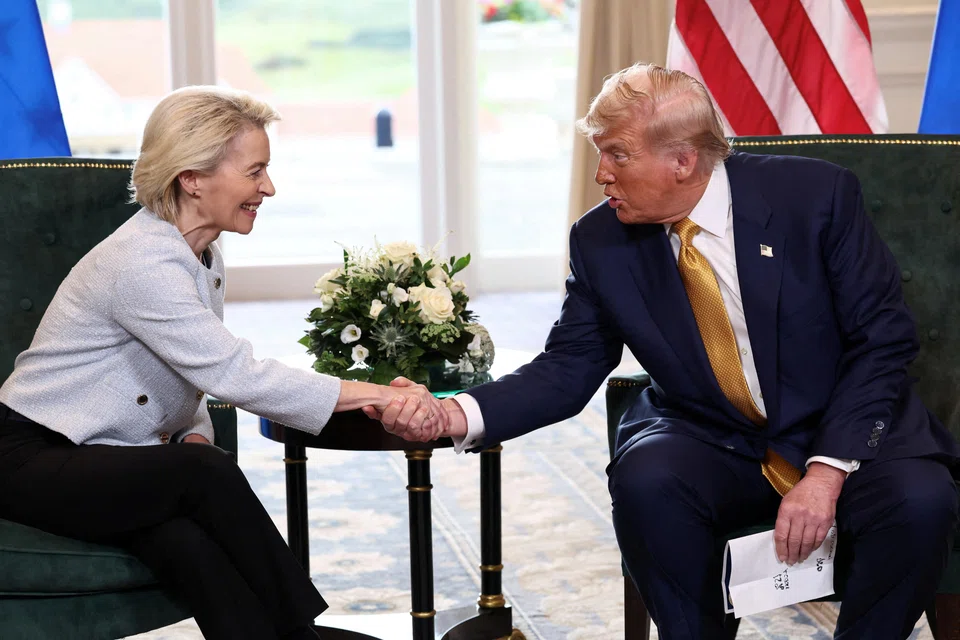
IT TOOK months of threats, legal chaos and mutual recrimination, but Europe has finally agreed on a text to ratify the Turnberry trade deal struck with the US last July in Scotland.
Both the European Parliament, which is expected to vote in June, and the White House, which has threatened to reject any amendments added by European officials, now need to give their assent.
Both should do so without further haggling, and focus instead on ways to deepen the world’s most important trade relationship.
The economic stakes are real.
Transatlantic trade – worth US$1.5 trillion a year – has been living under escalating threats. Even after the US Supreme Court invalidated the so-called “Liberation Day” tariffs, the administration used two other trade authorities to impose duties of 25 per cent or 50 per cent on the full value of steel, aluminium and certain derivative goods imported from Europe.
The administration also launched a series of trade investigations that could lead to additional levies, and has vowed to impose a 25 per cent tariff on European autos if a deal is not in place by Jul 4.
The Turnberry agreement is lopsided.
The deal would lock in zero tariffs on most US industrial exports to Europe while allowing duties on European Union goods up to 15 per cent.
Nor can European leaders pretend that ratification will resolve the underlying uncertainty.
Turnberry was always more a political statement than a traditional trade agreement – with no binding dispute settlement, no congressional authorisation, and commitments that depend on the whims of a mercurial US president.
That is why European Parliament members sought to add safeguards to the text.
Moving forward
Even so, ratification is the right call for both sides. An agreement would help avoid another inflationary escalation cycle.
EU officials have indeed introduced a few new caveats: the deal now extends to the end of 2029, and preferences can be suspended under certain conditions – including if the US does not reduce its steel and aluminum tariffs to 15 per cent by the end of the year, or if US imports are deemed to threaten “serious injury” to EU producers.
While the White House has been insisting on a clean text, it should be able to live with such language. In addition to zero tariffs on industrial goods, the deal expands preferential access for certain US agricultural and seafood products.
Ratification would also put the US in a better position to insist on the removal of non-tariff trade barriers, where the EU has been slow to act.
Most importantly, concluding the deal would allow Europe and the US to move forward in other areas of critical importance. Both want to address Chinese overcapacity and build secure supply chains.
In many areas, including steel and critical minerals (where the EU and US recently signed a memorandum of understanding to deepen cooperation), their defences would be far more effective if coordinated.
Healthier trade relations would also make it easier to jointly address geopolitical questions, including reopening the Strait of Hormuz and maintaining US troop levels in Europe.
A transatlantic relationship organised around temporary tariff truces is too fragile for a relationship of such importance. Ratifying Turnberry is necessary. Building something sturdier is the larger task over time. BLOOMBERG
TRENDING NOW

DBS, OCBC, UOB rout lops billions off STI as inflation, rate concerns spook investors

Grab CEO’s wife Chloe Tong on life with Anthony Tan and finding her purpose

OCBC sheds S$8 billion in value as shares close nearly 6% down; analysts cautious on banks

Deal between tycoon friends sparks scrutiny of Philippine power sector

