

The UK can find its way in Trump’s America
Britain must think strategically about trade and investment to set the right tone with the incoming US president
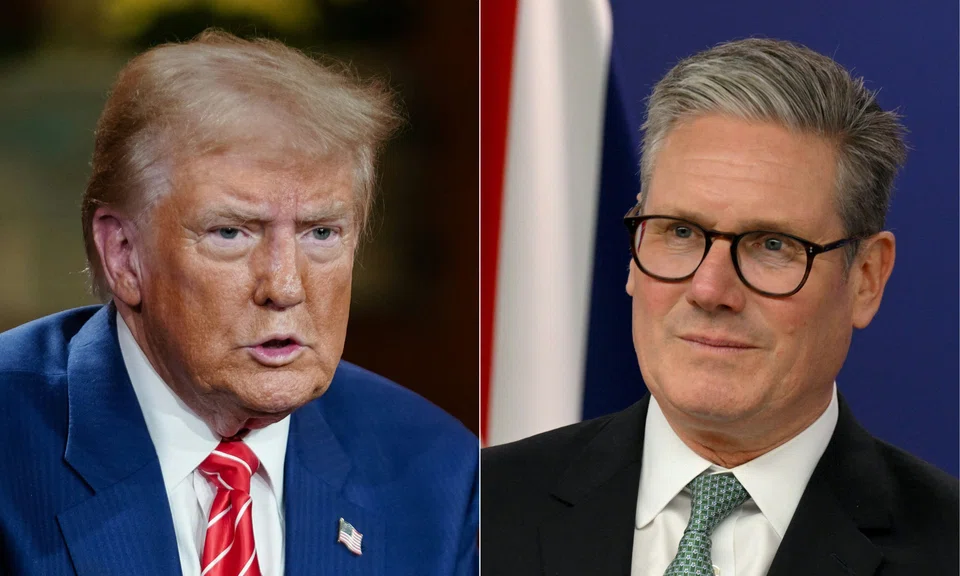
WHAT happens in the US economy does not always stay there, particularly when it comes to the UK.
With this in mind, a delicate balance of pragmatism and strategic positioning needs to define the UK’s approach to economic relations with the US under the incoming Trump administration.
Britain cannot afford to mismanage this relationship, given its own economic and financial challenges. Its government must be agile, aiming not only to defend the domestic economy, but also to position itself to take advantage of any opportunities that emerge – and there will be many.
America is a vital partner. It accounts for nearly 20 per cent of the UK’s exports and imports, and a third of foreign direct investment (FDI) into the country.
British companies sold £188 billion (S$320.5 billion) of goods and services to America in the year through June 2024, and trade in the opposite direction amounted to £116 billion. FDI from the US totalled around £700 billion in 2022, and America is a major destination for UK investors, including sectors such as artificial intelligence and life sciences that will power tomorrow’s engines of growth.
This extensive trade and investment relationship makes the UK highly sensitive to US policy changes. It also means that the UK is in an inherently weak negotiating position. It does not rank among the top buyers of American exports, which include Canada, Mexico, China and Japan. Also, foreign trade is a lot less critical to a US economy that has ample domestic resources and more alternatives.
All this puts the UK government in a tricky position at a time when the incoming US administration seems inclined towards an economic strategy that combines inward-looking policies with pressuring trading partners. It is even more worrisome given the erosion in the UK’s economic and financial resilience.
Britain enters this new phase with the US with a wobbly economy and a less-than-reassuring outlook. Its domestic policy flexibility is limited. The use of fiscal tools to stimulate the economy, such as tax cuts or higher spending on public services and investment, is constrained by a sizeable budget deficit, higher borrowing costs and a large stock of debt.
Monetary tools, including interest rate cuts, must consider the risk of sticky inflation. Meanwhile, the implementation of much-needed structural reforms is yet to reach critical mass, leaving the UK mired in a low-productivity world.
It is unlikely that the private sector, while able, will compensate for these weaknesses. After an encouraging start, the new government has stumbled, undermining corporate and household confidence. Neither businesses nor consumers seem willing or able to drive the faltering economy.
Lacking resilience, the UK needs to be agile in how it handles its relationship with the US. Indeed, it has no choice but to think hard about the type of trade and investment concessions that will allow president-elect Donald Trump to declare some early wins in his quest to realign the country’s foreign economic relations.
It is best that this is pursued through informal channels before Trump assumes office on Jan 20.
In a similar vein, the Labour government should be less vocal in denying that there is a choice to be made between Europe and the US. This is one of those situations where less is more, and where a redirect is best: Say less about Europe and, instead, steer the narrative to a more obvious choice for the UK – that of the US over China.
Being agile is not just a defensive move, it also positions the UK well in a situation where US tensions with China continue and difficult negotiations with the European Union await.
Some of America’s trade and investment could be channelled to Britain. With France and Germany facing political uncertainties, the UK can join with the US to lead an economic “coalition of the willing”, offsetting the “axis of convenience” that risks expanding beyond China, Iran, North Korea and Russia.
While avoiding tensions is primarily in the interests of the US and UK, it could also have broader implications at a delicate time for the global economy.
American economic exceptionalism has been a reliable engine of global growth in the post-Covid years. Avoiding turbulence in one longstanding partnership as the Trump administration revisits America’s trade arrangements could limit some of the headwinds to that dynamic. BLOOMBERG
The writer, a former chief executive officer of Pimco, is president of Queens’ College, Cambridge; chief economic adviser at Allianz; and chair of Gramercy Funds Management. He is author of The Only Game in Town.
TRENDING NOW

Britain’s mansion tax shows the difficulty of targeting wealth

Once staunchly pro-China, Malaysian Chinese businesses are now distancing themselves from Beijing

The only common thing in S-E Asia is that we all eat rice: Cisco’s Asean president

Singapore data centre operator DayOne opts for US IPO at likely US$20 billion valuation

