Ukraine’s Europe allies still hold an ace card in US showdown
A region with a gross domestic product that is 10 times that of Russia’s is able to do more than it has so far
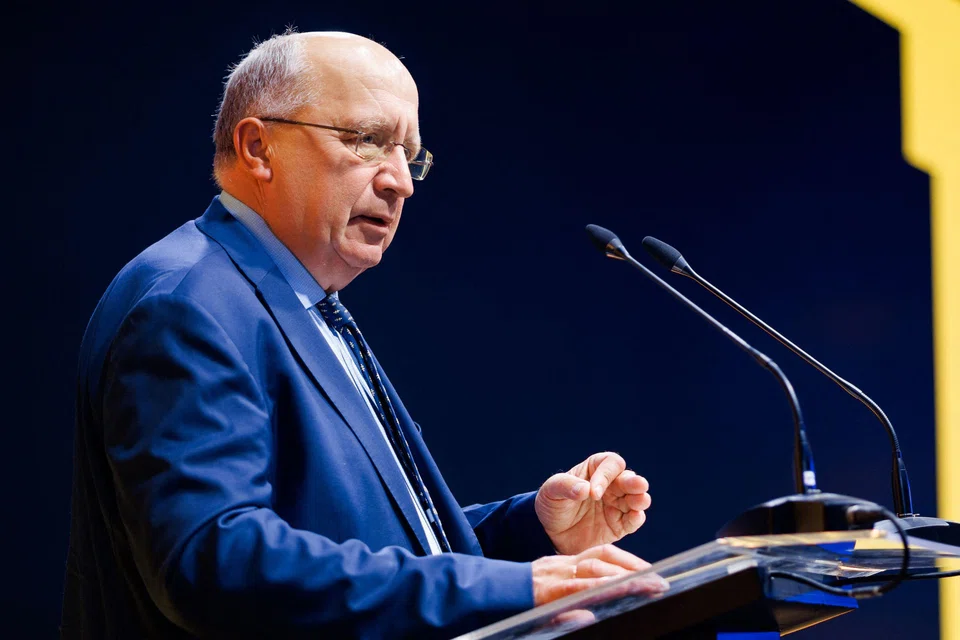
HAS the fate of Europe been decided in Miami? That was the fear this week, when European Commissioner Andrius Kubilius bemoaned “unacceptable” proposals hatched by the United States and Russia to end the war in Ukraine, and the fact that Europe seemed unable to lead with its own.
Kubilius said at an event in Strasbourg hosted by French magazine L’Express: “I’m tired of always discussing American plans. It would be better if we elaborated ours.”
It is easy to see where he is coming from. Even as pushback from the likes of Emmanuel Macron and Keir Starmer whittles down the Trump administration’s 28 humiliating points to 19 more palatable ones, the threat of a Carthaginian peace punishing Kyiv and sticking Europe with the bill has not gone away.
The frontline is in stalemate and Ukraine, which Trump insists does not “have the cards”, will run out of cash by February. European leaders’ deep dependence on the US for defence, energy and trade has relegated them to the role of spectator. US officials spent Monday berating the European Union for overregulating American firms.
It would be wrong to believe that Europe is completely card-less, though. Point 14 of the Witkoff-Dmitriev plan tries to nullify its best one by demanding that a substantial share of the US$300 billion of frozen Russian state assets – mostly sitting in Belgian clearinghouse Euroclear – be carved up between Washington and Moscow, and reinvested in reconstruction.
This apparently disappeared from subsequent versions, but there is no mistaking the intent. The US spies a lucrative way to claim a Trumpian win; Russia sees it as a vital way to deprive Kyiv of a lifeline. The response from Europe has been shock, anger and protest.
But it is time for action. A region with a gross domestic product 10 times that of Russia’s is able to do more than it has so far. Lingering objections to tapping these funds for a reparations loan – including from Euroclear, which fears for its own viability – can and should be overcome, either by offering guarantees to cash-strapped Belgium, or by finding an equivalent sum.
More dithering leaves the US an opening to twist European arms, argues Agathe Demarais of the European Council on Foreign Relations.
Leadership is required, ideally from both Germany and France, where a mega fighter-jet sale to Kyiv is on the cards. Despite Donald Trump’s claims otherwise, Europe is Ukraine’s chief financier.
Crossing the Rubicon on frozen assets should be accompanied by other funding no-brainers.
The price tag for Ukraine’s reconstruction will be about US$230 billion, Bloomberg Economics estimates. But Europe has to pay for its own rearmament, too, in the face of Putin’s belligerence. The continent needs solidarity if it is to stand on its own two feet in a Trumpian world.
Euro-area central bankers have called for more joint debt to finance common military spending. Given the grinding stagnation of Germany’s economy and France’s Budget crisis, this makes sense. BlackRock Inc’s vice-chairman Philipp Hildebrand is among those sketching out a new safe asset.
Putting cash on the table – whether by unfreezing the assets or other means – would recognise that Europe’s fate as a strategic actor is tied to Ukraine’s.
It would not suddenly deliver a military breakthrough on the ground. The hard reality is that ending this war will require concessions: Ukraine will have to accept some loss of territory, its military presence will come down and North Atlantic Treaty Organization membership still looks a bridge too far. Escalating a crackdown on corruption will be essential.
Still, given Moscow’s own pressures, with oil revenue vulnerable to a turning of the sanctions screw, Europe should do whatever it can to resist plans that look more like embittered capitulation than peace. Miami is a long way from Berlin and Paris – and it is no place to decide the continent’s fate. BLOOMBERG