

UltraGreen.ai right to move fast on Singapore listing instead of waiting for SGX-Nasdaq bridge
To drive its post-listing performance, the company should educate investors, lay out operational milestones and emphasise its competitive advantage

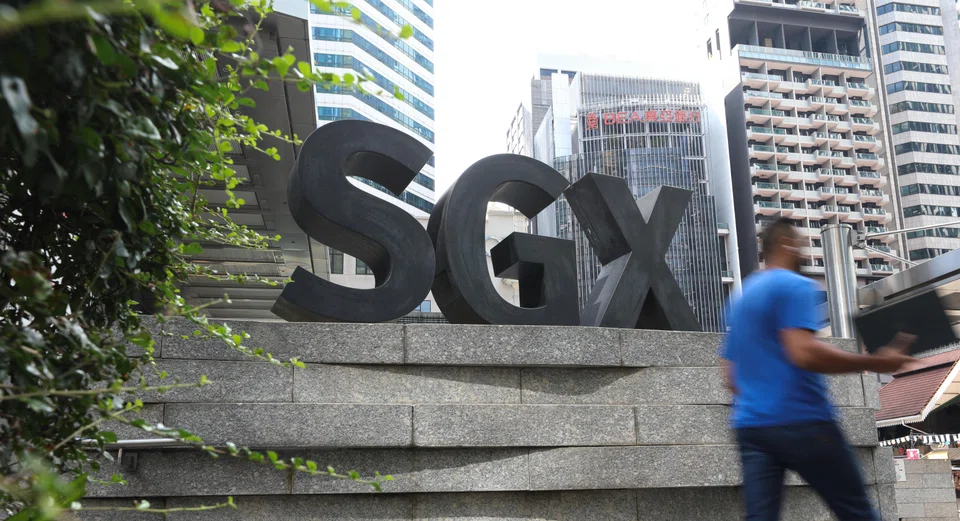
[SINGAPORE] As my newsroom colleagues pored over UltraGreen.ai’s listing prospectus last week, one of them wondered out loud why the company is choosing to list so late in the year, and not waiting for the “listing bridge” between the Singapore Exchange (SGX) and Nasdaq to go live in the middle of 2026.
The proposed dual listing programme, unveiled on Nov 19, will allow companies with market capitalisations of S$2 billion and above to simultaneously list on the two exchanges, with a single prospectus.
Companies that avail themselves of an SGX-Nasdaq dual listing would be tapping a broader range of investors, and may obtain a higher valuation for their shares than if they listed on SGX alone.
This might have benefitted UltraGreen.ai’s pre-initial public offering (IPO) backers, which includes a fund run by Temasek-linked 65 Equity Partners that has been helping to draw promising companies to the Singapore market.
From Info-Tech Systems to Yangzijiang Maritime Development, the market’s reception to every new listing this year has felt like a referendum of sorts on whether enough has been done to revive the local market, and restore its viability as a fundraising hub for growth-oriented companies with big ambitions. The listing of UltraGreen.ai is likely to be viewed through the same lens this week.
The reality, however, is that the timing of a company’s IPO often has more to do with its perception of market conditions than anything else. In my view, there are good reasons for companies eyeing a Singapore listing to move quickly, rather than wait for every recommendation of the Equities Market Review Group to be fully implemented.
Window of opportunity
For one thing, local market sentiment is as bullish as ever, with the Straits Times Index up more than 19.4 per cent since the beginning of the year, and influential research houses such as JP Morgan talking about DBS – which is the largest constituent of the benchmark index – re-rating “to a point where the stock becomes unjustifiably expensive”.
Yet, there are also concerns that valuations in the global artificial intelligence space are already unjustifiable, and that the US Federal Reserve may not deliver another rate cut at the conclusion of its next policy meeting on Dec 10. This could spell heightened market volatility that stretches into 2026, in my view.
UltraGreen.ai registered its prospectus on Nov 26, and it is scheduled to commence trading on the mainboard on Dec 3 – a full week before the coming Fed meeting.
Tellingly, it is not the only listing aspirant taking advantage of the current window of opportunity. Two Catalist-bound companies – Leong Guan Holdings and Infinity Development – recently registered listing prospectuses within a week of each other.
Infinity Development is scheduled to begin trading on Dec 3, while Leong Guan is expected to commence trading on Dec 11.
Fluorescence-guided surgery leader
The decision by UltraGreen.ai to just list in Singapore for now, instead of holding out for a higher valuation that a dual listing on Nasdaq might bring, could be a good thing for investors who participate in its IPO with a long-term view.
A total of 112.1 million shares are being offered at US$1.45 each, consisting of 103.4 million new shares and 8.6 million vendor shares. Of the total offering, 106.2 million shares will be sold through a placement while the remaining 5.9 million has been earmarked for a public offer.
Following this initial public offering (IPO), the company is expected to have more than 1.1 billion shares in issue. At the IPO price of US$1.45, its market capitalisation would be S$1.6 billion. This is equivalent to 28.6 times its 2024 net profit, and 31.2 times its annualised net profit for H1 2025.
This might seem high to many Singapore investors, but UltraGreen.ai has an interesting growth story.
The company describes itself as a global leader in the fluorescence-guided surgery (FGS) space. It produces a fluorescent green dye called Indocyanine Green (ICG) and related equipment that light up perfusions in the human body on a screen during surgical procedures. The company is also developing software and data platforms to help surgeons deliver better FGS outcomes.
To maintain its lead in the FGS sector, UltraGreen.ai is building out its supply chain and investing in its products. Of the US$150 million that the company will rake in from its IPO, US$55 million will be put towards capital expenditure and the development of its core products, while US$22 million will be used to fund strategic investments and acquisitions to support its geographical expansion.
A further US$64.8 million will go to general corporate purposes and working capital needs, while the remaining US$8.2 million will be used for underwriting fees and expenses related to the offering.
Communication is key
Despite the market’s bullish tone, only a few of the new listings this year have done really well. On Catalist, Lum Chang Creations is now trading 92 per cent above its IPO price, while MetaOptics is up 258 per cent. A good part of MetaOptics’ gain came after the company said on Nov 17 that it is seeking a dual listing on Nasdaq.
On the mainboard, only Centurion Accommodation Reit really stands out – its units are trading more than 30 per cent above their IPO price. Disappointingly, NTT DC Reit and Info-Tech Systems, both of which have a strong technology flavour, are underwater at the moment.
How will UltraGreen.ai perform when it hits the market this week? It is impossible to know, of course. Over the longer term, however, much could depend on its financial performance and how well it communicates its growth story.
The Monetary Authority of Singapore recently announced a Value Unlock programme, which will see it provide S$30 million in grants to help companies build competencies in corporate strategy, capital optimisation and investor relations. This could help small and mid-sized companies with depressed share prices drive shareholder value more effectively.
Yet, it is arguably even more important for companies with cutting edge businesses seeking to list at premium valuations to deliver results and communicate effectively.
In my view, UltraGreen.ai is the most interesting company to list on the mainboard this year. To hold the attention of public investors, it should steadily educate them about its products, emphasising why they matter to surgeons and their patients.
The company should also lay out the operational milestones that it aims to achieve; for instance, in the development of its data platform. It would also help if investors understand the basis of its competitive advantage, and why it is likely to maintain a commanding lead in its field.
TRENDING NOW

DBS remains analysts’ pick ahead of Q3 earnings after Singapore banks’ share slump

Singapore identifies 7 firms responsible for haze fires, notices issued urging action: Grace Fu

Good Class Bungalow market activity picks up pace on ‘realistic’ pricing

High Court rules against Julius Baer’s Singapore trust arm in US$50 million family trust dispute

