

The US ban on new Chinese robots could backfire
While security concerns are legitimate, American robotics companies rely on Chinese hardware
THE US Federal Communications Commission (FCC) on Jul 28 added foreign-made humanoid and quadruped robots to its “Covered List”, effectively barring new import authorisations for these devices.
No country is named in the order, but the target is unmistakable: China, which controls an estimated 85 per cent of the global humanoid robot market and is home to the sector’s dominant players, including Unitree, AgiBot and UBTech.
It’s worth being precise about what the ban actually does. It applies only to new device models seeking FCC authorisation going forward; it does not recall robots Americans already own, and it does not stop companies from continuing to sell models cleared before the order took effect.
That means the ban is less a ban on Chinese robots in America than a ban on the next generation of them, which, given how fast the field is moving, may amount to the same thing over time.
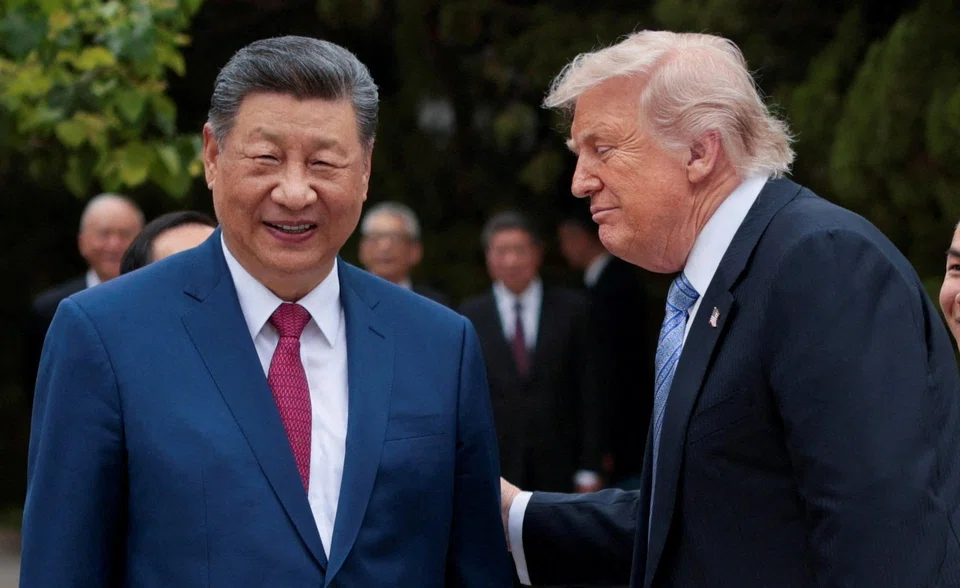
The move lands just weeks before a planned summit in the US between American President Donald Trump and Chinese President Xi Jinping in September, adding one more irritant to an already crowded list of trade and technology disputes.
The case for the ban
FCC’s stated rationale mirrors the logic it has already applied to Chinese-made drones and consumer routers: networked robots with cameras, microphones and sensors are potential surveillance and intrusion vectors.
A humanoid robot operating inside a home or federal facility is, in fact, a mobile computer with legs, one that could theoretically be remotely commandeered or used to harvest data on its surroundings.
Supporters of the ban also point to a supply chain issue: If the US lets a strategically important, fast-growing category of hardware become almost entirely dependent on a geopolitical rival, it inherits real vulnerability if that relationship sours further.
This argument has support in Congress, too. Senators Tom Cotton and Chuck Schumer – a Republican and a Democrat, respectively – have separately pushed legislation barring federal agencies from buying Chinese-made robots on similar grounds.
There’s also an industrial-policy case: after artificial intelligence software, humanoid robotics is widely seen as the next major technological platform.
And Washington has shown it’s willing to use trade tools to buy its own manufacturers time to catch up, the way it has with electric vehicles, solar panels and semiconductors.
The case against it
Critics – including Beijing, which has called the move protectionist “bullying” – argue the security rationale is doing a lot of work to justify what is, in effect, industrial protection for a US robotics sector that doesn’t yet have anything near the scale to compete.
China’s dominance in this space reflects years of investment in manufacturing, components and integration that American firms haven’t matched.
Walling off the US market doesn’t create that capacity. It just removes competitive pressure and, potentially, raises costs for American companies trying to build robotics products of their own.
US firms are not simply competing against Chinese robotics; they’re often building on top of it. Nvidia’s own humanoid robot reference design, unveiled in June, uses a chassis from Unitree.
A ban aimed at China risks tangling up the supply chains of American companies that had planned to integrate Chinese hardware into their own products, at least until domestic alternatives mature.
There’s also a practical question about how much the ban actually changes. Because it affects only new authorisations and leaves existing inventory untouched, well-capitalised importers may simply route around the rule through partnerships and licensing arrangements, softening the near-term impact.
Another data point in decoupling
This ban doesn’t stand alone. It follows the same Covered List playbook FCC used against Chinese drones and routers, and it arrives alongside broader US moves to restrict Chinese AI models and technology exports.
Seen that way, the robot ban is less a standalone policy than one more data point in a steadily hardening technology decoupling, one where “national security” and “industrial competitiveness” have become increasingly difficult to separate cleanly.
Whether that hardening serves American interests is a contested question, not a settled one. Proponents see a necessary defence against a strategic rival building critical infrastructure inside American walls and homes.
Sceptics see a tariff of sorts that will raise costs, invite retaliation and do little to close the underlying capability gap it’s meant to address.
Both readings are plausible, and which one proves right will likely depend less on this single order than on whether it’s followed by the kind of sustained domestic investment that made past US industrial pushes in semiconductors, for instance, eventually pay off.
TRENDING NOW

Government to bring forward raising of retirement age, give employers more financial support to create flexi-load jobs

If Europe goes to war, the fallout will be felt in East Asia

Indonesia stocks suffer worst plunge in nearly 30 years as MSCI proposes standalone status

Vietnam’s northern provinces, not Hanoi or Ho Chi Minh City, are powering near 10% GDP growth

