

US-China rivalry in Latin America: a race for influence
The region’s challenge lies in extracting value from both powers while avoiding the pitfalls of excessive dependence on either
LATIN America has solidified its status as yet another battleground in the broader US-China strategic competition, transforming what was once considered Washington’s “backyard” into contested geopolitical terrain. This shift reflects not only China’s global ambitions, but also the changing dynamics of hemispheric influence in the 21st century.
China’s expanding economic footprint
Over the past two decades, China has fundamentally altered its relationship with Latin America. Trade between China and the region reached a record high of US$518.5 billion in 2024, up 6 per cent year on year, according to China’s Ministry of Commerce.
This surge, from roughly US$12 billion in 2000, has made China the top trading partner for several South American nations, including Brazil, Chile and Peru.
Chinese investments have poured into critical sectors: infrastructure projects under the Belt and Road Initiative (to which 21 of the 31 countries in the region have now signed on), mining operations for lithium and copper (essential to the energy transition), agricultural commodities, and telecommunications networks.
This economic engagement has given Beijing significant leverage. Countries facing fiscal constraints or infrastructure deficits have found Chinese financing appealing, particularly when it comes with fewer governance conditions than traditional Western lenders.
The construction of ports, highways and energy facilities by Chinese state-owned enterprises has created dependencies that extend beyond mere economics into the realm of strategic influence.
Chancay port: a gateway to the Pacific
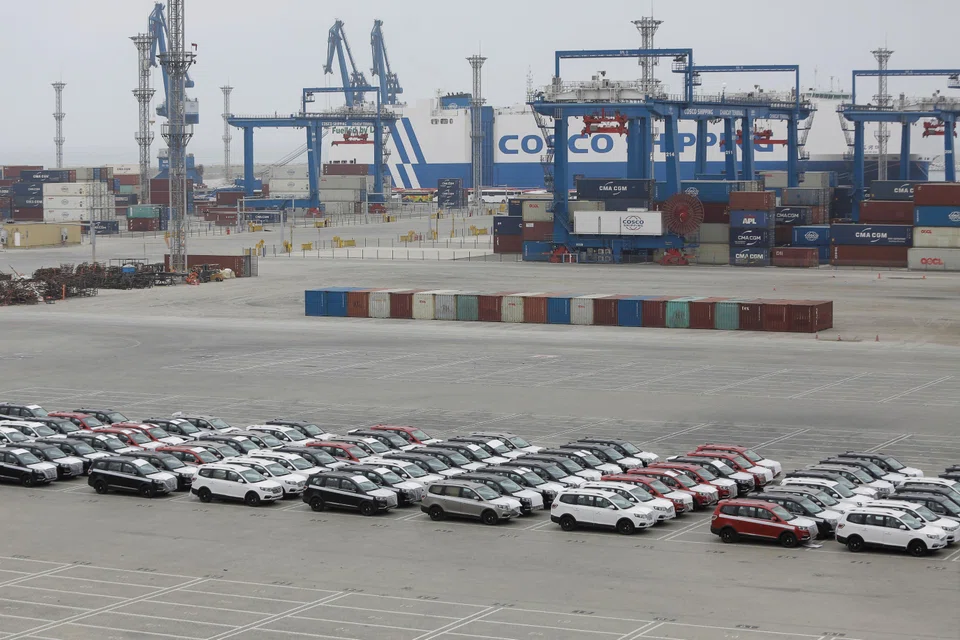
The November 2024 inauguration of the Chancay megaport in Peru exemplifies China’s strategic infrastructure approach in the region.
Located 80 kilometres north of Lima, this US$1.3 billion Chinese-funded facility represents South America’s first smart and green deepwater port capable of accommodating ultra-large container vessels.
Operated by China’s state-owned Cosco Shipping (which holds a 60 per cent stake), the port cuts shipping times between China and Peru from 35 days to just 23 days, and is expected to reduce logistics costs by over 20 per cent.
The port’s strategic significance extends beyond Peru. It is designed to serve as a regional hub for South America, potentially facilitating trade from landlocked countries like Bolivia and even Brazil, where discussions are underway about a transcontinental railway connecting Chancay to Brazil’s Atlantic coast.
The facility features cutting-edge automation with unmanned cranes and Huawei 5G technology, and is expected to generate US$4.5 billion in annual revenue while creating more than 8,000 direct jobs.
However, Chancay has raised alarm bells in Washington. US military officials have expressed concerns about the port’s potential dual civilian-military use, warning that the facility gives China a significant foothold on South America’s Pacific coast and potentially enhances Beijing’s ability to project power in the Western Hemisphere.
US response: between neglect and renewal
For years, US engagement with Latin America was characterised by what many in the region perceived as benign neglect.
Washington’s attention repeatedly shifted to the Middle East, Asia, and Europe, leaving Latin American nations feeling undervalued despite geographic proximity and historical ties. This created an opening that Beijing exploited with patient, systematic engagement.
The US recently attempted to revitalise its hemispheric strategy. US Southern Command’s (Southcom) 2024 and 2025 posture statements have explicitly identified China as the most concerning threat in the region.
In February 2025, Admiral Alvin Holsey, then Southcom’s commander, assessed that “the actions of nations such as China and Russia” represented the primary challenges to US interests.
The command has emphasised that Chinese access, presence and influence at strategic chokepoints, such as the Panama Canal, could imperil the US’ ability to rapidly respond in the Indo-Pacific during a crisis.
Southcom has increased security cooperation activities, and the command invested US$35 million in Peru’s maritime domain awareness, US$16 million in Costa Rican container scanning capabilities, and US$13 million in Ecuadorian air surveillance radars.
Additionally, the US facilitated Argentina’s acquisition of 24 F-16 fighter jets and supported Brazil’s purchase of 12 UH-60M Black Hawk helicopters, explicitly positioning these sales as alternatives to Chinese military equipment.
However, these efforts face significant challenges: they often come with more stringent requirements, deliver results more slowly, and must overcome decades of accumulated scepticism about US commitment.
The Trump administration’s renewed focus on Latin America, including threats regarding the Panama Canal and Secretary of State Marco Rubio’s early visits to Central America, signals heightened attention, but also introduces uncertainty about the consistency and nature of US engagement.
Beyond economics: technology and security
The competition extends into technology and security domains. The debate over Huawei’s infrastructure has become a microcosm of this broader contest.
Eight Latin American nations have now installed Chinese 5G equipment, while 24 others use Chinese 3G/4G infrastructure, potentially making future 5G upgrades with Western companies cost-prohibitive.
The US has pressured Latin American nations to exclude Chinese technology on security grounds. Some countries have complied; others have resisted, viewing the technology as cost-effective and the security concerns as overstated or pretextual.
Chinese engagement with Latin American militaries has also grown. Joint exercises, equipment sales and training programmes have expanded China’s security presence in a region where US military influence has historically been dominant.
Meanwhile, Chinese space infrastructure in countries like Argentina and Bolivia raise concerns in Washington about strategic positioning in the Western Hemisphere.
Latin American agency and pragmatism
Crucially, Latin American nations are not passive pawns but active players pursuing their own interests through a “hedging” strategy. Many governments have adopted a pragmatic approach, seeking to benefit from both relationships without fully aligning with either power.
Brazil, for instance, has deepened economic ties with China while preserving strategic relationships with Washington. Others, facing US pressure to choose sides, have bristled at what they perceive as a return to Cold War-style binary thinking that ignores their sovereignty and agency.
Both powers face constraints in Latin America.
China’s influence, while growing, remains primarily economic; it lacks the deep cultural, linguistic and institutional ties that bind the US and Latin America. Chinese soft power faces barriers, and Beijing’s authoritarian governance model holds limited appeal in a region that has largely embraced democracy.
The US, meanwhile, must contend with its own historical baggage – decades of interventions, support for dictatorships, and economic policies that many Latin Americans blame for inequality and instability. Trust deficits accumulated over generations cannot be easily overcome, even with renewed attention and resources.
As Southcom acknowledged, the command operates in an environment of heightened expectations, where partners want to see and feel American presence and commitment.
The US-China competition is likely to intensify, given the region’s strategic importance – including its 50 per cent share of the world’s lithium reserves and its diplomatic support in international forums. However, the outcome will not be determined solely in Washington or Beijing. Latin American nations will shape their own futures, leveraging great power competition to advance national interests while guarding their autonomy.
The most constructive approach for both great powers would involve recognising Latin American agency, and focusing on what they can offer rather than what they can deny each other.
For the region itself, the challenge lies in maximising the benefits of engagement with both powers while avoiding the pitfalls of excessive dependence on either. In an increasingly multipolar world, Latin America’s position between competing powers offers both opportunities and risks that will define the region’s trajectory for decades to come.






