
US-China summit: Will Xi and Trump stabilise ties?
Beyond Beijing and Washington, Asia-Pacific will watch the bilateral meeting closely
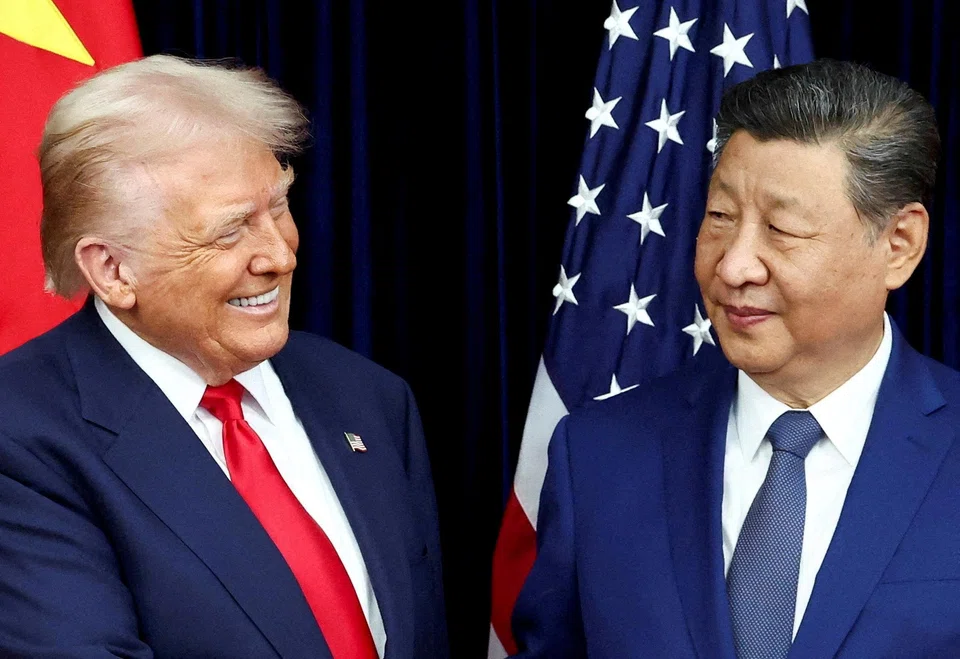
THE upcoming US-China summit in Beijing from May 14 to 15 will be the most important meeting in international relations so far in 2026.
Expectations are being played down, yet the meeting between US President Donald Trump and Chinese President Xi Jinping will shape the tone of the world’s most critical bilateral relationship through the 2028 US elections.
To be sure, economic and security fundamentals will drive the course of US-China ties in the medium term. However, personal chemistry between the Washington and Beijing teams remains a wildcard. Trump and Xi are preparing intensively for this first face-to-face meeting since last October in South Korea, and the first US presidential trip to China since 2017.
The importance of the Trump-Xi relationship is recognised by both Beijing and Washington. Chinese Foreign Ministry spokesperson Lin Jian recently said that “leader-level diplomacy plays an irreplaceable strategic guiding role” in bilateral ties. The truth of this was evident during Trump’s first term (2017 to 2021) and his current one, where the US president’s erratic nature accentuated the natural volatility of the relationship.
By contrast, the Obama years (2009 to 2017) saw bilateral ties remain generally cordial, reflecting mutual commitment to stability. Washington then pursued a strategy of cooperation on “soft” issues such as climate change while engaging on vexed issues like South China Sea tensions. Xi even outlined a desire for a new type of great power relationship – an audacious goal that lacked definition, as has been borne over time.
Since the Obama era, however, the consensus in Washington has shifted. Joe Biden kept much of the Trump-era framework during his 2021 to 2025 presidency, including a more far-reaching trade tariff regime, and significant sanctions in response to alleged human rights abuses in Xinjiang and Hong Kong.
The Trump team regularly highlights that contentious Chinese policies – including its actions in the South China Sea – were a feature of the Obama era too. Their logic is that the Obama team’s constructive engagement approach with China failed to shape Beijing’s behaviour, necessitating a tougher approach.
A packed agenda
Both sides will address wide-ranging issues, from Iran to trade tariffs. Although the Trump team insists the summit is not a strategic dialogue, Washington and Beijing will probably prefer a sustainable framework to underpin bilateral relations for the late 2020s, if this is possible.
Success would show that US-China relations need not inevitably drive greater global tension. Instead, it might even indicate a capacity to evolve a strategic partnership and potentially forestall further tensions that may otherwise become baked into the relationship.
The most pressing item on the agenda will be the Iran war, which has added a new chill to ties. Trump has pressured Beijing to use its military might to open up and protect the Strait of Hormuz, given that China bought more than 80 per cent of Iranian oil shipments in 2025, about 1.38 million barrels per day, according to Kpler.
Beyond the war, other challenges include US legislation such as the 2019 Hong Kong Human Rights and Democracy Act. This Bill, which Beijing has condemned, requires an annual evaluation of Hong Kong’s political autonomy from Beijing to qualify for continued special US trading consideration. This has created a recurring flashpoint.
Recent Trump-era legislation has also sown seeds for future strife. The Chinese Defence Ministry has asserted that they “abound in Cold War thinking, exaggerate the level of the China-US confrontation... undermines the atmosphere of development of China-US military ties, and damages China-US mutual trust and cooperation”.
With the two sides far apart on many issues, next week’s meetings still represent an important opportunity for the leaders to size each other up again and gauge intent. This is critical for both sides as they navigate a period of high international uncertainty.
Asia looks on
The visit will be watched closely in the Asia-Pacific, including Asean, whose diverse members are seeking potential pathways with both major powers towards more positive, productive relationships.
Longstanding US security allies Australia, Japan and South Korea will be watching with particular intensity. All three have faced criticism from Trump for not contributing more to the US campaign in Iran, including assisting with the reopening of Hormuz.
Japan may also get a visit from Trump, either before or after he travels to China. Prime Minister Sanae Takaichi is seeking a brief stopover following her recent trip to Washington. Takaichi, like some other US allies, is concerned about a possible US-China rapprochement – including a potential trade agreement – that could de-emphasise China’s economic and military pressure against its neighbours.
India, too, will be a cautious observer. While Prime Minister Narendra Modi is part of the Quadrilateral Security Dialogue alliance with the US, Australia and Japan, relations with Washington have cooled since Trump raised tariffs on New Delhi following its purchase of large quantities of Russian energy.
Taken together, the Trump-Xi summit will be the focal point for the wider region. While much of the world wants a less conflictual US-China relationship, some in Asia-Pacific fear a deal between the two great powers may contain challenges for them.
The writer is an associate at LSE Ideas at the London School of Economics
TRENDING NOW
Fed hike throws Singapore banks a margin lifeline; UOB likely to benefit more
He built the Vingroup empire. Now South-east Asia’s richest man is handing some key roles to his sons
From Haidilao to Oriental Kopi: How some of Asia’s favourite F&B players are faring in 2026
Floods compound Philippine growth woes from public-works scandal



