

The US dollar’s coming slide will be welcomed by the world
The greenback is set to weaken as the Fed changes its monetary policy stance
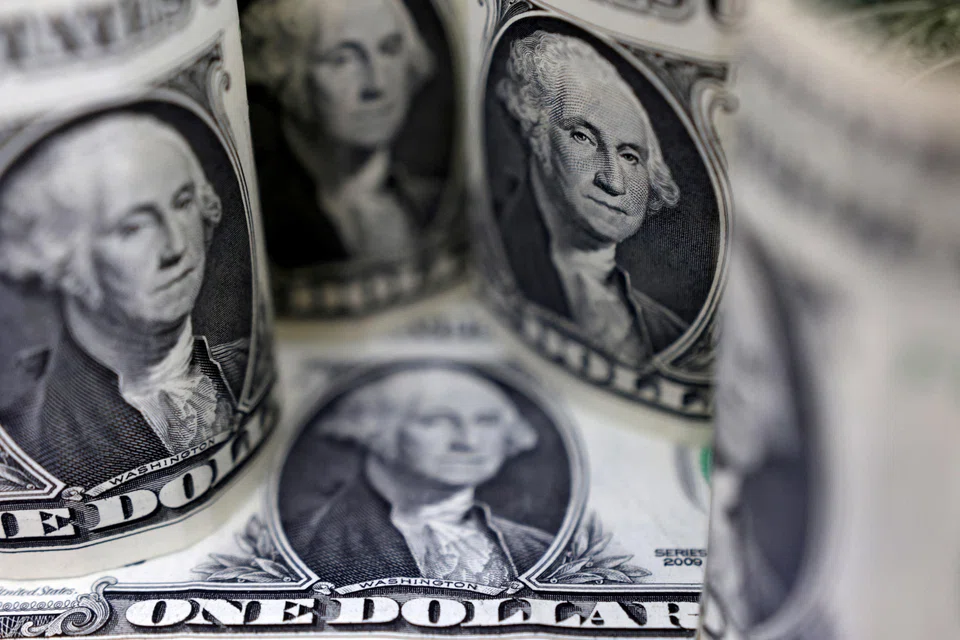
THE US dollar has lost some of its lustre over the winter. The twin supports of its status as the preferred haven during the pandemic and being backed by the world’s strongest economy are fading. And now another prop for the greenback is wobbling, amid doubts about how much higher the Federal Reserve will raise US interest rates as it has second thoughts on the likelihood of a recession. The greenback looks likely to suffer an extended bout of weakness.
This has no bearing on the US dollar’s unrivalled position as the global reserve currency: King Dollar sits serenely on its throne. But what’s not so good for the currency’s relative value is better for the rest of the world, because less focus is needed on keeping up with the US dollar. This has led to oversized interest rate hikes to shore up currency valuations, above and beyond what monetary policy has needed to do to address specific domestic requirements on fighting inflation.
This shift is helping to correct a serious imbalance, known as the dollar smile, that had skewed too much in the favour of the US currency for much of this decade. We are likely more towards the base of the smile’s curve, where the US dollar weakens steadily, as opposed to the raised sides when monies flow in on either a flight to quality or the perception that returns in America will be superior to those available elsewhere.
The regional US banking crisis, which has seen the failure of three banks so far, is the type of stumble that could hasten an economic downturn. Furthermore, the perception of US dollar safety is undermined if its banking system is under stress, particularly if the rest of the world’s financial system isn’t similarly challenged; the failure of Credit Suisse Group is being perceived as a one-off and, importantly, did not lead to a surge into US dollars.
Minneapolis Fed president Neel Kashkari, a Federal Open Market Committee (FOMC) voter this year and an outspoken hawk, highlighted last weekend that bank strains bring the risk of recession closer. Although he was careful not to prejudge the outcome of the next FOMC meeting on May 3, he did emphasise how closely the Fed is monitoring the risks of a credit crunch. Currently, the futures market suggests it’s a coin toss as to whether official rates rise by another quarter-point in May. Expectations are then for borrowing costs to start falling in the second half of the year, which is a big drag on the greenback’s forward pricing.
Any currency pair is a combination of relative value, and the most commercially important comparison is to the euro. The European Central Bank (ECB) forged ahead with another 50-basis-point hike on Mar 16, whereas a week later the Fed chose to play safer with a more modest quarter-point raise. The shift in perceptions about the likely path of central bank rates is reflected in the euro’s 12.5 per cent gain in the past six months to over 1.08 euros per US dollar, reversing an 11-week period between August and November last year when the common currency dipped below parity versus the greenback.
Policymaker rhetoric also steers forward rate expectations and currency values. At the last ECB meeting, executive board member Isabel Schnabel pushed for explicit wording that further rate hikes were possible, according to Bloomberg News. ECB president Christine Lagarde, at the post-meeting press conference, only gave verbal assurances that a bias to tighten remains if its economic projections proved accurate. This dispute keeps alive the possibility that the ECB tightens policy to a greater degree than the Fed in the coming months.
According to economists surveyed by Bloomberg, the probability of a recession in the eurozone has almost halved this year, to below 50 per cent. It’s now lower than the US, which is seen as having a 60 per cent chance of a protracted contraction. That is a notable shift of expectations as the eurozone had been on the precipice of recession prior to the pandemic and has suffered most from the surge in natural gas prices since Russia’s invasion of Ukraine.
Among G10 currencies, only sterling has performed better than the euro, rising more than 14 per cent. The Japanese yen is 10 per cent firmer to the dollar. The typical rule of thumb is that the large manufacturing export hubs of the eurozone and Japan benefit from a stronger US dollar making their products look cheaper; but the sharp rise in energy prices has placed them in the same boat as all other hydrocarbon-dependent economies.
The biggest gainers from a relatively weaker US dollar, though, have been in Eastern Europe and South America, with the Chilean peso notching a 22.5 per cent gain. It’s notable that the broadest gains are from energy-importing countries which had been hit hardest by the surge in gas prices. As most of the world’s commodity complex is priced in US dollars, an appreciation of the value of local currencies to the greenback offers much-needed respite.
Nonetheless, the sharp appreciation of the US dollar through 2021 and much of last year caused a lot of problems in developing and developed countries alike, as central banks scrambled to raise interest rates to prevent their own currencies from collapsing as the Fed tightened conditions. The world will be thankful for the calm of a more subdued value for the global reserve currency. BLOOMBERG
TRENDING NOW
Chairman’s role in spotlight with raft of proposed new rules for Singapore boards

Director of PR firm sacked for secretly recording internal meeting loses wrongful dismissal claim

Indonesia stocks suffer worst plunge in nearly 30 years as MSCI proposes standalone status

If Europe goes to war, the fallout will be felt in East Asia

