

US-EU tariff deal details deliver short-term stability, but what’s next?
European leaders hope that by de-escalating trade tensions with Trump, he might be more willing to help Ukraine out. But the situation remains fragile.
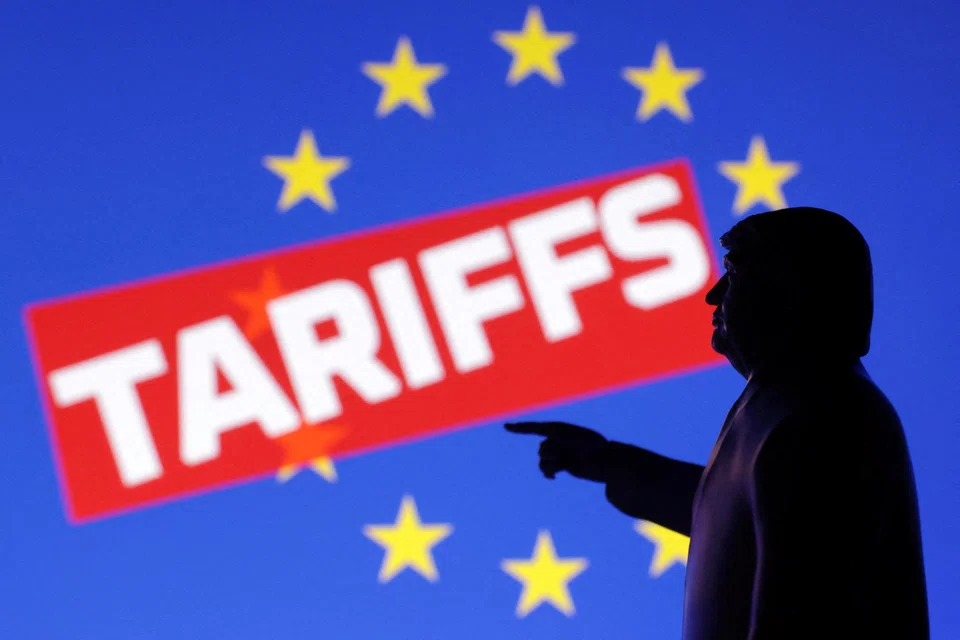
US PRESIDENT Donald Trump and European Commission President Ursula von der Leyen announced around a month ago a US-European Union tariff framework deal. Yet, it was only last Thursday (Aug 21) that some of the deeper details of the agreement were finally released.
The approximately month-long interval showcases not only continuing tensions between the two sides. It is also a signal that the agreement remains a fragile, hastily cobbled together exercise that could yet collapse in the three-year period to 2028 that it is meant to be in effect.
While some elements of the agreement will be respected, others are not legally binding and unlikely to come close to being realised. For instance, the EU pledge to buy some US$750 billion of US energy from 2025 to 2028 would require a huge increase in European purchases, and is most unlikely to materialise.
Nonetheless, the overall impact of the deal, plus last week’s meeting over Ukraine between Trump and key European leaders at the White House, has delivered some shorter-term stability to bilateral ties.
The importance of this should not be underestimated as, in recent months, many European business leaders have perceived that unpredictable US policy under the second Trump administration has been the key risk to the region’s economy – bigger even than inflation and supply chain challenges that have grown since the pandemic and Russia’s invasion of Ukraine in 2022.
The recent joint statement on the new “Framework on an Agreement on Reciprocal, Fair, and Balanced Trade” confirms key points, including: a 15 per cent US tariff ceiling on most goods; linking EU market opening to US tariff reductions; and that the EU will eliminate tariffs on all US industrial goods, and expand preferential access for a wide range of US seafood and agricultural products.
Beyond tariffs, the statement also outlines major European spending pledges. It highlights that European companies “are expected” to invest US$600 billion across strategic sectors in the US, and that the bloc intends to procure US$750 billion in US energy and US$40 billion in artificial intelligence chips. However, these are not legally binding commitments, nor ones that the EU can make on behalf of relevant private-sector firms.
On the regulatory front, the EU will work to ease its Carbon Border Adjustment Mechanism (CBAM) burdens for US small and medium enterprises, and offer more flexibility on its corporate sustainability and reporting rules.
Moreover, the US will cap tariffs on EU goods at 15 per cent, applying zero tariffs to certain goods like aircraft and parts, cork and generic pharmaceuticals. Car tariffs will be reduced from 27.5 per cent to 15 per cent once the EU tables its legislation to enact the tariff legislation, although the 25 per cent tariff on pickup trucks will remain, for now.
EU carmakers and pharmaceutical exporters benefit from tariff ceilings, while US farm, seafood, energy, defence and technology suppliers gain expanded access.
However, auto tariff relief hinges on EU legislative timing; and uncertainty remains over steel and aluminium tariffs, which are still under review. EU regulatory adjustments, including the CBAM, will still face potentially significant further political negotiations.
While the further details of the tariff deal are helpful for business, the bigger context is that overall global imports to the US are forecast to slow significantly in the remainder of 2025 and beyond, as global maritime trade patterns are recalibrated in the new economic landscape.
The latest Global Port Tracker report from the US National Retail Federation and Hackett Associates forecasts that import cargo volumes may drop by a huge 20 per cent in the second half of 2025. Correspondingly, this could see a 15 per cent decline in overall annual cargo volume.
With the new tariff deal, the EU may not be the worst-hit power in the world from this very significant, looming slowdown. However, it will surely be a challenging landscape for European exports to the US.
Beyond the tariff deal, European relations with the US have also been stabilised in the short term by last week’s White House meeting with Trump. In coming weeks, European leaders hope that by de-escalating the tariff tensions with Trump, he might be more willing to help Ukraine out in areas like security guarantees for any eventual peace deal with Russia.
While it is possible that a breakthrough could happen in the coming days, many European leaders remain sceptical that Russian President Vladimir Putin wants to end the war. The next test of this will be whether Putin agrees, as Trump claims he has, to meet with Ukrainian counterpart Volodymyr Zelensky in the coming weeks, and on what terms.
Taken together, two immediate potential crises in US-European relations have therefore been taken off the table in August. However, the tariff deal and situation in Ukraine remain fragile, and further flare-ups between the transatlantic partners cannot be dismissed and may even be likely in the coming weeks.
The writer is an associate at LSE IDEAS at the London School of Economics
TRENDING NOW

Singapore bars Alice Huang, woman tied to affair with Nvidia’s Jensen Huang, for misleading police

Nvidia prepares to oust Jensen Huang after news of second affair, with executive: reports

Higher rates, weaker spending: Is the Philippines entering stagflation?

Nvidia’s market value sinks below US$4 trillion after CEO Jensen Huang resigns

