US Fed faces dual-mandate challenge amid a divided path forward
No clear policy prescription exists as policymakers balance sticky inflation against labour market risks
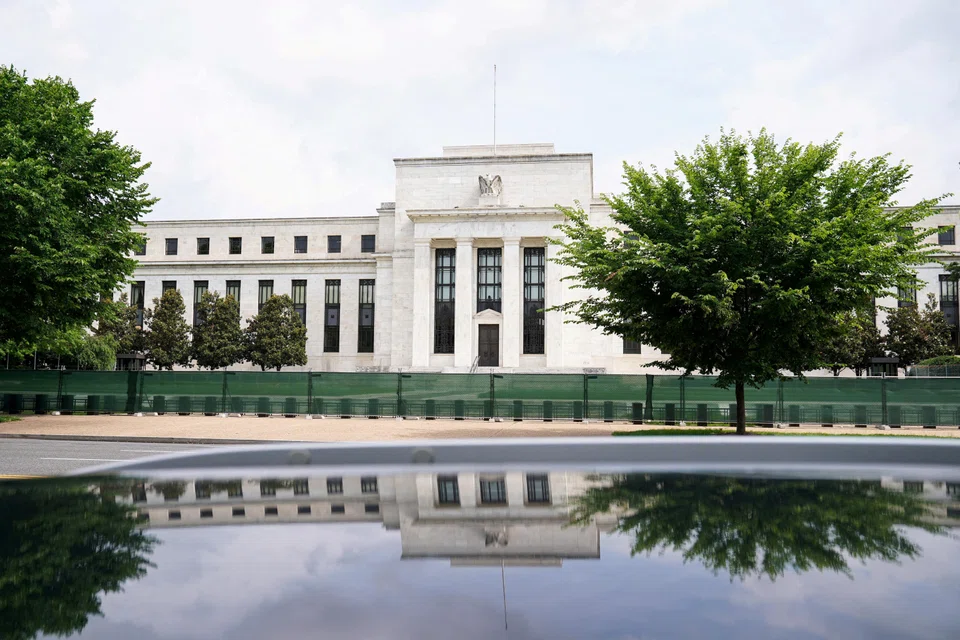
THE Federal Reserve’s Dec 10 meeting revealed a central bank at a critical inflection point – one marked by unprecedented internal division, competing economic pressures and mounting uncertainty about the path ahead.
While the Federal Open Market Committee delivered its third consecutive quarter-point rate cut, bringing the federal funds rate to 3.5 to 3.75 per cent, the 9-3 vote and the cautious tone from chair Jerome Powell suggest the era of steady rate reductions may be ending. As we look to 2026 and beyond, several key developments are likely to shape monetary policy in the months ahead.
The most immediate implication of the December meeting is that a sustained pause in rate cuts now seems highly probable.
Powell’s repeated assertion that the Fed is “well positioned to wait to see how the economy evolves” represents a clear signal that policymakers are shifting from active adjustment to watchful waiting. The new language about evaluating “the extent and timing of additional adjustments” mirrors phrasing the Fed has historically used when signalling pauses in its policy trajectory.
This pause could extend well into 2026. While the dot plot continues to show one additional cut projected for next year, that forecast appears increasingly aspirational given current conditions. Markets have already begun pricing in the possibility of two cuts, but even that may prove optimistic if inflation remains sticky or tariff impacts persist longer than expected.
The labour market dilemma will intensify
One of the most striking revelations from Powell’s press conference was his acknowledgment that job creation may actually be negative when accounting for statistical issues with government data. This represents a significant shift in the Fed’s assessment of labour market health, and points to a growing tension at the heart of monetary policy.
The unemployment rate has edged up to 4.4 per cent, but remains low by historical standards. However, Powell characterised the labour market as facing “significant downside risks”, with declining job availability and hiring difficulty measures pointing to further softening ahead.
This creates a profound challenge for the Fed in 2026. If job creation continues weakening while unemployment rises more substantially, pressure will mount for additional rate cuts to support employment – the Fed’s first mandate.
Yet, with inflation still running at 2.8 per cent (core personal consumption expenditures) and elevated above the 2 per cent target, aggressive easing could reignite price pressures. Powell acknowledged this bind directly, noting “you have one tool, you can’t do two things at once”.
The likely outcome is that the Fed will tolerate somewhat higher unemployment than it would prefer, rather than risk losing ground on inflation. Expect policymakers to emphasise that their 2 per cent inflation target is non-negotiable. This represents a harder line than the Fed maintained during previous easing cycles, and reflects lessons learnt from the 2021 to 2023 inflation surge.
Tariff uncertainty clouds the outlook
Powell made explicit what many suspected: Tariffs are the primary driver of the current inflation overshoot. He noted that stripping out tariff effects, underlying inflation is “in the low twos” – essentially at target. This creates both a near-term challenge and a potential opportunity for the Fed.
The challenge is that tariff-driven inflation is largely beyond the Fed’s control. Monetary policy has limited ability to offset price increases caused by trade policy, meaning the Fed must accept some inflation persistence that it cannot directly address through interest rate adjustments.
The opportunity, however, lies in the Trump administration’s recent moves to ease some tariff pressures. If these adjustments continue and broader trade policy stabilises, inflation could peak in early 2026 and begin declining more meaningfully by mid-year.
Powell characterised tariffs as likely producing a “one-time” price level increase rather than sustained inflation, suggesting the Fed views current pressures as temporary even if they persist for several quarters.
The key variable for 2026 will be whether new tariff announcements emerge or existing ones prove more permanent than expected.
A historic leadership transition looms
Perhaps the most consequential development ahead is the change in Fed leadership. Powell’s term as chair expires in May 2026, and President Donald Trump has made clear he will nominate someone more aligned with his preference for lower interest rates.
Powell’s stated goal is to “turn this job over to whoever replaces me with the economy in really good shape”, with inflation under control and the labour market strong.
This leadership transition introduces multiple sources of uncertainty. The nomination and confirmation process itself could create policy drift or hesitancy. Markets may begin positioning for a potentially more dovish Fed leadership, which could ease financial conditions independent of actual policy changes.
Perhaps most significantly, the transition raises questions about Fed independence. If markets perceive the new leadership as more politically accommodating, it could affect inflation expectations and complicate the inflation fight.
The December vote featured three dissents – the most since 2019 – with two members (Austan Goolsbee and Jeffrey Schmid) preferring no cut and one (Stephen Miran) advocating for a larger half-point reduction. Beyond those formal dissents, signals from reserve banks and projections from policymakers suggest broader discomfort with the decision.
This division reflects genuinely competing views about the economy’s trajectory and appropriate policy response. Miran, Trump’s recent appointee, has been vocal in arguing that immigration and tariff policies have had far greater economic impacts than traditional models suggest.
Going into 2026, the internal division is likely to intensify. Without clear data pointing definitively in one direction, philosophical differences about appropriate policy will become more pronounced. Fed policy will likely be more unpredictable and reactive to incoming data than in periods of stronger consensus.
Expect Fed communications to become more fragmented, with individual members voicing divergent views publicly.
Projections point to stronger growth, persistent inflation
The Fed’s updated economic projections reveal an increasingly optimistic view of growth paired with continued concern about inflation. Policymakers now see gross domestic product growing 2.3 per cent in 2026, up from their September forecast, driven by resilient consumer spending, continued artificial intelligence (AI)-related business investment, and supportive fiscal policy.
Powell’s optimism about AI’s economic impact is particularly noteworthy. He emphasised that spending on data centres and AI-related infrastructure is supporting business investment, and may be contributing to productivity gains that allow the economy to grow faster without generating inflation.
On inflation, however, the projections remain sobering. Core personal consumption expenditures inflation is expected to end 2025 at 2.9 per cent and 2026 at 2.4 per cent – still well above target even by end-2026.
The Fed does not project inflation reaching its 2 per cent goal until 2028, indicating policymakers expect a grinding, multi-year process. The central bank appears to be converging on a view that neutral interest rates – the level that neither stimulates nor restricts the economy – may be higher than previously thought, perhaps in the 3 to 3.5 per cent range rather than the pre-pandemic assumption of around 2.5 per cent.
Powell: “Complicated, unusual, difficult situation”
The Fed thus emerges from the recent meeting in a markedly different position than it occupied just a few months ago. Having delivered three rate cuts while maintaining credibility on its inflation target, Powell and his colleagues have achieved a delicate balance. Now comes the harder part: holding that position while multiple sources of uncertainty resolve.
The most likely scenario for 2026 is an extended pause in rate adjustments through at least the first half of the year, with policy potentially resuming a gradual easing path in H2 if inflation decisively declines and labor market conditions do not deteriorate severely. However, the path is highly uncertain.
Powell’s characterisation of this as a “complicated, unusual, difficult situation” captures the challenge facing policymakers. With both sides of the dual mandate under stress, no clear policy prescription exists. The Fed must balance supporting employment against controlling inflation, all while navigating a major leadership transition and an increasingly polarised political environment.
For now, the Fed is positioned to wait. Whether that patience proves wise or whether circumstances force a more dramatic policy shift will be one of the defining economic questions of 2026.
TRENDING NOW
Fed hike throws Singapore banks a margin lifeline; UOB likely to benefit more
He built the Vingroup empire. Now South-east Asia’s richest man is handing some key roles to his sons
From Haidilao to Oriental Kopi: How some of Asia’s favourite F&B players are faring in 2026
Floods compound Philippine growth woes from public-works scandal