

The US-India trade deal: Strategic reset or fragile truce?
The lack of details on the agreement makes it difficult to assess its true economic impact
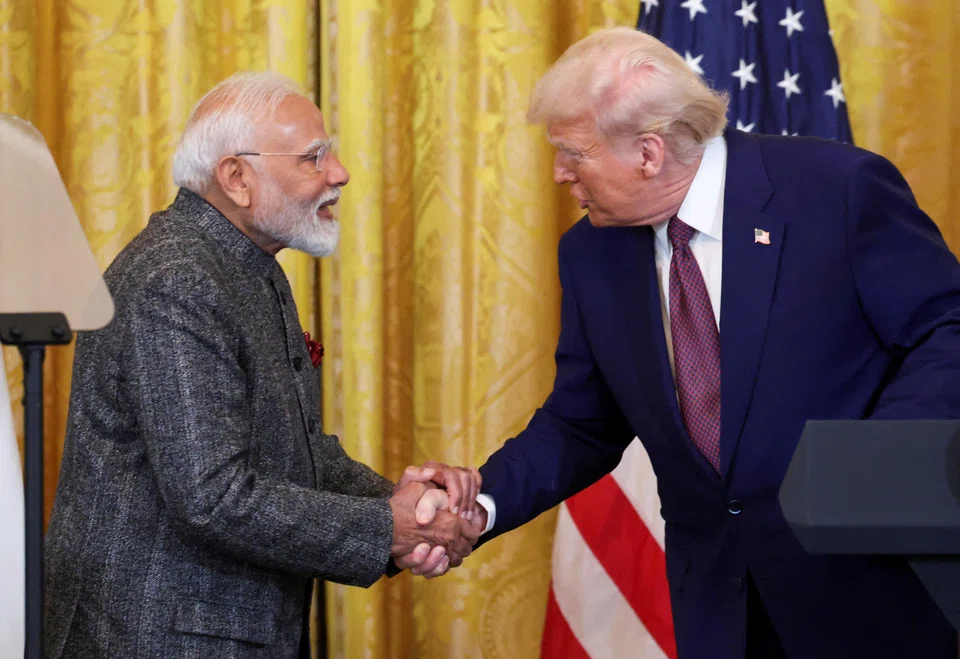
IN A flurry of activity that caught many observers by surprise, US President Donald Trump and Indian Prime Minister Narendra Modi announced a trade deal on Monday (Feb 2), marking a dramatic shift in what had been increasingly fractious economic relations between the world’s two largest democracies.
The announcement, made via Trump’s Truth Social platform, promises reduced tariffs and increased trade, but the details remain frustratingly sparse, and the path forward is anything but certain.
At its core, the agreement reduces the US tariff rate on Indian goods from a punishing 50 per cent to 18 per cent. This represents significant relief for India, which had been subjected to a 25 per cent baseline “reciprocal tariff” plus an additional 25 per cent penalty imposed last year over its purchases of Russian oil.
Trump claims that Modi agreed to stop buying Russian oil entirely, and purchase more than US$500 billion in American energy, technology, agricultural products and coal. India, according to Trump, will also cut its tariffs on US goods “to zero”.

Modi confirmed the US’ tariff reduction on Indian goods in a post on X, thanking Trump “on behalf of the 1.4 billion people of India”. Yet, notably absent from Modi’s statement was any confirmation of the oil commitment or the promise to eliminate Indian tariffs on US goods, highlighting the ambiguity surrounding this agreement.
For businesses and investors, the deal offers both promise and peril. An 18 per cent tariff rate, while still high by historical standards, gives Indian exporters a competitive advantage over many Asian competitors.
Most Asean nations, for instance, face 19 per cent tariffs, with Vietnam staring down a rate of 20 per cent. This could provide a boost to India’s manufacturing sector, particularly in textiles, pharmaceuticals and technology services.
Scepticism warranted
The commitment to purchase US$500 billion in US goods, if realised, would represent a massive shift in trade flows. American energy producers, agricultural exporters and technology companies stand to benefit substantially.
However, scepticism is warranted. India has not publicly confirmed this commitment, and the timeline remains unclear. The lack of specificity makes it difficult to assess the deal’s true economic impact.
Moreover, India’s purported pledge to eliminate tariffs on American goods has raised scepticism among trade experts.
India has historically protected certain sectors, particularly agriculture, where millions of farmers depend on government support and trade barriers for their livelihoods.
The US Trade Representative clarified on Feb 3 that India would be allowed to protect its agricultural sector from foreign competition, suggesting that the “zero tariffs” Trump claimed may not indeed be the case.
“China looms large over this agreement, too. As US-China tensions remain elevated and American companies seek to diversify their supply chains away from China, India emerges as a natural alternative manufacturing hub. ”
The timing and context of this deal reveal as much as its substance. Coming just one week after India signed a comprehensive free trade agreement with the European Union, the US-India announcement appears designed to ensure Washington is not left on the sidelines of global trade realignment.
As other nations forge new economic partnerships in response to Trump’s aggressive tariff policies, the US risks isolation.
The Russian oil dimension adds another layer of complexity. Trump has consistently used tariffs as leverage to achieve foreign policy objectives. Pressuring India to abandon Russian oil purchases fits this pattern.
For Trump, reducing India’s energy ties to Moscow serves dual purposes: it weakens Russia’s war effort in Ukraine while creating new markets for US energy exports.
For India, however, publicly committing to end Russian oil purchases would represent a significant strategic shift. That Delhi has not explicitly confirmed this suggests negotiations continue behind the scenes.
China looms large over this agreement, too. As US-China tensions remain elevated and American companies seek to diversify their supply chains away from China, India emerges as a natural alternative manufacturing hub.
This deal, if it effectively leads to reduced barriers and increased investment certainty, could accelerate that shift.
Personal diplomacy
Perhaps the most significant aspect of this deal is what we do not know. Unlike the EU-India free trade agreement, which represents a formal, legally binding treaty negotiated over more than a decade, the US-India arrangement appears to be an executive agreement announced via social media.
No text has been released. No formal signing ceremony has occurred. Indian Commerce Minister Piyush Goyal said the countries would sign the deal “shortly” and release a joint statement when details are finalised, but that has not yet materialised.
This matters because Trump’s track record on trade agreements suggests they are more fluid than fixed. South Korea and Canada both thought they had secured favourable terms with Washington, only to face renewed threats and renegotiation demands.
Trump views tariffs not merely as economic tools, but also as perpetually available leverage for whatever issue captures his attention, whether that is border security, foreign policy alignments or domestic political calculations.
The announcement also highlights Trump’s reliance on personal relationships with foreign leaders.
His characterisation of Modi as “one of my greatest friends” and his framing of the tariff reduction as done “out of friendship and respect” suggests this deal owes as much to the Trump-Modi relationship as to any systematic trade negotiation.
While personal diplomacy can cut through bureaucratic delays, it also creates uncertainty about durability. What happens when political winds shift or personal relationships cool?
For now, markets have responded positively, with Asian stocks rallying on the news. Indian exporters are breathing easier, and American businesses are cautiously optimistic about new opportunities in one of the world’s fastest-growing major economies.
The deal has undoubtedly eased tensions that had escalated over the past year.
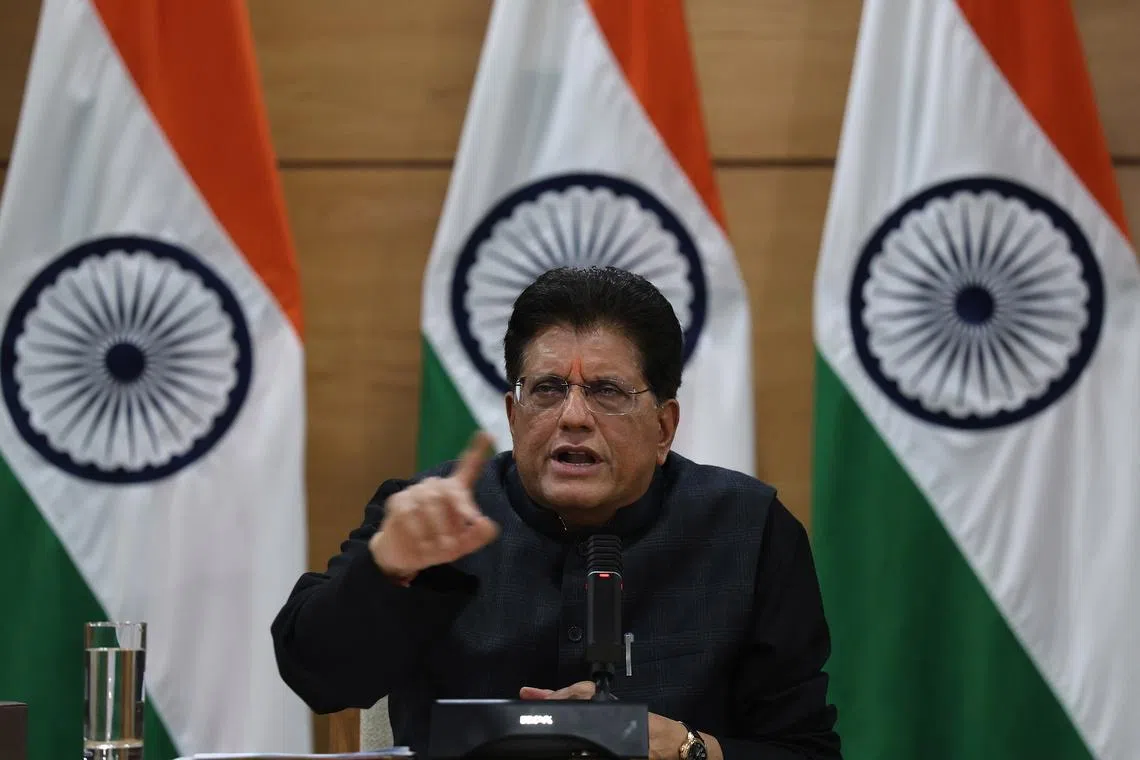
Yet, caution is warranted. Until we see the actual text of any agreement, India publicly confirms its commitments on Russian oil and tariff reductions, and both countries demonstrate follow-through on their promises, this deal remains more aspiration than achievement.
The fundamental question is whether the two leaders can implement an agreement that survives political pressures, economic realities and the inevitable complications that arise when two continental-scale economies with different priorities attempt to reshape their relationship.
The US-India trade deal may represent a genuine reset in bilateral relations, offering both countries economic opportunities and strategic advantages in an increasingly multipolar world.
Or it may prove to be another fragile agreement, subject to the whims of presidential tweets and geopolitical chess moves. Only time, and those missing details, will tell.
TRENDING NOW
Prima to move out of historic Keppel Road flour mill building in 2028

Temasek-related Azalea, SeaTown, Seviora Capital to merge in 2027
Family offices see more tailored products, leverage ‘collective firepower’ for direct deal access

Singapore room rates soar, but hotels seeing mixed demand from F1 race and events

