THE BOTTOM LINE

US-South Korea summit: A strategic reset for bilateral relations?

The meeting could be viewed as a qualified success that stabilises one of America’s most crucial Asian alliances while opening new avenues for cooperation
Summarise
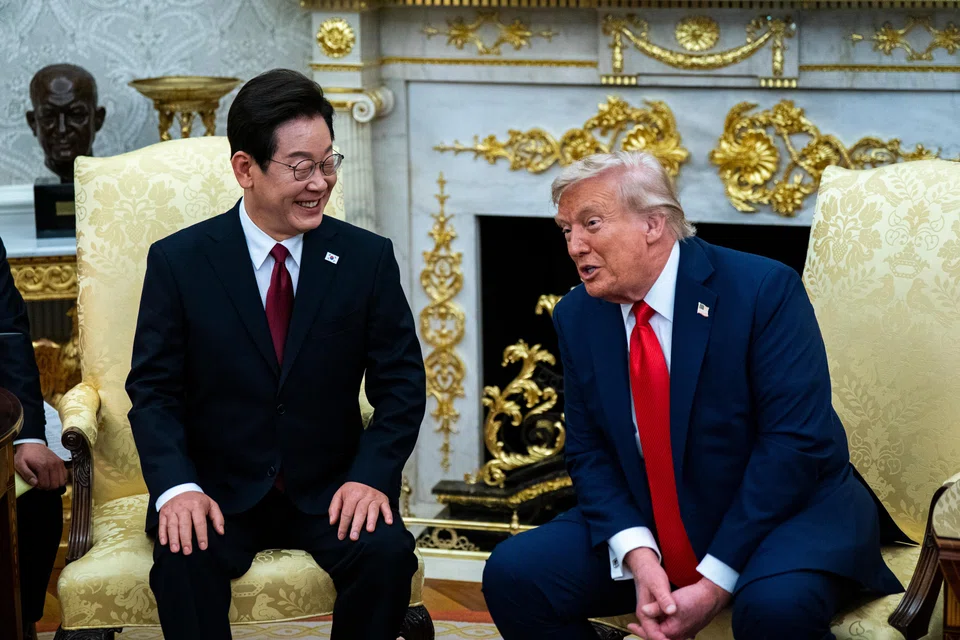
    • Lee's (left) diplomatic approach successfully navigated Trump's transactional style, producing concrete outcomes while preserving South Korea's strategic autonomy.
    • Lee's (left) diplomatic approach successfully navigated Trump's transactional style, producing concrete outcomes while preserving South Korea's strategic autonomy. PHOTO: EPA
    Published Wed, Aug 27, 2025 · 07:00 PM

    THE Aug 25 meeting between President Donald Trump and South Korean President Lee Jae Myung marked a pivotal moment in US-South Korea relations, demonstrating both continuity and change in the alliance. This first summit between the two leaders produced several noteworthy outcomes that warrant careful analysis.

    The summit’s most tangible achievement was the consolidation of a trade agreement that reduces US tariffs on South Korean goods from a previously threatened 25 per cent to 15 per cent. This compromise reflects a pragmatic approach to economic diplomacy, with Lee successfully leveraging South Korea’s shipbuilding expertise as a bargaining chip.

    The plan to revitalise American shipbuilding through South Korean investment and technology transfer represents a creative solution to Trump’s “America First” agenda while benefiting Korean industry.

    Perhaps most significantly, the leaders expressed renewed optimism about North Korea policy. Trump’s statement that “we can do big progress with North Korea” and his expressed desire to meet with Kim Jong Un again in 2025 signal a potential return to direct diplomatic engagement. This is a notable shift from the more confrontational posture towards Pyongyang that characterised recent years under the previous South Korean administration.

    President Lee’s approach to the summit demonstrated sophisticated diplomatic skills. His effective use of flattery and strategic positioning helped create the “cordial atmosphere” of the meeting.

    His promise to help “Make America Shipbuilding Great Again” cleverly aligned South Korean industrial capabilities with Trump’s campaign rhetoric, turning potential economic friction into mutual opportunity.

    Lee’s recent visit to Tokyo to meet with Japanese Prime Minister Shigeru Ishiba before the Washington summit also showed strategic foresight. By strengthening trilateral coordination, Lee positioned himself as a stabilising force in regional security architecture, making him a more valuable partner for Trump’s broader Asia strategy.

    The summit’s focus on collective security and North Korea represents both opportunity and challenge. Trump’s positive references to his relationship with Kim suggest a return to summit diplomacy, which could create space for Lee to pursue his own engagement policies with North Korea.

    However, this also raises questions about coordination between allies and whether Trump’s unilateral approach might undermine broader deterrence strategies.

    The discussion of defence burden-sharing, while not extensively detailed in public statements, remains a persistent issue. Lee will likely face continued pressure to increase South Korea’s financial contributions to the US military presence on the peninsula, a familiar theme in Trump’s alliance management.

    Despite the positive atmospherics, several underlying tensions remain. Trump’s past social media criticisms of South Korea’s political conditions, though downplayed during the meeting, reflect ongoing US concerns about domestic stability in Seoul.

    Moreover, Lee’s progressive background and his party’s supermajority in the National Assembly may create future friction with Trump’s conservative approach to regional issues, particularly regarding China.

    The 15 per cent tariff rate, while a reduction, still constitutes a significant burden on Korean exporters. The success of the shipbuilding initiative will depend on concrete implementation, not just rhetorical commitments.

    Overall this summit represents a successful reset of US-South Korea relations after a period of uncertainty. Lee demonstrated that South Korea can be both a reliable ally and an assertive partner, capable of protecting its interests while advancing shared objectives.

    The focus on practical cooperation in shipbuilding and measured optimism about North Korea engagement suggests both leaders may have learned from previous diplomatic missteps.

    However, the real test will be in implementation. Can South Korean investment truly revitalise American shipbuilding? Will renewed North Korea diplomacy produce substantive results or repeat past cycles of engagement and disappointment? The answers will determine whether this summit marks a genuine strategic breakthrough or merely a temporary alignment of interests.

    The Trump-Lee summit should thus be viewed as a qualified success that stabilises one of America’s most crucial Asian alliances while opening new avenues for cooperation. Lee’s diplomatic approach successfully navigated Trump’s transactional style, producing concrete outcomes while preserving South Korea’s strategic autonomy.

    As both leaders face domestic pressures and regional challenges, their ability to build on this foundation will be crucial for maintaining stability in North-east Asia and advancing their respective national interests.

    The meeting sets a constructive tone, but the durability of these achievements will depend on both leaders’ commitment to translating rhetoric into substantive policy action.