US tariff turmoil: Will partners in Asia and Europe break away from their 2025 deals?
For economies already hit by the war in Iran, America’s new ‘unfair trade practices probes’ spell only more trouble
AS THE Middle East conflict moves into its third week, the economic shock waves are growing, especially for Asia and Europe.
Meanwhile, the Trump administation has opened yet another front of uncertainty with its announcement of major trade investigations – including against key Asean nations – which are likely to lead to fresh American tariffs from this summer.
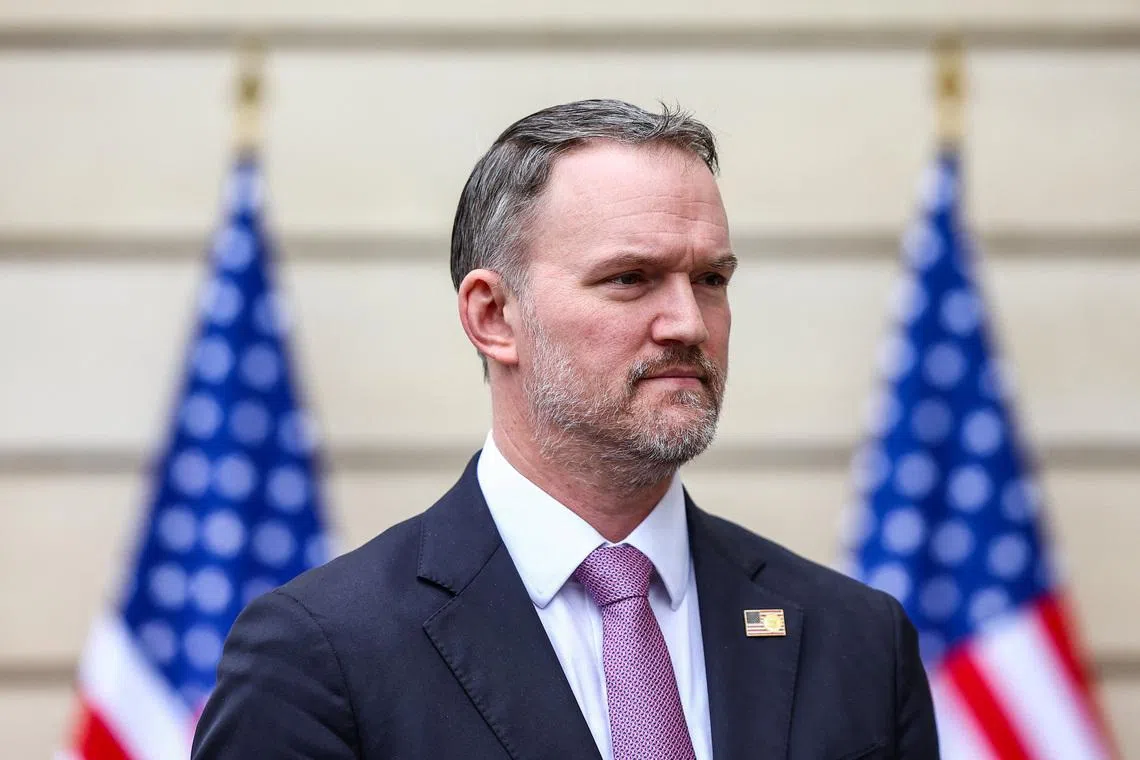
Last week, US Trade Representative (USTR) Jamieson Greer said that the so-called Section 301 unfair trade practices probes under the 1974 Trade Act are at least twofold in nature.
First, it will look into bans of US imports of goods produced with forced labour. While it covers more than 60 economies, according to the administration, the main target appears to be China.
Washington has already clamped down on solar panel imports and some other goods from China’s Xinjiang region under the Uyghur Forced Labor Prevention Act, and the probe could expand such actions to other territories. Greer wants other countries to enforce bans on goods produced with forced labour.
The second Section 301 investigation is being undertaken, according to the USTR, because “the United States will no longer sacrifice its industrial base to other countries that may be exporting their problems with excess capacity and production to us”.
Greer said this probe “will focus on economies that we have evidence appear to exhibit structural excess capacity and production in various manufacturing sectors, such as through larger persistent trade surpluses, or underutilised or unused capacity”.
Aggressive moves
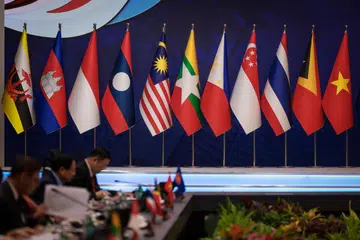
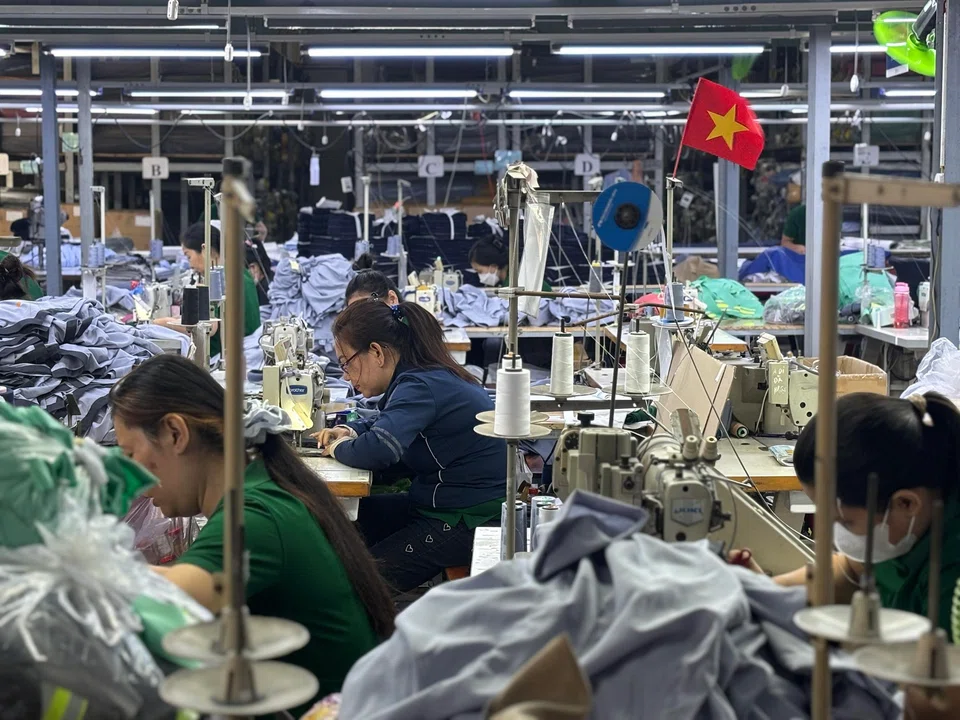
The list of targets includes Singapore, Indonesia, Malaysia, Thailand, Cambodia and Vietnam in Asean. Vietnam had the largest trade surplus with the US in January, overtaking Mexico and China as its exports rose sharply.
Other Asian and European powers on the list include the European Union, China, Switzerland, Norway, South Korea, Taiwan, Bangladesh, Japan, India and Switzerland.
In North America, Mexico is also within the probe’s scope, but not Canada, the US’ second-largest trading partner. This could further complicate US President Donald Trump’s attempts to renegotiate the US-Mexico-Canada trade agreement that he signed during his first presidency between 2017 and 2021.
Although the UK, like Canada, is not on this specific list currently, London expects it may face separate new US investigations – such as over the UK digital services tax that has been perceived by the Trump team as discriminatory against American tech firms.
The USTR office has already highlighted significant German and Irish surpluses in goods trading as evidence of excess capacity in the EU. It has also cited the goods surpluses of Singapore, Norway and Switzerland.
Stakeholder comments on the excess-capacity probe are allowed until the middle of April, and a public hearing will be held in early May.
The administration’s goal is to get the investigations completed before Jul 23, when the Section 122 tariffs of 10 per cent (effective for 150 days) that Trump imposed in late February expire.
Any extension of the Section 122 duties requires approval by the US Congress. However, many legislators will not want to do this during a midterm election year, given their unpopularity with voters who have linked these measures with rising domestic prices.
Still, Section 301 allows the president to impose import taxes on goods without the approval of Congress. Trump could order such tariffs if the investigations find any nation using unfair trade practices, and they could last as long as any countries continue the practices deemed discriminatory to the US.
These aggressive moves by the Trump administration are the latest chapter in its response to the US Supreme Court ruling in February – which struck down the president’s reciprocal and fentanyl drug tariffs, the legal underpinning of which was the 1977 International Emergency Economic Powers Act (IEEPA).
The separate, sectoral US tariffs announced in 2025 on industries such as steel and aluminium are not affected by the ruling, and remain fully in place. Trump has also said he will keep the existing import taxes under Sections 301 and 232.
So rather than ending tariff uncertainty, the court’s decision may actually increase it in the coming months. This is a context, too, where the economic costs for Asia and Europe amid the Iran war are growing – fast.
Seeking clarity on Section 122 tariffs
The announcement of the investigations also comes as multiple Asian and European nations are still seeking definitive answers to the Section 122 tariffs, such as potential refunds from the IEEPA tariffs. The vast majority of the US tariff revenue in 2025 and 2026 came from IEEPA-underpinned measures.
The two regions are also looking for further clarifications from the White House on tariff deals that were agreed on last year.
After the court ruling, senior Trump officials said that these agreements with partners including the EU, UK and Japan will remain in place. Greer said the US would “stand by” the deals, and “we expect our partners to stand by them”.
Yet, some of the agreements may no longer seem as advantageous as they did, in the new landscape. Key winners, in relative terms of the court’s ruling, are the nations which had the largest IEEPA reciprocal rates levied against them, including China, which faced a rate well over 100 per cent at certain points.
Asian economies that signed tariff deals with Trump in recent months – such as Japan, Indonesia and Taiwan – generally assert that they will continue to implement the agreements, at least until further notice.
One partial exception is India, which will reportedly freeze the process of ratifying its US deal for several months. It had been anticipated that New Delhi would sign an interim deal in March, followed by a full deal later, but that timeline has been postponed.
The EU’s position is also not 100 per cent clear at the time of writing. While the European Commission wants, in principle, to stick to the terms of the so-called Turnberry deal from July 2025, European Parliament legislators have repeatedly delayed a ratification vote.
Bernd Lange, the trade committee chair, recently said: “Who can guarantee that the final outcome will not mean even higher tariffs for the EU? It is not enough to simply assume – on both sides – that we will end up within the Turnberry framework. We need clarity.”
His view is shared widely across not only Europe, but also Asia.
Taken together, the US trade escalation will only strain relations with key, longstanding allies across Asia and Europe. While these partners have so far said they will adhere to tariff deals agreed with the US, it is possible some may choose to break away – especially if the Iran war continues for weeks longer and economic costs pile up.
The writer is an associate at LSE Ideas at the London School of Economics