

Venezuelan crude: The prize beneath the chaos
As Trump pivots from hunting narcoterrorists to promising oil profits, the fate of the broken Latin American nation is being rewritten
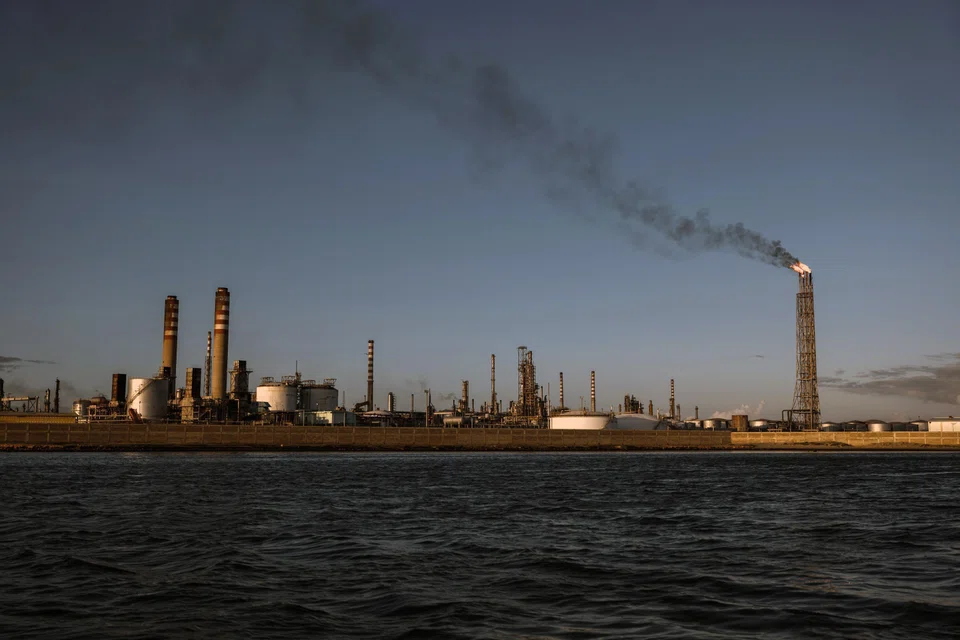
THE predawn raid that removed Nicolas Maduro from power on Jan 3 marked the most dramatic US regime change operation in Latin America in recent decades.
Yet, within hours of announcing the military strike, US President Donald Trump’s rhetoric shifted from narco-trafficking justifications to something far more candid: oil.
“We’re going to have our very large United States oil companies go in, spend billions of dollars, fix the badly broken infrastructure,” Trump declared, making explicit what many had long suspected lay at the heart of escalating US pressure on Venezuela.
The resource that defines the conflict
Venezuela sits atop the world’s largest proven oil reserves: an estimated 303 billion barrels, roughly one-fifth of global reserves and exceeding even Saudi Arabia’s holdings.
This geological fortune has been both a blessing and curse for the South American nation. Under Hugo Chavez and later Maduro, the state-owned oil company PDVSA became a vehicle for political patronage rather than efficient production.
Combined with US sanctions, underinvestment, corruption and the exodus of technical expertise, Venezuela’s oil output collapsed from 3.5 million barrels per day (bpd) in the late 1990s to barely one million today.
This dramatic decline represents one of the most spectacular wastes of natural resource wealth in modern history.
The infrastructure has aged catastrophically, with pipelines over 50 years old and refineries operating far below capacity.
Rystad Energy estimates that restoring production to three million bpd by 2040 would require US$183 billion of investment over the next 15 years. This also assumes political stability and clear legal frameworks, neither of which currently exist.
Oil as justification and objective
The Trump administration initially framed its Venezuela operation as counter-narcotics enforcement, citing Maduro’s indictment on narcoterrorism charges.
But this narrative quickly gave way to frank discussion of commercial interests. Trump claimed that Venezuela “stole” American assets during nationalisations under Chavez, and promised that US oil companies would not only rebuild the sector but also “make a lot of money for the country”.
This rhetorical evolution reveals the fundamental tension in US policy.
While Maduro’s authoritarian governance, electoral fraud, humanitarian failures and alleged criminal activity provided legitimate grievances, the administration’s emphasis on extracting oil wealth and compensating American companies undermines claims that the operation primarily sought to protect Americans from drug trafficking or to promote Venezuelan democracy.
Trump’s assertion that the US would “run” the country until a transition could be arranged signals an appetite for direct control unprecedented since the era of gunboat diplomacy.
The practical challenges of revival
Even setting aside the profound legal and ethical questions surrounding this intervention, the practical obstacles to reviving Venezuelan oil production are immense.
Major oil companies such as Chevron, ConocoPhillips and ExxonMobil were burned by previous nationalisations and are unlikely to commit billions without ironclad guarantees.
The current global oil market, with prices below US$60 per barrel and oversupply concerns, makes Venezuela’s heavy crude – which requires expensive processing – less attractive than it might have been a decade ago.
Moreover, the political vacuum created by Maduro’s removal complicates everything. Vice-President Delcy Rodriguez has been designated acting president by Venezuela’s Supreme Court, though she publicly contradicted Trump’s claim that she would cooperate with US plans.
The Venezuelan opposition, including Nobel Peace Prize winner Maria Corina Machado, whom Trump oddly dismissed as lacking support despite her 72 per cent approval rating, has been conspicuously absent from US planning.
Without legitimate Venezuelan leadership or clear legal frameworks for foreign investment, oil companies face enormous risks.
The lack of a US diplomatic presence in Venezuela since 2019 further hampers any transition effort. Managing a country’s oil sector from afar, through military force and phone calls, is not a recipe for stability.
Every historical precedent – from Iraq to Afghanistan to Libya – suggests that imposed transitions are extraordinarily difficult and rarely unfold as occupying powers imagine.
Geopolitical reverberations
The implications extend far beyond Venezuela’s borders. For US allies and adversaries alike, the operation demonstrates a willingness to use military force unilaterally for regime change, without congressional authorisation and with minimal consultation.
China, a major buyer of Venezuelan oil, issued sharp condemnations. Russia, which had provided security assistance to Maduro, saw its inability to protect a client state exposed. Iran lost another ally in the region, compounding losses across its so-called “axis of resistance”.
For Latin America, the message is unmistakable. Trump’s invocation of a “Trump Corollary” to the Monroe Doctrine signals a return to viewing the hemisphere as America’s sphere of influence, where Washington reserves the right to intervene militarily against regimes it deems threatening.
Mexico and Colombia, both already under pressure regarding drug trafficking, have reason to wonder whether cooperation will be enough to forestall similar treatment.
The oil paradox
Yet, beneath these geopolitical tensions lie a starker economic reality: The very resources triggering this intervention have long been a cause of Venezuela’s undoing.
There is deep irony in the fact that the world’s largest oil reserves have contributed not to prosperity, but to dysfunction. Oil wealth enabled the Chavez and Maduro governments to sustain themselves despite economic collapse, using PDVSA revenues to maintain loyalty among key constituencies while the broader population suffered.
The very abundance of oil made economic reform seem unnecessary during boom years, leaving Venezuela unprepared for price crashes and sanctions.
Now, US control of those resources creates a different paradox. If American companies successfully revive production, flooding global markets with Venezuelan crude could depress prices, potentially harming the US shale industry that Trump claims to champion.
It could also undermine Saudi Arabia and other producers from the Organization of the Petroleum Exporting Countries, reshape global energy geopolitics, and even weaken Russia’s war economy by lowering oil prices – potentially a long-term benefit to Ukraine.
Yet, the human costs of this intervention – the civilians killed in the raids, the uncertainty now gripping Venezuela’s population, the precedent set for military action – cannot be offset by oil production spreadsheets.
If the goal was truly Venezuelan democracy and prosperity, the exclusion of democratic opposition leaders from planning and the emphasis on US commercial interests suggest a troubling divergence between stated aims and actual priorities.
The coming months will determine whether this operation represents a turning point towards Venezuelan recovery or another chapter in the troubled history of American intervention.
Success would require not just oil industry investment, but also genuine political transition to democratic governance, massive humanitarian assistance, reconciliation among deeply divided Venezuelan factions and sustained US engagement beyond the initial military phase.
The early signs are not encouraging. Trump’s focus on quick wins and commercial gains, combined with apparent disregard for Venezuelan democratic movements, suggests shallow commitment to the difficult work of nation-building.
The constitutional and legal questions surrounding US authority to “run” another country remain unresolved. And history counsels humility about outsiders’ ability to reshape complex societies through force.
Venezuela’s oil will eventually flow again – geology guarantees it. But whether that wealth will finally serve the Venezuelan people, or simply enrich foreign corporations and fund another corrupt regime, depends on choices not yet made and commitments not yet proven.
Oil, as Venezuela’s history tragically demonstrates, is never just about oil. It is about power, sovereignty, justice and the question of who decides a nation’s fate. That question, raised starkly by the removal of Maduro, has no easy answers in the wreckage of a raid.
TRENDING NOW

Things to know about DBS’ incoming chairman Anthony Lim
DBS eyes prime brokerage business as Q3 profit falls 5% on weaker trading income

Royal Group and Sunset Hospitality abandon plans to open Casa Mett hotel off Orchard Road

George Yeo adds 100,000 Wilmar shares at S$2.97 apiece, taking stake to over 1 million shares

