Venezuela’s warning: how Singapore must navigate a fractured order

US operation to capture Maduro exposes dangerous gap between global rules and raw power – one that small states cannot ignore
Summarise
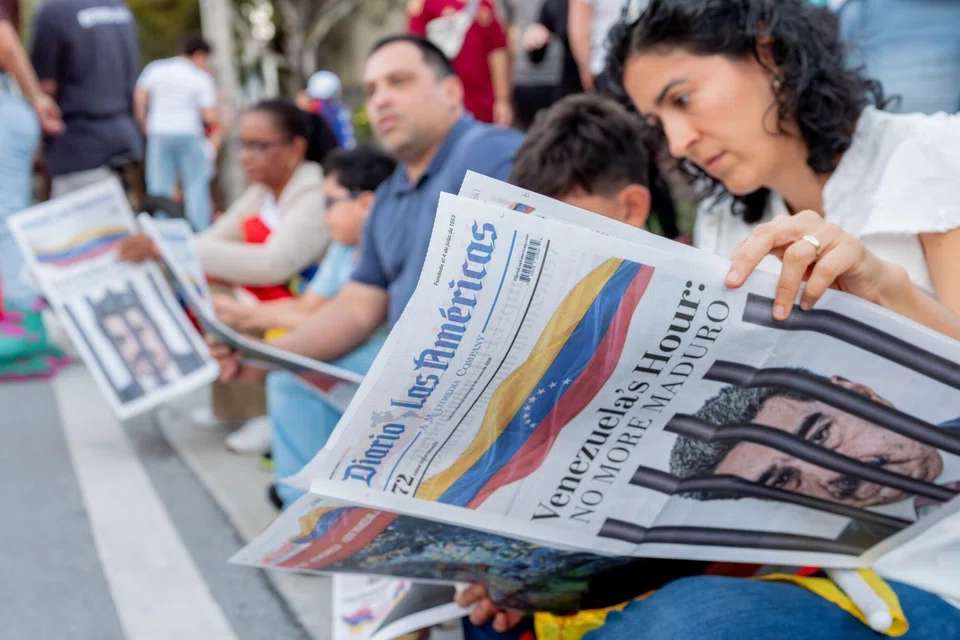
    • What Venezuela clarifies: small states must grasp an uncomfortable reality.
    • What Venezuela clarifies: small states must grasp an uncomfortable reality. PHOTO: BLOOMBERG
    Published Wed, Jan 7, 2026 · 07:00 AM

    THE recent US strikes in Venezuela, culminating in the capture of President Nicolas Maduro, has unsettled capitals worldwide.

    Singapore’s response, expressing grave concern over the intervention, reflects a foundational principle: sovereignty is existential for small states.

    Yet, the episode also reveals deeper currents reshaping international order.

    Singapore must defend these principles while navigating the reality that the gap between rules and enforcement is widening.

    This shift threatens to reshape international relations as profoundly as the Iraq War did two decades ago.

    What Venezuela clarifies: small states must grasp an uncomfortable reality. Order requires both law and power. Rules without enforcement invite chaos. Power without rules invites tyranny.

    Understanding the threat

    Singapore’s tough stance on drugs is not ideological. It is rooted in geographic reality. The Golden Triangle, where Myanmar, Thailand and Laos meet, remains a major centre of synthetic drug production. Myanmar’s Shan State, affected by prolonged conflict and weak state control, mass-produces methamphetamine, feeding criminal syndicates that dominate regional drug markets.

    Singapore sits at a critical junction linking these production zones to global markets. Without an uncompromising approach, we risk becoming a conduit for regional drug trafficking.

    Our drug laws are not about moral absolutism, but about deterrence. Permissive approaches would entrench criminal ecosystems that exploit our position as a highly connected transport hub.

    The US faces a parallel challenge with Venezuela. Large quantities of cocaine transit Venezuelan territory each year. US prosecutors have alleged that elements within Venezuela’s political and military institutions – often termed the “Cartel of the Suns” – facilitated these flows in cooperation with Mexican and Colombian cartels.

    Court proceedings and guilty pleas by senior officials suggest these were not isolated cases, but networked operations with protection from state institutions.

    These allegations highlight the danger when drug trafficking becomes intertwined with state structures, fuelling violence and addiction across the Western Hemisphere. The threat is serious and growing.

    When Singapore says we take transnational criminal threats seriously, we mean it. The choice is stark: maintain strong enforcement or allow criminal networks to exploit structural vulnerability.

    This experience allows Singapore to hold two positions at once. The threat posed by state-linked narco-trafficking is real and urgent. But responses to that threat cannot come at the expense of sovereignty or international law.

    The hard choice small states must navigate

    The Venezuela operation exposes a tension small states can no longer ignore. International order has always depended on powerful states willing to uphold it, even when that occasionally means acting at the edges of legal frameworks.

    What matters is whether powerful states, when they do act, feel compelled to justify their actions within legal frameworks, or whether they act entirely unconstrained.

    Venezuela suggests the constraints are weakening. When the US invoked transnational criminal threats as justification, then bypassed multilateral frameworks, it signalled a broader shift: when institutions fail to enforce, powerful states will act unilaterally.

    For small states, the challenge is not preventing powerful states from ever acting unilaterally – that is unrealistic. The challenge is maintaining some discipline on power when complete constraint is impossible.

    Yet, we must also acknowledge that systems repeatedly unable to address serious transnational threats will lose credibility. When that happens, enforcement migrates outside the system, disadvantaging small states most.

    This is the contradiction Venezuela exposes. Singapore cannot accept sovereignty becoming conditional based on subjective judgments about which governments warrant intervention. If we normalise unilateral force for narcotics, what pretext comes next? For small states, this path leads only to vulnerability. This matters acutely in Asia. If sovereignty arguments lose weight after Venezuela, other powers may calculate that regional interventions carry fewer reputational costs.

    Yet we also cannot accept gridlocked institutions unable to act when criminal networks operate at state level. The answer must be to fix enforcement mechanisms before breakdown occurs, not to normalise unilateral action afterwards.

    Singapore’s credible advocacy

    Singapore must position itself carefully – not as a passive rule-taker, but as a credible advocate of order. Our tough stance on drugs and deterrence demonstrates we take threats seriously. We are clear-eyed about what criminal networks can do. We simply reject sovereignty violations as the remedy.

    Being constructive matters. The underlying failure is institutional: gridlocked decision-making, weak enforcement capacity, slow response times.

    Small states such as Singapore should advocate for faster multilateral response mechanisms for transnational threats – not after-the-fact condemnations, but actionable frameworks that reduce the gap between recognising a threat and addressing it legally. A stronger system reduces the temptation for powerful states to bypass it entirely.

    Information will also shape these crises. The Venezuela operation immediately generated duelling narratives – justice versus resource imperialism, criminal enforcement versus sovereignty violation – that spread rapidly through digital channels.

    For Singapore, this previews what regional crises could look like. Our people will encounter competing frames, creating pressure to pick sides before the government can define Singapore’s interests. This threatens the domestic consensus that has always anchored our foreign policy.

    In this fractured reality, Singapore’s advantage lies in our consistency and clarity. We understand that order requires strength, that strength without discipline destroys order, and that small states survive not by choosing between these truths, but by insisting that both matter.

    Not loud, not sentimental, but strategically serious. This is how we must meet the world Venezuela has revealed.

    The writer is a law lecturer and Ministry of Education-Start scholar at the Singapore University of Social Sciences and a lawyer at RHTLaw Asia