

A war the public didn’t ask for
Rising fuel prices in the US cut across party lines in a way that military strategy does not
WHEN the US and Israel jointly launched military strikes against Iran on Feb 28, the American public’s reaction was swift – and largely negative. Weeks later, that disapproval has not softened.
If anything, it has hardened into something more troubling for the Trump administration: a broad, sustained and cross-demographic scepticism about whether this war was wise, necessary or winnable.
A Pew Research Center survey conducted in late March found that nearly six in 10 Americans disapprove of US President Donald Trump’s handling of the Iran conflict, and 59 per cent believe the decision to use military force was wrong.
These are not fringe views, a Reuters-Ipsos poll similarly found that 61 per cent of respondents disapproved of the US strikes, while an AP-NORC survey found a similar majority saying the military action has “gone too far”.
By nearly two to one, more Americans say the military action will make the US less safe in the long run than safer, according to the Pew Research Center. More than three-quarters of voters think it is likely that the conflict will result in a terrorist attack on US soil, and most expect the fighting to drag on for months, if not longer.
That is a damning verdict, and it reflects a public that has not been persuaded by the administration’s framing.
Just over one-third of Americans say the Trump administration has clearly explained the goals of the military campaign, while 65 per cent say it has not.
Wars without articulated objectives tend not to age well in the court of public opinion, and this one is no exception.
“Keeping energy costs down was a central promise of the Trump campaign, and the war has placed that promise under direct threat.”
The partisan divide is real but also revealing. Democrats and Democratic-leaning independents overwhelmingly disapprove of Trump’s handling of the conflict at 90 per cent, while about seven in 10 Republicans approve.
Yet even within the Grand Old Party, the unity is shakier than the headline numbers suggest. Republican-leaning independents are divided, with roughly half approving and 45 per cent disapproving.
The “rally around the flag” effect that typically accompanies the opening of military conflict has been muted, a sign that the public’s exhaustion with overseas engagements runs deeper than party loyalty.
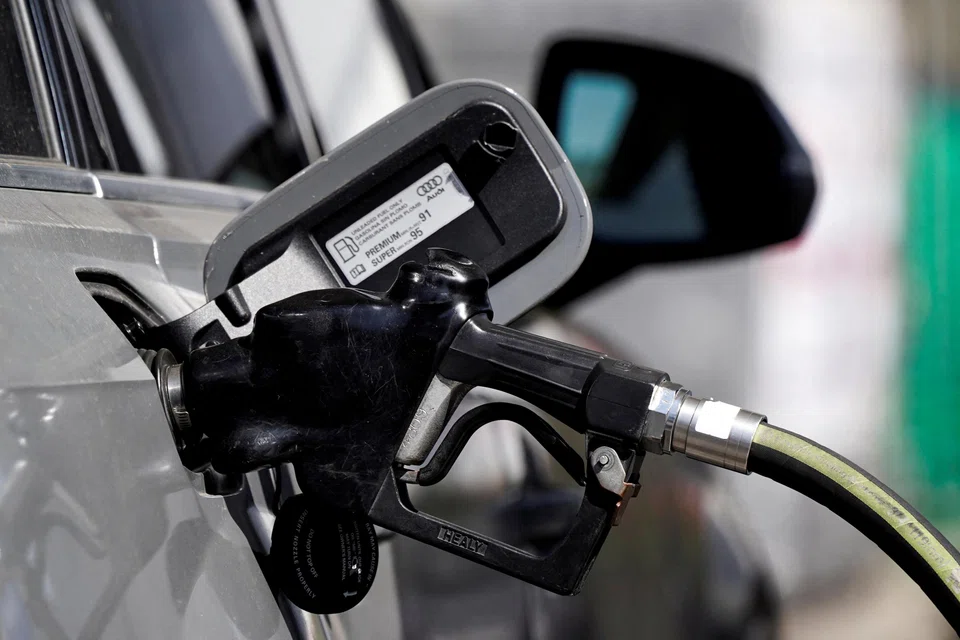
The economic dimension is sharpening those doubts. About 45 per cent of Americans are “extremely” or “very” concerned about being able to afford petrol in the next few months, up from 30 per cent shortly after Trump won re-election.
Keeping energy costs down was a central promise of the Trump campaign, and the war has placed that promise under direct threat. Americans who say petrol prices are going up a lot near them are significantly more likely to oppose the war than those who say prices are rising only a little.
The pocketbook effect is real, and appears to be eating into the administration’s political base. Rising fuel prices cut across party lines in a way that military strategy does not, and they could prove to be the conflict’s most politically destabilising consequence at home.
Perhaps most telling is where Americans draw the hard line. About six in 10 Americans oppose deploying US ground troops to fight in Iran, including about eight in 10 Democrats and roughly half of Republicans.
The memory of Iraq and Afghanistan has not faded. Americans may accept airstrikes grudgingly; boots on foreign soil is where tolerance ends.
Even a recent Fox News survey found that 58 per cent of American voters oppose the war, a number the White House cannot easily dismiss.
The administration may claim to be ahead of schedule militarily, but on the home front, the gap between its confidence and the public’s consent grows wider by the week.
TRENDING NOW

Once staunchly pro-China, Malaysian Chinese businesses are now distancing themselves from Beijing

Britain’s mansion tax shows the difficulty of targeting wealth

Three hats, one goal: How Ng Kian Swan runs sustainability at NUHS
COE review: The gap between luxury and mass-market cars isn’t the only one worth bridging

