
Warsh’s impossible mission – tame inflation and please Trump
Fed chair nominee defends Fed independence and insists the US president has not asked him to commit to any rate decision
DeeperDive is a beta AI feature. Refer to full articles for the facts.
[LONDON] Kevin Warsh defines US Federal Reserve’s success as having no one talking about inflation. To achieve that, the Fed chair nominee will likely not get to please the president any time soon.
Before Warsh began his confirmation hearing in Congress on Tuesday (Apr 21), US President Donald Trump, who appointed him, made it clear once again where he stood on interest rates – telling CNBC he would be disappointed if the new Fed chair did not lower borrowing costs immediately on taking office.
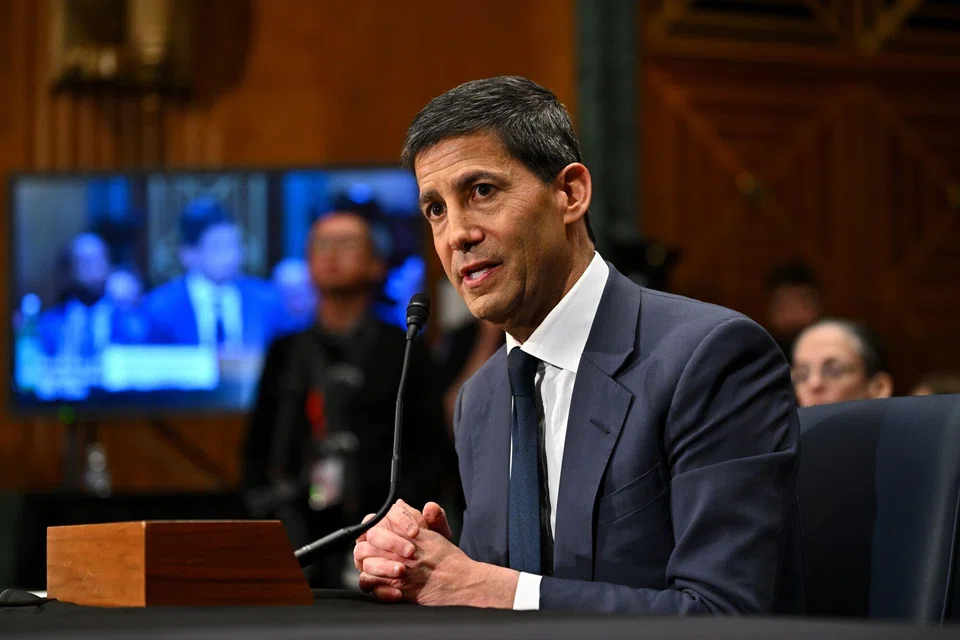
Grilled by the Senate Banking Committee for two hours afterwards, Warsh played it straight in defending Fed independence, and insisted Trump had not asked him to commit to any rate decision – nor would he agree to it if the president had.
For all the “regime change” rhetoric, data investigations and balance sheet rethinks that Warsh laid out as his programme for the central bank, he faces a fiendishly difficult task meeting his own definition of price stability before year’s end.
Channelling former Fed boss Alan Greenspan’s view of the inflation target, Warsh defined price stability – one of the central bank’s two congressional mandates – as a rate of price change “no one is talking about”.
In other words, it is the point at which price changes no longer affect the decisions of households or businesses – the level Greenspan had in mind when settling on 2 per cent as a target.
Navigate Asia in
a new global order
Get the insights delivered to your inbox.
On the Fed’s other mandate, Warsh said that the economy was close to full employment.
But quieting business and household concern about price rises may take many months at minimum, amid an oil shock that has already sent headline inflation soaring to near two-year highs and more than a full percentage point above the Fed’s 2 per cent target.
Core inflation gauges tracked by the Fed were already a point above target before the Iran war began. Few Americans are likely to stop talking about – or acting on – inflation for many months to come.
Consumer expectations for inflation over the next year surged a full percentage point to 4.8 per cent in April, their highest in seven months, based on the University of Michigan’s latest poll.
Institute for Supply Management surveys showed businesses recording their highest input prices in March, since the inflation surge of 2022.
Trump’s approval rating on his handling of the cost of living was 26 per cent in April – tied for his lowest reading – based on a rolling Reuters/Ipsos poll.
By any measure, the US is not experiencing price stability. And if “no one talking about it” is the goal, we are a long way from there.
Stop the talking
Warsh’s line may have been a tad throwaway, of course, and his broader testimony offered a more forensic take on how he viewed the economy and reform of the Fed – allowing perhaps more wiggle room than that blunt definition implied.
The prospective new chair, who takes the helm from Jerome Powell in May if confirmed, spoke of examining problems in inflation data collection, a potential artificial intelligence productivity wave, pre-emptive policymaking and a gradual reduction of the Fed’s giant balance sheet that could allow more room for rate cuts.
Even if all that eventually built a case for easing, the clamour about prices from workers and companies makes it almost perverse to open his tenure with rate cuts.
Markets understand that – at least since the recent oil shock. Futures pricing puts less than a 50 per cent chance on any Fed cut this year, with a further reduction not fully priced in for at least 12 months.
For investors who bet a Trump-appointed Fed chief would deliver what the White House wants, the clouds have darkened. And Warsh’s extensive focus on reducing the balance sheet in his hearing just tightens the picture at the margins.
Based on all that, Trump is highly likely to be disappointed – not least in a midterm election year.
On the question of direct political pressure, even if not explicit, Warsh’s take was that “inflation is a choice and the Fed must take responsibility for it”. The government is entitled to its views, he added. “Fed independence is largely up to the Fed.”
Not everyone agrees, not least given the legal case against Powell, which the current Fed chair himself says is simply a “pretext” to force him to cut rates further.
Former Fed economist Claudia Sahm was blunter still, writing on Tuesday that “Warsh’s platitudes ignore the current reality. Trump’s pressure on the Fed is far beyond words”.
“Central bankers who oppose Trump’s views on interest rates do not need to be ‘strong enough to listen’ – they need to be personally wealthy enough to cover the legal fees of cases brought against them in retaliation,” she wrote.
Warsh’s honeymoon may not last long if he cannot convince his Fed colleagues of his sweeping new vision for the central bank – or stop Americans talking about inflation. REUTERS
Decoding Asia newsletter: your guide to navigating Asia in a new global order. Sign up here to get Decoding Asia newsletter. Delivered to your inbox. Free.
Share with us your feedback on BT's products and services
TRENDING NOW
Middle East-linked energy supply shocks put Asean Power Grid back in focus
From intern to C-suite: JPMorgan’s Teresa Heitsenrether on building a fully AI-powered ‘megabank’
Richard Eu on how core values, customers keep Singapore’s TCM chain Eu Yan Sang relevant
Prime Orchard condo High Point takes fifth stab at en bloc sale with S$580 million asking price



