Watt about water? The green AI conversation we need to have now

Sustainable AI strategies must address efficient use of water, not just energy
Summarise
    • The resource that has not received comparable attention, despite being consumed at significant scale by every data centre running those workloads, is water.
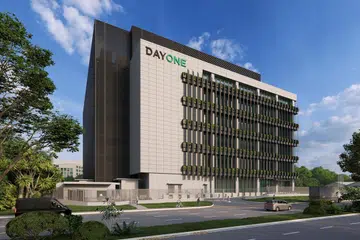
    • The resource that has not received comparable attention, despite being consumed at significant scale by every data centre running those workloads, is water. PHOTO: BT FILE
    Published Fri, Apr 10, 2026 · 07:00 AM — Updated Mon, Apr 13, 2026 · 03:02 PM

    OVER the past two years, the sustainability debate around artificial intelligence has been dominated by one resource: electricity.

    Renewable energy targets, power purchase agreements, graphics processing unit efficiency ratings, the carbon intensity of compute workloads. These are legitimate priorities, and the industry has been right to pursue them seriously.

    The resource that has not received comparable attention, despite being consumed at significant scale by every data centre running those workloads, is water.

    The mechanics are not complicated. Evaporative cooling towers – still the most common cooling approach across the industry – remove heat by evaporating water into the atmosphere.

    AI inference and training workloads run considerably hotter than traditional enterprise computing, which means more heat to remove and more water consumed in doing so.

    Microsoft reported a 34 per cent increase in global water consumption between 2021 and 2022, the same period in which it was expanding AI infrastructure substantially. Google disclosed consumption of roughly two billion litres in 2023.

    Researchers at University of California, Riverside estimated that a single ChatGPT conversation can require up to 500 ml depending on where the servers are located and how they are cooled.

    These numbers rarely appear in the sustainability frameworks that operators, investors and regulators are using to assess green AI progress.

    Metrics

    The industry measures energy efficiency through Power Usage Effectiveness (PUE), a metric that is well understood, widely reported, and increasingly tied to regulatory and procurement requirements.

    There is a water equivalent – Water Usage Effectiveness or WUE, but its adoption is voluntary and its disclosure is inconsistent.

    When sustainability teams present to boards or clients, PUE leads. WUE, when it appears at all, is in the appendix. That hierarchy shapes infrastructure decisions and policy priorities in ways that are now beginning to create real exposure.

    Singapore’s Green DC Roadmap, published by the Infocomm Media Development Authority (IMDA) in 2024, is a serious document that sets a clear, time-bound energy target: all data centres in Singapore are to achieve a PUE of 1.3 or better within 10 years.

    The water efficiency section runs to a few paragraphs. It records that the median WUE among large water-using data centres in Singapore was 2.2 cubic metres per megawatt-hour in 2021 and notes that sector demand for water is expected to grow.

    The water section sets a WUE target of two cubic metres per megawatt-hour within 10 years – an improvement of 0.2 units from the 2021 median of 2.2.

    There are no new grants, no new standards, and no mandatory disclosure requirements to drive that target at the same pace as the PUE framework. The ambition is not comparable.

    This is not a criticism of a document that gets a great deal right. It reflects where the global conversation has been. However, the gap is harder to leave as is in Singapore than elsewhere.

    Singapore has built one of the world’s most advanced water security systems through NEWater and desalination, yet freshwater demand continues to grow in the country and across the region, driven by population growth, industrial demand, and shifting weather patterns. (see amendment note)

    Water used in data centres

    Several markets across South-east Asia actively competing for data centre investment, including Malaysia, Indonesia and Thailand, face water constraints that will intensify over the operational lifetime of facilities being planned today.

    A data centre approved this year runs for 15 to 20 years. Water availability is not a fixed constant over that horizon.

    The engineering solutions exist and are not experimental. Closed-loop cooling systems recirculate water rather than evaporate it, substantially reducing consumption. Direct liquid cooling removes heat at the chip level using liquid coolants, bypassing evaporative cooling altogether.

    The IMDA road map already recommends liquid cooling adoption for high-density AI racks, where power density can exceed 20 kilowatts per rack.

    The energy efficiency case for that recommendation is sound. The water efficiency benefit is equally material and rarely stated alongside it.

    Updating technical guidance and future capacity allocation criteria to explicitly cite water efficiency – not just energy efficiency – as a benefit of liquid cooling adoption would change how operators approach infrastructure decisions at the planning stage, when it is far cheaper to act than at the retrofit stage.

    Accountability requires a baseline, and a reliable baseline requires consistent disclosure.

    The largest global hyperscalers have started publishing WUE voluntarily. Regional and co-location operators that make up much of Singapore’s data centre capacity largely have not.

    Incorporating WUE reporting into the Green Mark for Data Centres framework, which already includes water efficiency as an assessment criterion, or into future capacity allocation exercises, would establish the foundation that voluntary disclosure has not produced.

    For enterprises and operators across East Asia, the commercial case is becoming harder to defer.

    Scope 3 reporting frameworks are extending their reach into operational water consumption. Institutional investors and large enterprise procurement teams that already apply rigour to carbon and energy footprints will apply the same to water.

    The organisations with structured data and credible improvement trajectories ready when that scrutiny arrives will be in a considerably stronger position than those that begin the work reactively.

    Singapore has demonstrated, through its approach to water security over decades and through the standards it has set for data centre energy efficiency, that resource constraints can produce policy precision and genuine innovation.

    Applying that same discipline to the water dimension of AI infrastructure is the natural next step. The IMDA road map’s living document status provides the vehicle.

    Energy and water are not competing priorities here. A complete green AI strategy addresses both, with equal seriousness.

    The writer is the vice-president and general manager, electrical sector, East Asia, at Eaton

    Amendment note: An earlier version of this article included an inaccurate statistic about Singapore’s water supply. It has since been updated.