
Welcome to the end of the biggest commodity boom

After basking in the sunshine of higher prices, iron ore faces a blizzard
    • The cost of  the reddish dirt, which turns into steel inside blast furnaces, has already fallen below US$100 a tonne, down 55 per cent from its all-time high of almost US$220 a tonne set in 2021.
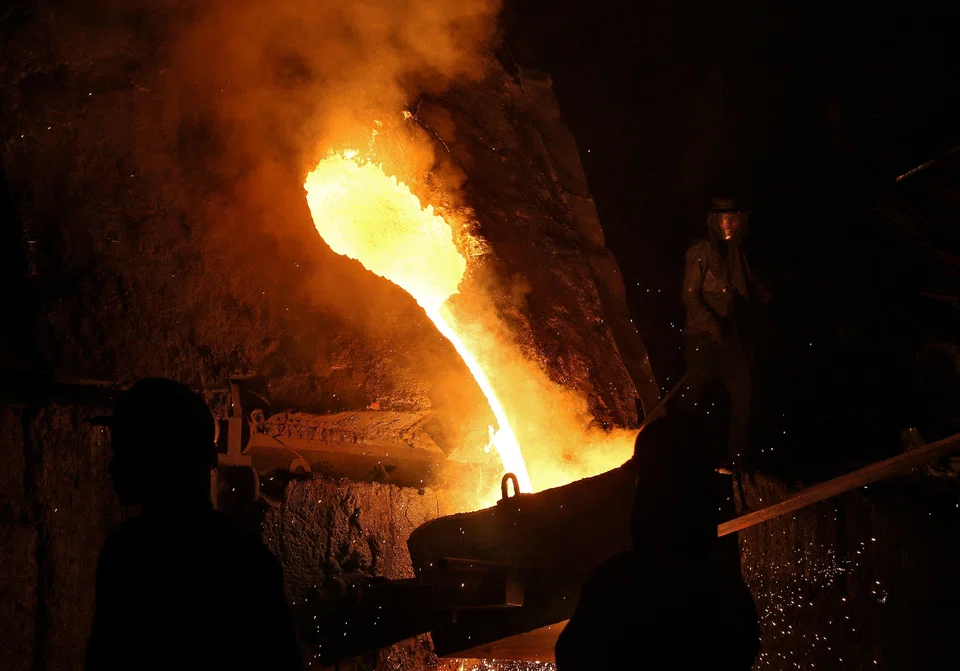
    • The cost of the reddish dirt, which turns into steel inside blast furnaces, has already fallen below US$100 a tonne, down 55 per cent from its all-time high of almost US$220 a tonne set in 2021. PHOTO: REUTERS
    Published Tue, Aug 20, 2024 · 05:00 AM

    OIL, copper, soybeans and a handful of others monopolised the attention – but of all commodities, the humble lump of iron ore benefited the most from the Chinese economic boom of the last 25 years.

    It was an astonishing bonanza: From the late 1990s to earlier this year, iron ore prices jumped nearly over ten times, more than any other major commodity; traded volume tripled; Australian commodity tycoons become billionaires; mining companies turned, even briefly, into Wall Street darlings; and mighty legal battles broke for control of the last untapped mineral deposits.

    And now, it is over: The greatest commodity boom thus far of the 21st century has ended. China inflated it – and China, too, is bringing it down.


    The cost of the reddish dirt, which turns into steel inside blast furnaces, has already fallen below US$100 a tonne, down 55 per cent from its all-time high of almost US$220 a tonne set in 2021. Beyond, the outlook looks sombre as Chinese steel demand reaches a zenith.

    Pinpointing the exact date is foolhardy, but now it is becoming clear that China hit peak steel demand somewhere between 2020 and earlier this year. The reason? The shift in its economic model to services and away from heavy investment and housing construction.

    During previous downturns, Beijing rescued its economy – and thus the iron ore and steel sectors – by indulging in a debt-fuelled binge of construction. It is unlikely that China will do so this time.

    Do not take my word for it. Listen to Hu Wangming, chairman of China Baowu Steel Group Corp, the world’s largest steelmaker, who last week predicted a “severe winter” for the sector. The downturn, he said, would be “longer, colder and more difficult to endure” than he had previously expected.

    Because China nowadays produces more than half the world’s steel, what happens there matters enormously. Other nations may take over as engines of steel demand. India is the most obvious candidate. Unfortunately for the global seaborne iron ore market, India has enormous domestic ore resources, and is likely to do it without imports for years to come.

    On its own, China’s peak steel demand would mark a setback, but it would not signal a disaster for iron ore. After all, Chinese steel consumption will remain at a high plateau for years to come, rather than fall sharply.

    Beijing may not be building as many houses as in the past, therefore reducing demand for so-called “long steel” – beams, rods and similar stuff. But the country still needs lots of steel to make stuff its consumers want. That is the so-called “flat steel” used for new cars, fridges and the lot.

    The slowdown in China comes, crucially, as a new generation of large, low-cost mines in Australia and Africa start production. That mix is the problem, because it means the iron ore market, already oversupplied in the first half of this year, would remain in surplus in 2025, 2026, 2027 and probably 2028, too.

    Macquarie Bank, an Australian lender, said that the current surplus is “one of the worst” ever. Thus, over the medium-term, iron ore prices must drop to rebalance the market, pushing out high-cost miners. How low? It would depend a lot on whether the new mines come onstream on time, and whether the Chinese real estate sector recovers a bit.

    If production hits the market as planned, potentially as much as 200 million tonnes – about 12.5 per cent of the seaborne iron ore market – need to be displaced. That is a lot. Similar oversupply, last seen in 2015 and 2016, required a drop towards US$50 a tonne, nearly half the current prices.

    For now, however, the market is not crashing. Despite the recent drop, iron ore prices remain close to US$100 a tonne – that is 700 per cent above the 1980 to 2000 average price of US$12.50 a tonne. The rally in previous years had been so large that it would require a massive retreat to bring prices anywhere close to where they were in 2000.

    At current prices, the top miners would still make plenty of money. Consider that Rio Tinto, the world’s largest iron ore miner, digs the mineral out of the Pilbara region of Western Australia at a cost of about US$21 a tonne. Even at the current lower price, the company is likely to make a return on the capital invested on its iron ore operations north of 40 per cent, and perhaps as high as 50 per cent.

    But if prices drop towards US$50, the fortunes of Rio – alongside other big producers like Vale, BHP Group, Fortescue, and Anglo American – would suffer. That in turn could open the door for mergers and acquisitions, probably in the second half of the decade.

    Two new entrants, a mine in Guinea, in West Africa, called Simandou, and another one in Australia called Onslow, would still make money even if prices drop because of their low production costs. By 2028, both mines could add about 150 million tonnes to the seaborne market, equal to about 10 per cent of the market’s current size. On top of that, the current major miners also plan to expand other mines.

    So who would cut output? Look to second-tier and third-tier miners in Brazil, India, Ukraine, South Africa, Iran and Kazakhstan. With higher production costs – anywhere from US$50 to US$100 a tonne – they would be pushed out as prices decline, rebalancing the market. Chinese domestic miners would be squeezed, too. The more tonnage needs to be displaced, the lower prices would need to fall – and vice versa.

    The big companies argue that many third-tier miners have costs close to US$80 to US$100 a tonne, meaning that if prices plunge beyond the above-US$90-a-tonne level currently, some high-cost producers would be underwater and output would drop, rebalancing the market.

    Only if the oversupply were significant – requiring second-tier miners with costs of US$60 to US$80 a tonne to stop digging – would prices approach US$50 a tonne, they argue.

    Historical experience suggests they are right. What I do not anticipate is a return to the pre-2000 market of ultra-low prices, when iron ore typically changed hands at less than US$15 a tonne. Back then, ore was a backwater of the global commodity market. It was profitable – but just. The market was so primitive that calling it a market would be a misnomer.

    From 1960 until well into the 21st century, iron ore prices were not set each day amid cut-throat trading, but rather, just once-a-year in secretive annual negotiations between the miners and the Japanese steelmakers.

    While discussions continued, everyone waited until a steelmaker and a miner agreed on the price; then, in a quasi-cartel fashion, everyone else in the industry accepted the price as a benchmark, with the same price agreed by all miners and steelmakers.

    It was not until the early 2000s when a daily spot market for iron ore emerged, and not until 2010, well into the Chinese economic boom, when the annual system of price negotiations broke apart, replaced by the prevailing system of long-term contracts linked to daily prices.

    The 1960 to 2000 period will not come back. But miners need to forget about a return of more than US$200-a-tonne prices. Even the US$90-a-tonne average price of the last two decades is in danger. True, some unexpected event can still buoy the market. In 2015 and 2019, the collapse of two tailing dams – Mariana and Brumadinho in Brazil – suddenly reduced supply, driving up prices. But, barring a disaster, the boom is over.

    The miners, in many ways, are telegraphing it. Ignore what they say in public. Focus instead on what they are doing. When BHP, one of the world’s top iron ore miners, launched a nearly US$50 billion takeover attempt over rival Anglo American, it indicated its lack of interest in Anglo’s ore mines in South Africa, which have somewhat higher costs. That says it all. BLOOMBERG


