What America’s fight over AI infrastructure is really about
Contention over data centre build-outs has crossed partisan lines
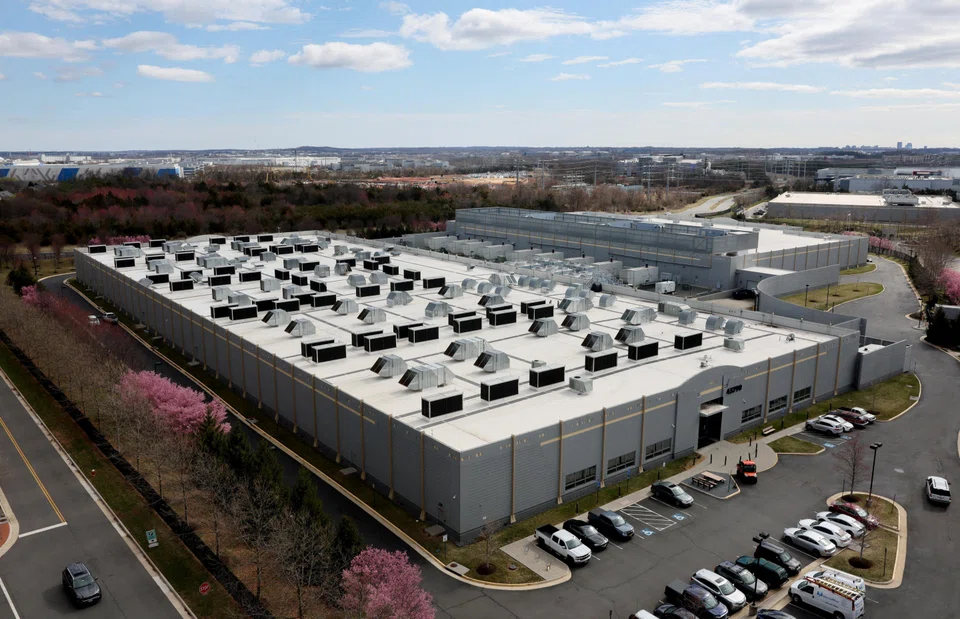
A YEAR ago, most Americans would have struggled to explain what a “hyperscale data centre” was.
Today, it is a flashpoint. In the first three months of 2026 alone, local opposition blocked or delayed at least 75 data centre projects worth roughly US$130 billion, nearly matching the total for all of 2025 combined.
The number of organised opposition groups has surged past 800, active in nearly every state.
Gallup polling from March found that 71 per cent of Americans oppose having a data centre built in their own area – more than the 53 per cent who say the same about a nuclear power plant.
Something has shifted, and it is worth asking why a piece of industrial infrastructure has become one of the most contentious local issues in the country.
Why communities are pushing back
The opposition is not monolithic, but a few grievances recur across red and blue states alike.
The most immediate complaint is cost. Data centres are enormous power consumers, and in many regions their arrival has coincided with rising residential electricity rates, as utilities pass along the cost of new transmission lines and generation capacity.
While the exact impact on bills varies by region and remains disputed, the perception that ordinary rate-payers are subsidising tech company infrastructure has stuck.
Cooling these facilities requires large volumes of water, sparking anxiety in drought-prone areas. The sheer physical footprint of hyperscale campuses – sometimes spanning hundreds of acres – has run into conflict with agricultural preservation, rural character and local zoning norms.
Tech companies have marketed data centres as job creators and tax-base boosters, but research on employment impact is mixed. These facilities are notoriously light on permanent staffing relative to their footprint and the tax breaks they receive.
Combined with “behind-the-meter” power arrangements, where developers build dirtier, on-site gas generation to avoid straining public utilities, communities often feel they are absorbing the costs (noise, emissions, water stress, land use) while a handful of shareholders and executives reap the gains.
Perhaps most importantly, analysts increasingly describe the data centre backlash as a stand-in for a broader unease about artificial intelligence that people don’t otherwise have an obvious outlet to express.
A recent poll found that only 8 per cent of people who oppose data centres actually live near one, suggesting this isn’t purely a “not in my backyard” phenomenon.
Commentators have noted that Americans can’t easily “fight AI” when threats such as job displacement fears, distrust of concentrated tech power and anxiety about a technology moving faster than any regulatory framework feel abstract.
But they can show up to a zoning hearing and fight a concrete building in their town. As one Vox piece put it, the data centre has become the place where all of that free-floating anxiety lands.
Why the industry says the build-out is necessary
Supporters of continued data centre expansion – which includes not just tech companies but many state and local officials courting investment – make a different case.
The dominant argument is geopolitical and economic. Many leaders believe whoever builds the most powerful AI infrastructure will lead the industries of the next several decades.
Because the US is in a direct race with China on this front, advocates argue that delaying data centres risks ceding ground to competitors with fewer regulatory hurdles.
Industry advocates also point to construction jobs, local tax revenue and the broader economic activity that data centres can seed, even while acknowledging permanent staffing levels are modest compared to other industrial development.
Some in the industry argue that community concerns about electricity prices conflate correlation with causation – that broader inflation, ageing grid infrastructure and unrelated policy choices are also pushing up utility bills.
They also say well-sited projects (in areas with abundant renewable power and water) can be built with far less strain than the average case suggests.
Notably, the industry is not just making its case in op-eds. Leading the Future, a new super political action committee reportedly backed by tens of millions of dollars from AI investors and executives, was formed explicitly to support pro-AI candidates and counter local opposition.
Clearly, industry leaders see this as a fight that could shape not just individual projects but the broader trajectory of AI policy.
Rare bipartisan alignment
What makes this backlash unusual in today’s political climate is its cross-partisan character.
Researchers studying the opposition movement describe it as driven less by ideology than by a shared, place-based set of grievances: rising costs, water scarcity and distrust of unaccountable corporate power.
These concerns resonate with conservative rural landowners and progressive urban environmentalists alike.
Whether that coalition holds is an open question. Some observers expect the 2026 midterms to test whether data centres become a genuinely bipartisan check on AI’s expansion, or whether the issue eventually splinters along familiar partisan lines as politicians look to use it to their advantage.
Gainers vs losers
Strip away the specifics of water permits and zoning boards, and the data centre fight is really a proxy for a bigger question: Who gets to decide how AI reshapes American life, and who bears the costs of that transition versus who captures the benefits?
Tech companies argue they are building the infrastructure of the future and that local resistance risks slowing genuinely important technological progress.
Communities counter that they are being asked to absorb real, tangible costs – on their power bills, water tables and local landscapes – to support a technology whose benefits feel abstract, concentrated and, for many, threatening to their livelihoods.
Neither side is wrong about what it is defending. The harder question, one now playing out in zoning meetings, statehouses and increasingly in campaign finance filings, is whether the US can find a way to build AI infrastructure at the pace industry says is necessary without simply asking ordinary communities to eat the costs.