What the new World Artificial Intelligence Cooperation Organization means for businesses in Asia
If it supports compatible standards, stronger institutions and wider tech access, it could reduce some costs of adoption
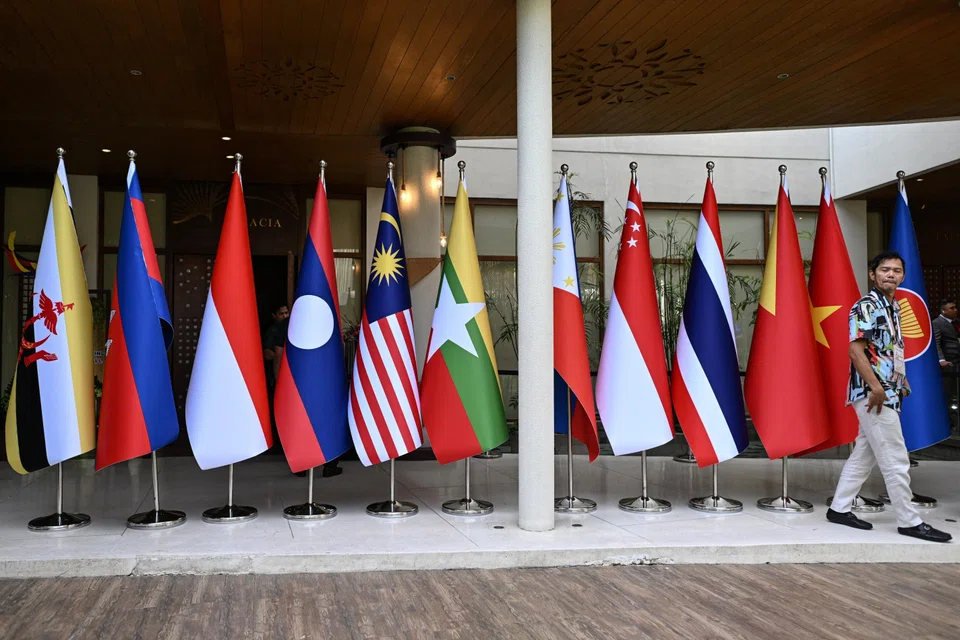
WHEN representatives of 29 countries signed the agreement establishing the World Artificial Intelligence Cooperation Organization (Waico) at the World Artificial Intelligence Conference in Shanghai, the geography of Asian participation drew attention.
Five Asean states – Indonesia, Malaysia, Cambodia, Laos and Myanmar – became founding members. Singapore, Vietnam, Thailand, Timor-Leste and the Philippines did not.
The different decisions taken by Asean countries appear to reflect their respective development needs, regulatory priorities and technology partnerships, rather than a clear regional division in alignment.
For businesses across Asean and Asia, the more immediate question is how Waico may affect market access, compliance and technology choices.
Established as an intergovernmental organisation headquartered in Shanghai, Waico’s stated priorities include international cooperation, capacity-building and the safe and equitable development of artificial intelligence.
Notably, it has yet to create a common market, shared regulatory regime or single set of obligations for companies.
Important details remain unclear, including funding, decision-making, procurement and private-sector participation. Businesses therefore do not face a distinct body of enforceable Waico regulations at this stage.
The state of AI governance across Asia and Asean
A common regulatory approach does not currently exist across Asia.
Indonesia is moving from ethical guidance towards more formal AI governance. Malaysia relies largely on voluntary AI principles while enforcing binding data-protection requirements.
Cambodia and Laos are still building national strategies and institutional capacity. In Myanmar, broader cybersecurity, platform and content rules may matter more than AI-specific legislation.
Meanwhile, several non-Waico-members in Asia have moved further towards binding governance. Vietnam, for instance, has adopted dedicated legislation. South Korea applies requirements to high-impact systems and some foreign providers.
Singapore combines data-protection and sectoral laws with testing and assurance frameworks. Thailand is considering a broader legislative approach.
The regulatory distance between two Waico members may yet be wider than that between a member and a non-member.
For companies operating within the region, the relevant questions remain where the business is incorporated, where the model is hosted and deployed, what data it processes, which sector uses it, and where its outputs have legal or commercial effects.
Consider a Singapore-based company that deploys a Chinese open-weight model on a Malaysian cloud platform, supplies an AI service to an Indonesian bank and serves customers in Europe.
The company could face Singaporean data-transfer requirements, Malaysian privacy and cloud rules, Indonesian financial and electronic-system regulation, and European obligations arising from the use of its outputs.
Particular chips, cloud services or software may also involve licensing, end-user or end-use conditions imposed by the technology’s country of origin.
Companies still face domestic laws, sectoral regulation, Asean frameworks and other international rules.
Waico may help coordinate parts of this landscape, but it could also add another layer of standards and procedures. Its commercial significance will therefore depend on how it develops beyond the founding agreement.
Where Waico could make a difference
Waico was conceived to respond to priorities that matter to many Asian economies. For instance, governments with limited computing resources and regulatory capacity seek technical training, local-language models and practical applications in agriculture, healthcare, education, disaster management and public administration.
Despite current regulatory fragmentation, Waico has the potential to influence markets through less formal channels. Government procurement, technical assistance, public-sector pilots, regulatory training and standards coordination often shape commercial conditions without producing binding international law.
For instance, testing methods used in tenders could affect market access. Infrastructure projects often determine which hardware, cloud platforms and standards eventually become widely used.
China’s announcements in Shanghai included training opportunities for developing countries, regional application centres and overseas deployment of public-service technologies. Chinese firms can also provide models, cloud services, telecommunications equipment, computing systems and robotic platforms across a range of prices and capabilities.
For participating countries then, Waico presents another channel to obtain expertise, attract investment and develop public-sector applications. However, the benefits will ultimately hinge on implementation.
Training can strengthen domestic institutions if participants acquire durable regulatory and technical capabilities.
Infrastructure projects can expand access, but their longer-term effects will depend on financing terms, interoperability and alternative suppliers.
Open-weight models can lower initial costs while still requiring substantial computing resources, specialised personnel and local governance.
Standards coordination presents a similar balance. If standards remain divergent across jurisdictions, companies would still need to repeat product tests, maintain separate compliance records and redesign technical features for individual markets.
Waico’s relationship with Asean, international standards bodies and national regulators will therefore be commercially important.
Mutual recognition of testing and certification could reduce duplication and ease regional expansion.
Selective market segmentation is likely
Across the world, government-supported initiatives tend to link commercial opportunity to standards, financing, security requirements or trusted-supplier policies.
For companies, the practical question is whether participation in one network affects eligibility in another.
With the introduction of Waico, the likely result is selective market segmentation rather than a complete technological split. Consumer and general business applications will probably continue combining models, chips and software from several countries.
Government, defence and critical-infrastructure projects may apply stricter rules concerning suppliers, data access, ownership and technical control.
Asean can help preserve coherence for the region. Its AI governance work and digital-economy agenda provide a platform for interoperability and common principles across the region, regardless of their membership in Waico.
Singapore also remains relevant despite staying outside Waico. Its testing tools, regulatory expertise, financial services and regional corporate base could support companies operating across different systems through model evaluation, AI assurance, cybersecurity, cross-cloud integration, project finance, insurance and dispute resolution.
If Waico supports compatible standards, stronger institutions and wider access to technology, it could reduce some costs of AI adoption.
However, if its procedures remain separate from existing frameworks, companies may face another layer of compliance in an already fragmented regional market.
The writer is a research fellow with the Charhar Institute