

What the reallocation of global energy capital means for Asia
As the region faces a massive infrastructure investment cycle, investors should understand how risks have changed
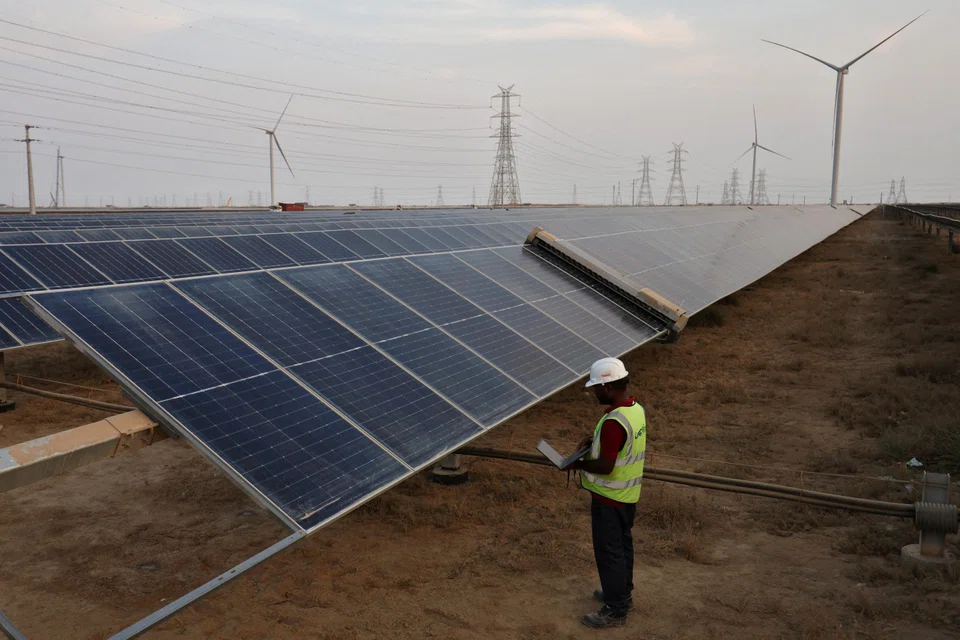
ASIA is in the middle of the great reallocation of global energy capital.
The latest trigger was the closure of the Strait of Hormuz, through which roughly 90 per cent of petrol and 80 per cent of crude bound for Asian markets pass.
A similar pattern of fragility had already been exposed by Russia’s gas cuts to Europe in 2022 and Houthi strikes on Red Sea shipping in 2023.
But more significantly, a capital shift that was already under way has accelerated. Renewables have proven their financial strength and maturity for years. What changed materially is the incentive to act: Energy security is now an urgent strategic imperative.
In 2025, global energy investment reached US$3.3 trillion – US$2.2 trillion in clean energy and US$1.1 trillion in fossil fuels. This two-to-one ratio stood at parity as recently as 2018. Regional numbers show the same trend.
In South-east Asia, fossil fuel investment has fallen 29 per cent over the past decade, while clean energy investment has risen 57 per cent. In Japan and South Korea, 92 per cent of energy investment now goes to clean energy, against a 66 per cent global average.
'%3e%3cpath%20d='M12.1475%2025.5262C13.7713%2025.4295%2014.94%2023.913%2014.94%2021.8832C14.94%2019.5359%2013.474%2018.093%2011.5917%2018.093C11.3745%2018.093%2010.9582%2018.093%2010.8393%2018.1413V25.2086L11.8891%2025.5745C11.8891%2025.5745%2012.207%2025.5262%2012.1475%2025.5262ZM11.4934%2017.6281C13.2567%2017.6281%2014.3843%2016.4292%2014.3843%2014.4501C14.3843%2012.372%2013.275%2011.2973%2011.4339%2011.2973H10.8393V17.6305H11.4934V17.6281ZM6.66078%2025.6482L7.39265%2025.5492C8.02617%2025.4502%208.26403%2025.3053%208.26403%2025.1097V11.6149C8.26403%2011.4193%208.1451%2011.3709%207.23484%2011.249L6.68137%2011.173L6.6219%2010.7588H11.9508C15.7153%2010.7588%2017.0624%2012.0797%2017.0624%2014.1578C17.0624%2015.9666%2015.7748%2017.1909%2013.4969%2017.6305V17.7041C16.111%2017.948%2017.6571%2019.5382%2017.6571%2021.7636C17.6571%2024.3318%2015.8937%2026.0417%2012.1109%2026.0417H6.60132L6.66078%2025.6482Z'%20fill='%232B2B2B'/%3e%3cpath%20d='M20.6287%2025.6505L21.5596%2025.5515C22.1725%2025.4779%2022.4104%2025.3076%2022.4104%2025.112V11.249H21.9346C20.073%2011.3479%2018.982%2013.0095%2018.408%2014.6227L18.1907%2015.5018H17.6555L18.1701%2010.7588H29.3837L29.6421%2015.4787H29.1664L28.9491%2014.6227C28.3728%2012.8645%2027.3047%2011.2743%2025.5002%2011.249H24.9856V25.1856C24.9856%2025.3812%2025.1251%2025.4548%2025.9965%2025.5515L26.7695%2025.6505L26.829%2026.0417H20.5693L20.6287%2025.6505Z'%20fill='%232B2B2B'/%3e%3c/g%3e%3cdefs%3e%3cclipPath%20id='clip0_5242_21648'%3e%3crect%20width='24'%20height='16.8'%20fill='white'%20transform='translate(6%2010)'/%3e%3c/clipPath%3e%3c/defs%3e%3c/svg%3e)
This change in capital allocation is not the by-product of environmental sentiment – it is a rational response to vulnerabilities that have become impossible to ignore.
Opportunities amid tightening competition
Asia’s energy map is being redrawn accordingly. In developed markets, the build-out of renewables – the cheapest form of energy available – is mature.
Competition is strong, policy frameworks are well established and returns have tightened. However, grid hardening, transmission, and the technology and services layer (that improves resilience) remain attractive.

The biggest opportunities lie in growth-market countries where dependence on imported fuel has become a macroeconomic liability.
Asia accounts for most of the global electricity demand growth, so for import-dependent countries such as India, Indonesia and the Philippines, building domestic renewable capacity will be a requirement for economic stability.
China’s significant wind and solar investment over the last decade offers a model which fellow Asian markets can replicate to bolster regional resilience.
The scale of the opportunity is huge in Asia, with its combination of dependence on imported energy, rapidly growing demand, abundant renewable resources and a stark infrastructure investment gap.
Today, Indonesia has an estimated three terawatts of technical solar potential against roughly 90 gigawatts (GW) of total installed generation capacity from all sources.
Vietnam has raised its offshore wind target to between 6 and 17 GW by 2030 to 2035. India added 45 GW of solar capacity in 2025 alone, crossing 150 GW of cumulative capacity on its way to a 500 GW non-fossil fuel target by 2030.
The financing gap is significant. Asia needs US$1.7 trillion a year in infrastructure investment until the end of 2030, while actual spending is running at less than half of that, at about US$881 billion.
Government reforms can offset up to 40 per cent, but private capital is needed to bridge the remaining gap.
Investment risks have shifted
To capitalise on the opportunities in Asia, risk models need upgrading.
Growth-market infrastructure in Asia has long been treated as a political risk story of unpredictable regulation, weak governance and uncertain contract enforcement. This perception has not kept pace with the significant advancements happening on the ground.
Countries must build reliable domestic renewable capacity to protect their currencies, fiscal positions and/or political stability, so that the incentive for honouring long-term contracts will strengthen rather than weaken.
These markets are not all risk-free, but the nature of risk is shifting from contract security to execution. The energy infrastructure build-out must last over the long term and meet the needs of today’s world.
The joint statement of the Asean economic ministers released in March illustrates this, underscoring the importance of strengthening regional energy security through the acceleration of renewable energy transition, such as the advancement of the Asean Power Grid.
This piece of shared energy infrastructure will depend on member states delivering their share of generation, transmission and interconnection on schedule.
A government-level commitment of this kind is proof of the shift where energy security policy is now written in terms of execution.
Grid readiness, regulatory evolution, the pace of permitting, construction reliability and the development of domestic supply chains will all matter.
This is why investor diligence has changed to focus on deliverability rather than legal protections. What matters most is whether a project can be built quickly, at scale and by teams with genuine capability on the ground.
One underappreciated outcome of this new geopolitical order is the enhanced cooperation across Asian markets.
Capitalising on this defining infrastructure investment cycle requires a combination of local insight, development expertise and operating experience that cannot be assembled overnight.
As governments and stakeholders increasingly prioritise companies with a proven track record of delivering projects, investors with boots on the ground and local knowledge will have an edge.
We expect that the world will eventually adjust to the Hormuz crisis – shipping lanes will reopen, prices will ease and markets will stabilise.
However, in Asia, what has changed will unlikely revert to its old state. Renewables are cost-competitive with fossil fuels, fast to implement and justified with far stronger strategic logic.
With energy security now imperative for the region, the investors who consider Asia when allocating capital to energy may have a head start over those who do not.
The writer is managing director, energy infrastructure, Singapore, at Actis
Decoding Asia newsletter: your guide to navigating Asia in a new global order. Sign up here to get Decoding Asia newsletter. Delivered to your inbox. Free.
Share with us your feedback on BT's products and services
TRENDING NOW

DBS, OCBC, UOB rout lops billions off STI as inflation, rate concerns spook investors

Grab CEO’s wife Chloe Tong on life with Anthony Tan and finding her purpose

OCBC sheds S$8 billion in value as shares close nearly 6% down; analysts cautious on banks

Deal between tycoon friends sparks scrutiny of Philippine power sector

