

What’s bugging travellers now?
There is no virus-free utopia as humans increasingly collide with nature and animals
COVID schmovid, it would appear. Travellers insouciantly scamper from board meetings to trade shows to weddings to partying the nights away. Cities are stirring and travel bustle returning.
Yet while Covid-19 rates have dropped to insignificant levels – largely due to vaccinations and non-reporting as nerves ease – the viral mayhem is not in the rear-view mirror as yet. It may never be.
It is easy to forget that the pre-pandemic years were not some bug-free utopia. The world continues to battle various strains of flu. Asia remains alert to the dangers of wily saboteurs such as malaria, chikungunya, dengue fever, hepatitis, tuberculosis, typhoid, cholera, bird flu and Japanese encephalitis.
Some of these culprits have been around for decades, even centuries – but with greater media scrutiny and mounting interest on the horrors they cause, it might seem like we’ve stepped into some devilish cauldron of mutating zoonotic viruses.
Travel bugs
Though inured to aches and pains, frequent flyers are most at risk of random infections. In December 2016, I developed a mild dry cough that I ignored for weeks as I travelled from Bangalore to Singapore to Hong Kong and on to Bangkok, even as I grew increasingly tired and my chest began to feel like it was being squeezed by a python.
Well accustomed to travails on the road, I made a note to see a doctor and started myself off on Zithromax and Brufen. But then I started flitting in and out of reality. Alerted by nonsensical WhatsApp ramblings, my son asked a doctor friend to intervene. He kindly did. I was in the intensive care unit within a half hour of reaching the hospital.
It was swiftly diagnosed as Legionnaires’ disease. Looking back, I believe I contracted the bug from the aircon in a dank and mouldy Bangalore taxi, whose driver was distinctly unwell.
Later, as sense and clarity returned, I started following notifiable illnesses such as Legionnaires’ in the region – and was taken aback by random listed incidences, including at the then-newly launched casino resort The Parisian Macau. It seemed the bug was everywhere. And it is not alone.
Science writer and zoonotic virus hunter David Quammen puts it thus: “The most serious outbreak on Planet Earth is that of the species homo sapiens.” Now link this disturbing thought with a simple statistic: there were 38.9 million flights in 2019.
Carbon footprints aside, travellers have a profound effect on the ecosystem of disease. From sniffles and sneezes to genetic quirks and random travel plans, frequent travellers offer viruses a unique mobile laboratory for rapid mutation and experimentation.
The speed of worldwide outbreaks was amply demonstrated during the 2003 Sars episode. From the index patient in Hong Kong – who infected 16 persons at his hotel, of whom six took intercontinental flights – the pathogen spread within days to Canada, Singapore, the Philippines, Australia, and Vietnam.
The US Centers for Disease Control has a Yellow Book for returning travellers to assess their health, with a destination breakdown of possible ailments to watch for. This is a useful compilation.
The most common ailments for travellers, it notes, are influenza; leptospirosis, which causes fever, headaches and jaundice, and is from bacteria carried by animal urine; legionellosis, or a Legionnaires’ lung infection through inhaling droplets carrying the bacteria; malaria; and the less serious chikungunya, a mosquito-borne illness with no cure that presents with joint and muscle pains, spiking fever, headaches and rash.
Meanwhile, Europe is carefully watching a tick-borne infection, Crimean-Congo haemorrhagic fever, that in 2016 claimed its first victim – a hiker in Spain – within nine days of the bite. Hotter, drier summers are offering fertile pastures for ticks who are moving steadily northwards into Europe.
Prevention is better
Clearly, while common sense remains a traveller’s best friend, the health map has changed.
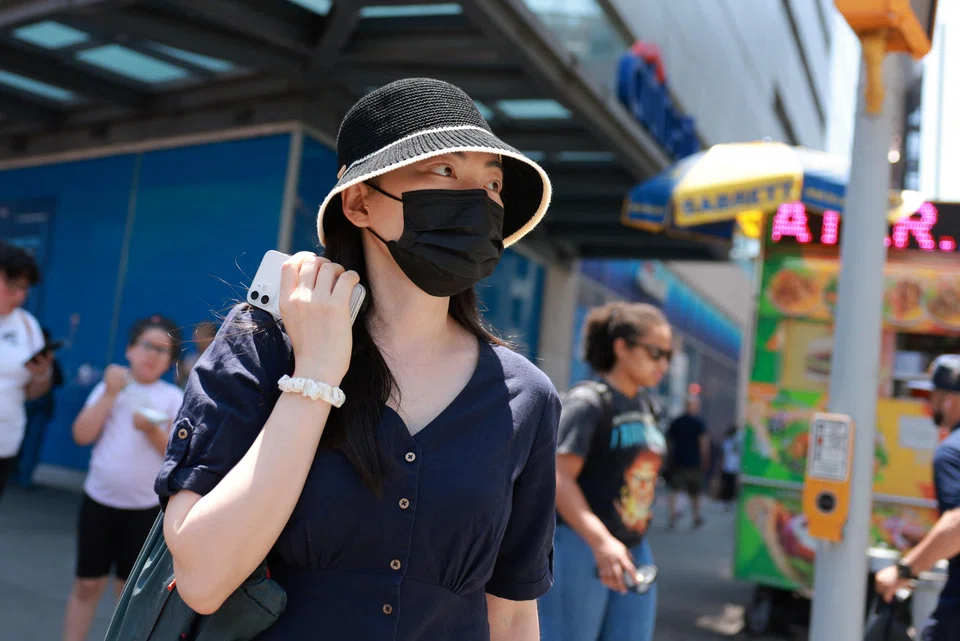
The humble mask is often stigmatised as a mark of shame for neurotic weaklings, but it has played a fundamental role in curbing transmissions of various kinds. Masks are still advised in crowded spaces such as buses, commuter trains, aeroplanes and indoor wet markets, particularly for elders and those with compromised immune systems.
Airports are rich viral breeding grounds. On aeroplanes, researchers are zeroing in on airline waste water to check for virus mutations and seasonal flu strains. Once abhorred window seats are becoming prized for their relative isolation.
Here, masks also offer some degree of protection and should certainly be worn by travellers who feel unwell. While the heavy duty N95 mask may not suit everyone, normal medical masks are a useful companion.
Besides masks, seasonal influenza shots – based on projected variants for the coming year – are a sensible option. So are Covid booster shots, now available as combination bivalents, if the traveller’s last booster or Covid episode was over six months ago.
By July 2023, the World Health Organization had counted 768 million confirmed cases of Covid worldwide, with just under seven million deaths, against a total of 13 billion vaccine doses. It is evident that the massive defence mounted with vaccinations and masking provided strong deterrence for the Covid-19 virus.
Nonetheless, the despoilation of nature by humans and exploitative intrusion bear careful re-examination.
As Quammen states in his post-Covid book Breathless: “The more numerous we become, the more crowded, the more interconnected, the more demanding of resources, the more invasive of wild places, the more disruptive of richly diverse ecosystems – the closer we stand to the epidemic threshold for any new virus that probes us as a possible route to greater evolutionary success.”
The writer is a Hong Kong-based journalist and editor of the online magazines AsianConversations.com and SmartTravelAsia.com
TRENDING NOW

China Investment Corp, PGIM’s 50% stake in Nex mall up for sale; asking about S$1.2 billion

Higher rates, weaker spending: Is the Philippines entering stagflation?

Singapore tech stocks plunge as Nasdaq bloodbath spills into region

OCBC wealth clients turn defensive amid market volatility as Q3 profit rises 3%

