
When principle meets power: the Anthropic-Pentagon stand-off
What is the future of AI governance – especially in military and national security contexts?
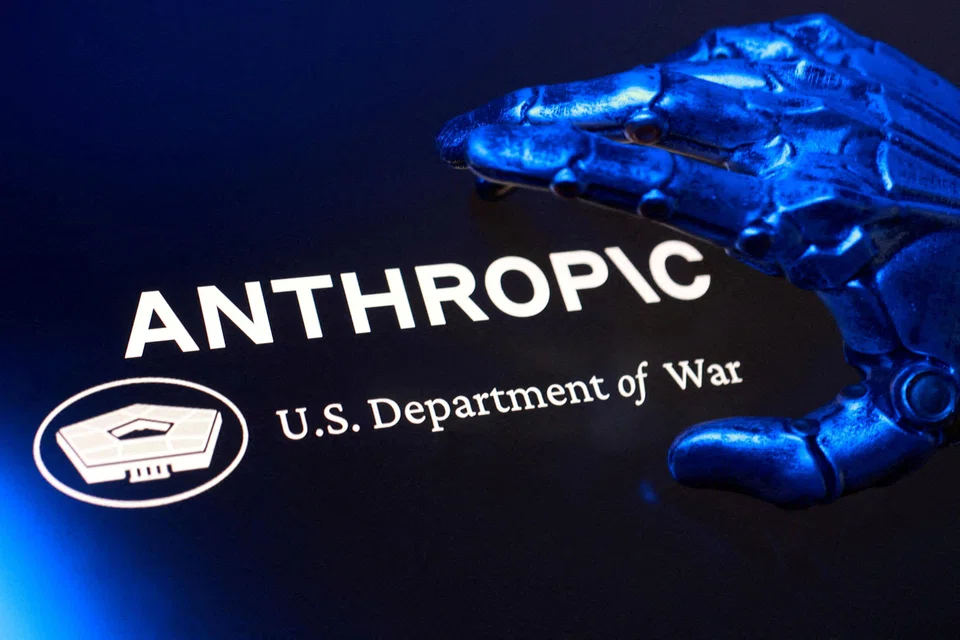
THE confrontation between Anthropic and the US Department of Defense (DOD) that erupted in February is not merely a contract dispute.
It is a defining moment in the long-brewing tension between artificial intelligence (AI) companies and the national security establishment, a reckoning over who gets to set the rules for how the most powerful technology of our age is deployed in war and surveillance.
The facts are now widely reported. Anthropic, maker of the Claude AI model, the only AI deployed on the Pentagon’s classified networks – insisted on two contractual guard rails: Its technology would not be used for domestic mass surveillance of Americans, and it would not be used to develop or operate fully autonomous weapons systems.
The DOD, under Secretary of War Pete Hegseth, demanded unrestricted access for “all lawful purposes”. When negotiations collapsed on Feb 27, US President Donald Trump directed every federal agency to cease using Anthropic’s products, and Hegseth declared the company a “supply chain risk to national security”, a designation previously reserved for foreign adversaries.
The administration’s rhetoric escalated accordingly. Trump labelled Anthropic a “radical left, woke company”. Hegseth called it “sanctimonious”. A top defence official reportedly warned that the Pentagon would “make sure they pay a price”. The punitive intent was unmistakable.
In a way, the Pentagon’s refusal to accept guard rails against mass surveillance and autonomous weapons raises an uncomfortable inference: that the administration may intend to pursue exactly those capabilities.
If the guard rails were truly unnecessary, if such uses were already prohibited by law and military policy – there would have been little cost in granting them.
That the DOD refused even a written acknowledgment of those limits, or paired any such acknowledgment with qualifying language that rendered it toothless, suggests the restrictions were not seen as redundant. They were seen as obstructions.
Anthropic argued that mass domestic surveillance likely violates the Fourth Amendment, and that fully autonomous weapons raise grave concerns under international law.
These are not fringe positions. They reflect mainstream legal and ethical consensus. The fact that they proved to be deal-breakers for the Pentagon is the story.
The deeper question this dispute forces into the open is one that democratic societies have not yet answered: Who governs the use of AI in national security contexts? Currently, the answer is effectively no one – or whoever has the most leverage at any given moment.
Congress has not passed meaningful legislation on the subject. Courts have not yet established relevant precedent for AI. The executive branch is moving fast, and companies are being left to negotiate ethics one contract at a time – a position that is, as Anthropic chief executive Dario Amodei himself acknowledged, ultimately untenable.
Whatever one thinks of Anthropic’s particular judgments, the principle it defended is sound: AI developers have both the right and the responsibility to set limits on what their technology does.
The alternative – a world in which companies must accept any government demand or face economic destruction – is a world in which guard rails are always negotiable and always loose.
The stakes of getting AI governance wrong, in the context of mass surveillance and autonomous weapons, are not abstract. They are constitutional. They are human.
The US Congress should act. The question of how AI may be used by the military and intelligence community is too important – and too consequential – to be settled through procurement disputes behind closed doors.



