‘The whole world is watching’
BEATEN and arrested by police in Chicago outside the 1968 Democratic National Convention, anti-Vietnam War demonstrators chanted, “The whole world is watching.”
The event was, indeed, covered by the major television networks and broadcast nationally and internationally, as the protestors were being whacked and pulled into police vans, and the spontaneous and perceptive chants became famous worldwide.
The phrase is still regularly used in protests, but its significance goes beyond that. It conveys the sense that in our contemporary global village, what happens in America, including when it comes to its politics, does not stay in America.
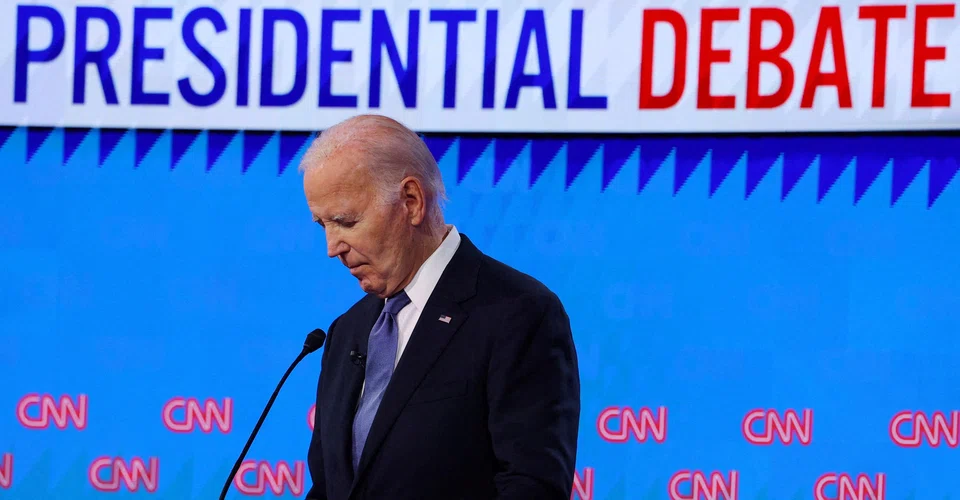
From that perspective, the recent televised presidential debate between President Joe Biden and his opponent Donald Trump, particularly Biden’s faltering performance, reverberated not only through the American political system but, indeed, also around the world.
It may sound like a cliche, but the US president is seen by many residents of the global village as the “leader of the Free World”.
In fact, the role that Biden has played in uniting the Western nations in response to Russia’s aggression in Ukraine seemed to accentuate that role of the American commander-in-chief on the global stage.
Against the backdrop of the war in Ukraine, Biden’s success in revitalising the North Atlantic Treaty Organization (Nato) as well as other US-led military alliances stood in contrast to former president Trump’s dismissal of these multilateral security organisations, including his threat to withdraw the US from Nato.
And, indeed, Trump used the Jun 27 debate as an opportunity to criticise Biden’s assistance to Ukraine, while portraying him as a weak leader who had supposedly presided over America’s decline, highlighting in particular its chaotic withdrawal from Afghanistan as one example.
“Throughout the entire world, we’re no longer respected as a country,” Trump said. “They don’t respect our leadership,” he declared. “They don’t respect the United States anymore.”
The Republican presidential candidate also argued that Biden’s alleged lack of resolve encouraged Russian President Vladimir Putin to attack Ukraine in February 2022 and, Hamas and its patron Iran, to assault Israel on Oct 7 last year.
Unfortunately, in the face of this harsh criticism by Trump, Biden looked frail and failed to deliver a quick and resolute response, and in that context, did not manage to advance his Ukraine policy.
If anything, the president’s faltering performance seemed to confirm existing fears among America’s allies (who prefer him over his Republican adversary) about his ability to win re-election.
Moreover, the image that Biden projected to the world during the debate was one of weakness and irresolution, and that at a time of growing political instability and security threats.
There is no doubt that the debate and Biden’s troubling performance undermines international confidence in America’s global leadership, and sends a message of incompetence and vulnerability to its adversaries in Moscow and Tehran, encouraging them to challenge the US and its allies.
So far, Biden has defied calls for him to pull out of the presidential race. But pressure on him to do so is mounting. As he, his family and Democratic Party leaders assess whether he should step aside and allow a younger and more energetic politician to replace him, they need to consider the international implications of such a decision. Indeed, the whole world is watching.