

Why Buldak ramen is an US$8 billion brand
For now, investors know that despite Trump’s protectionism, young people are interested in exotic tastes and aesthetics, and that’s worth billions
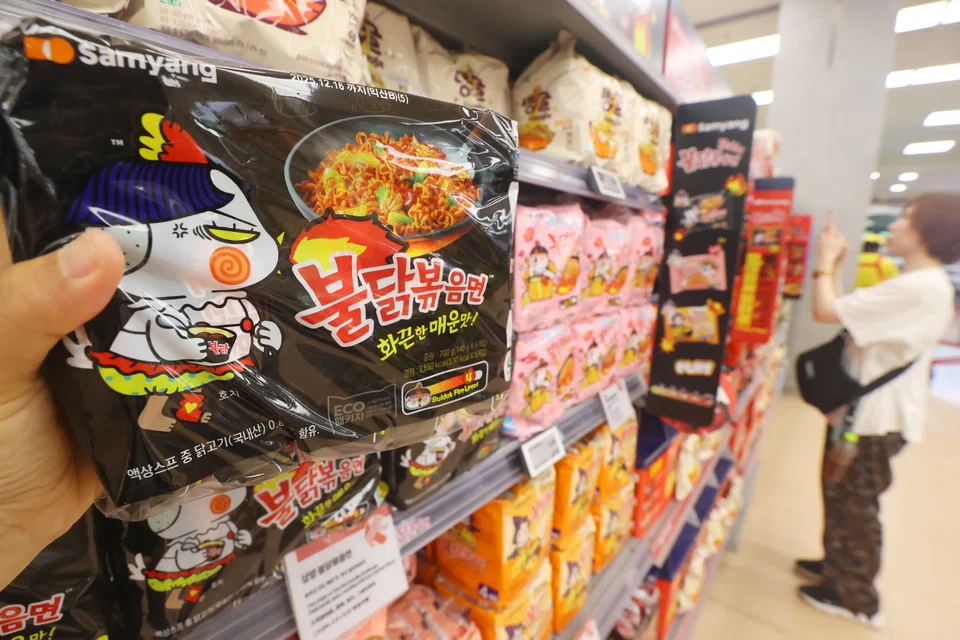
WHEN it comes to instant noodles, there’s no Korean discount. Only a Korean premium.
Samyang Foods, the manufacturer of Buldak ramen, has gained 93 per cent this year. Trading at 26 times forward earnings, it boasts an US$8.1 billion market cap, as much as bigger rivals Japan’s Nissin Foods Holdings and Korea’s Nongshim combined.
This rally has also made chief executive Kim Jung Soo, who married into a conglomerate family and turned around the instant-noodle company after it declared bankruptcy in the late 1990s, a rare billionaire in her own right in the country’s male-dominated business world.
Not for the faint-hearted
Buldak, which translates to “fire chicken” in Korean, is not for the faint-hearted. With its debut in 2012, Samyang introduced a level of spice previously unseen in the instant ramen market. It has roughly the same heat level as jalapeno peppers. Last year, Denmark briefly recalled the fiery ramen for being too spicy.
Perhaps because of its “seriously extreme spice”, Buldak has become an object of fascination for social media influencers who might enjoy truth-or-dare antics. The carbonara version, in particular, resembles the boxed macaroni and cheese Americans grew up with – with a kick.
In May, the number of TikTok hashtags related to Buldak surged 250 per cent from last year, according to CLSA, a brokerage. The keyword leaps up on Google trends, too. As these ramen packs go viral online, they fly off supermarket shelves. In the first quarter, revenue in the US jumped 20 per cent quarter on quarter, even as sales at Walmart declined slightly due to a Buldak Carbonara shortage.
This is nonetheless music to investors’ ears: Unrequited love can be a beautiful thing. Upon the completion of a second plant in Miryang in June, Samyang will soon be able to ramp up shipments to major distributors including Costco Wholesale. By 2030, Samyang’s market share in the US can double from 8.1 per cent in 2024, according to CLSA estimates.
In many ways, there are parallels between Samyang and China’s Pop Mart International Group, the maker of Labubu, an elf-like plush toy that has become a global sensation. With US$45 billion market cap, the toy maker is worth more than twice as much as Sanrio and Mattel combined, owners of long-time favourites Hello Kitty and Barbie.
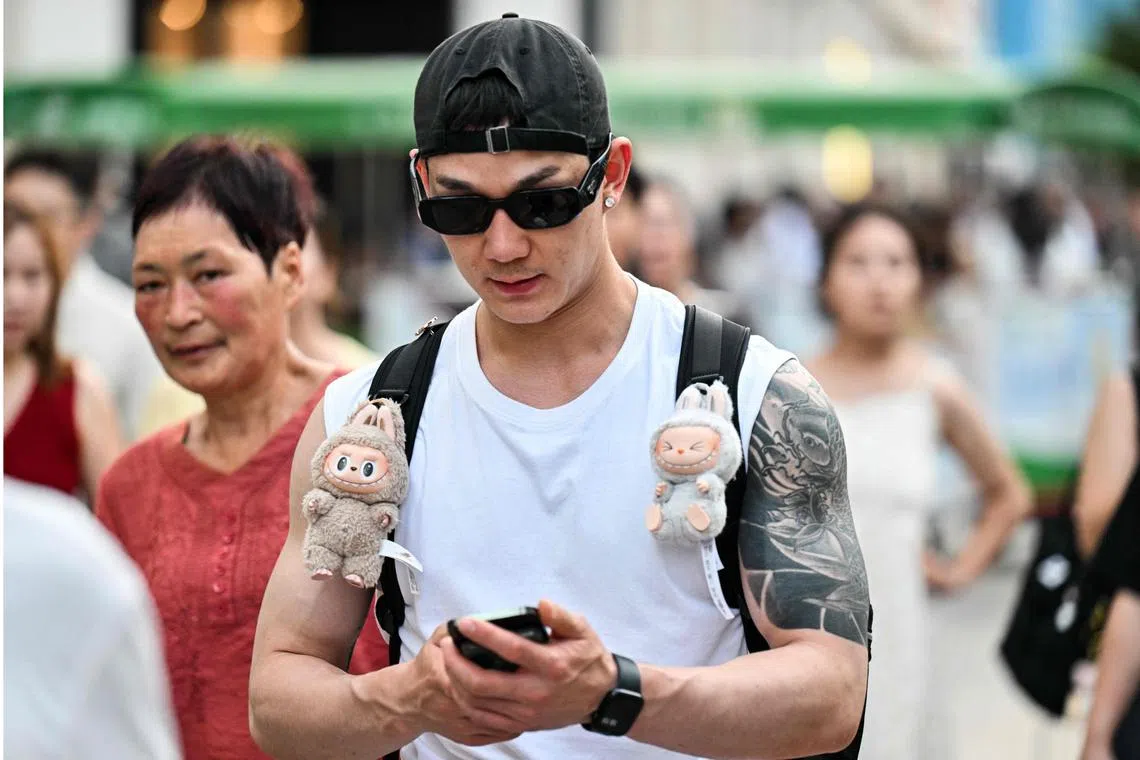
These products are not for everyone. With pointy ears and nine serrated teeth, Labubu has a weird look, which only some consumers find cute, while others scratch their head and puzzle over its stardom. Existing outside the mainstream, both generate conversation and attract eyeballs. They are designed to go viral.
Adventurous young Americans
Investors are also betting that unlike older generations, young Americans have the adventurous spirit for something different. These days, people are getting hooked on Korean specialty grocery chain H Mart, quite a cultural shift considering cucumbers were a new vegetable for McDonald’s US menu just over a decade ago. And the youth are friendlier to China than their parents. IShowSpeed, a streamer with 38 million followers, certainly enjoyed Chinese cars and robots during his two-week trip in the spring.
As for US President Donald Trump’s trade policies? Investors are not at all worried, seeing that both brands are tariff-proof. In the US, eating out has become an expensive endeavour. A meal at a fast-food restaurant can easily set you back US$10. Instead, staying at home with a bowl of Buldak ramen, which will cost just over US$2 even with the incremental 25 per cent duty Trump plans to impose on South Korean products, can be equally satisfying. As for Labubu, good luck getting your hands on them at all. They are sold out at Pop Mart’s retail stores worldwide.
In a year’s time, Gen Z and influencers might have moved on to something different. But for now, investors are happy to reward Samyang and Pop Mart with outsized valuation premium. They know that despite Trump’s protectionism, young people are interested in exotic tastes and aesthetics, and that’s worth billions.






