Why this China shock will hit close to home
With the US market cooling, where will China’s trade surplus go?
DURING the salad days of global supply chains, the benefits of being on cordial terms with China were barely questioned. Being in the same neighbourhood was considered better yet. It was a ticket to ever-greater prosperity.
That idea is now getting some welcome scrutiny. Asia’s years of runaway expansion are behind it, and being in China’s economic orbit is more of a mixed blessing. While that nation’s export juggernaut has encountered stiff resistance in the US, its factories are sending increasing volumes of cheap products to the rest of Asia. Consumers will find that attractive, but domestic manufacturers may come to loathe it – if they don’t already.
And while it is good that inflation has been contained, there is a risk that economies get too much of a good thing. Price gains are below target in many places, and a sustained move south from here would be detrimental.
Do not expect torrents of loud criticism directed at Beijing. It is far easier, diplomatically, to level complaints against Washington than to point at the nearby power. China has also been growing in stature as an investor. Asian leaders constantly say they do not wish to choose between the two economic heavyweights. In practice, they are disinclined to speak ill of Chinese President Xi Jinping.
Former Malaysian prime minister Dr Mahathir Mohamad once put it this way: “Whether we like it or not, China is there and China is going to play a bigger role in world affairs. So one has to learn to live with China… we realise we are a very weak nation, and China is a very powerful nation.”
US tariffs have been almost universally decried. For good reason: South-east Asia grew rapidly as barriers to trade were dismantled in the 1980s and 1990s. For a while, even the protectionist instincts that surfaced during US President Donald Trump’s first term looked like they could be turned into at least a partial win.
For large corporations that wanted to hedge their bets, switching that planned assembly line to Vietnam or Thailand made some sense. It was fairly inexpensive and not a great distance to the rest of the operations in China.
Now, there is a double hit. The White House is wary of the transhipping of products through third countries such as Vietnam. Levies on such goods, which are deemed to have only minimal final assembly before moving on to the US, have been significantly dialled up. And with the steep duties attached to Chinese exports to the US, a decent portion of what was once destined for America must find buyers elsewhere.
China’s overall trade surplus is on track to exceed US$1.2 trillion this year; in the first eight months it widened to US$785 billion. With the US market cooling, where does it go? Sales to the 10-member Asean have exceeded their post-pandemic peak. Shipments to the European Union continue to climb, and those to Africa have jumped.
Should this trend continue, the consequences may be profound. Even before Trump dramatically raised the level of tariffs in early April, regional manufacturers were feeling squeezed.
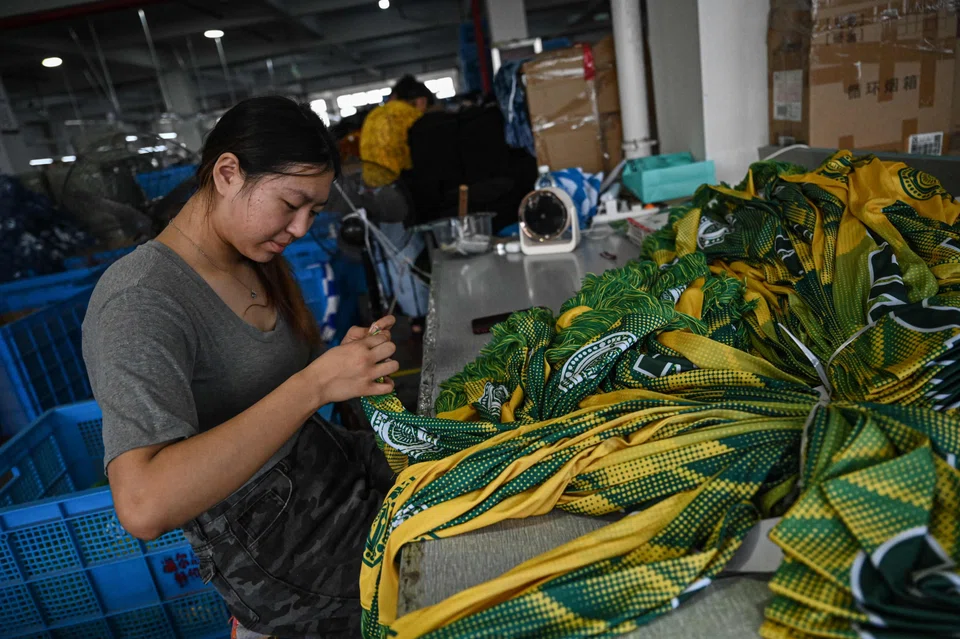
The textile industry in Indonesia has been under particular pressure, with job losses and business failures becoming commonplace, and workers blaming competition from China. Indonesian President Prabowo Subianto, who depicts himself as a populist, tried to salvage at least one large employer. The issue is clearly on his radar.
Sound familiar? It echoes the experience of segments of American industry after China joined the World Trade Organization (WTO) in 2001. Landmark academic work on the erosion of factory jobs, by David Autor, David Dorn and Gordon Hanson, has often been cited to explain the social dislocation that fuelled Trump’s ascent. The title of their paper summed it up pithily: The China Shock: Learning from Labor Market Adjustment to Large Changes in Trade.
Do they see similar seeds of discontent today? “This is China Shock 2.0 or China Shock 3.0,” Dr Hanson, a professor at Harvard Kennedy School, said earlier this year. “China has this immense manufacturing capacity, and the goods have to go somewhere.”
Chinese industry suffers from significant overcapacity and ruthless competition at home. Profits have suffered, and the authorities have wrestled with deflation.
Much policy energy is devoted to dealing with the fallout from tariffs. One solution often trotted out in moments of economic stress is for Asian economies to become more integrated, with the EU, perhaps, serving as a role model. That is easier said than done.
The bloc’s success stems from the pooling of sovereignty in hyper-sensitive areas such as exchange rates, the price of money, and antitrust. But one of the golden rules of getting along in South-east Asia is the idea that you do not interfere in what other countries regard as internal affairs.
Criticism of China in its neck of the woods will be subtle. You may strain to hear it. Beijing is also alive to the potential kudos of presenting itself as a defender of free trade, however rich some might find that packaging. The government will, for example, no longer claim the benefits available to developing nations at the WTO. That will address a point of contention with Trump and, possibly, keep a lid on resistance to export diversion.
Dr Mahathir’s central point was right. China’s footprint in Asia is not getting smaller, and not always for the better. Textile workers in Java and North Carolina, whose factories have been hit hard by competition from China, can certainly relate. BLOOMBERG