Why EU companies are helping their Chinese rivals
Many multinationals seem to be adopting an approach of ‘if you can’t beat them, join them’
IN RECENT years, politicians in Europe have pleaded with their companies to de-risk from China, citing the threat from over-dependence on the world’s second-largest economy. But for many European multinationals in China, the new catchphrase instead seems to be: “If you can’t beat ’em, join ’em.”
To escape the brutal competitive landscape in China, many Chinese companies are rapidly investing in overseas production. German firms, which have a long history of partnering with local companies in the Chinese market, are joining them and helping them go abroad.
In a recent study, AHK Greater China – the German chamber of commerce in China – found that 36 per cent of its members saw “Chinese firms going global” as their most relevant business opportunity. A full 68 per cent had already in some way engaged with Chinese companies investing overseas.
The trend offers German companies a chance to defend market shares and profit margins squeezed by fierce competition. At the same time, it has enabled them to learn new ideas from their increasingly technologically advanced and strategically nimble Chinese partners.
It comes despite the rising geopolitical risk of working with Chinese companies as Brussels and Beijing clash over mass job losses in the EU blamed on an influx of hyper-competitive Chinese exports into global markets.
“Chinese companies... are building a larger international presence,” said Oliver Oehms, executive director of AHK Greater China, “and German companies are part of this.” Other European companies are thought to be acting likewise.
Although it builds on previous waves of Chinese overseas investment, China’s new round of outbound activity has a distinctly different flavour.
This time, manufacturers, including some of the world’s most advanced electric-vehicle and industrial-robotics producers, are moving overseas in search of fatter margins or to dodge tariffs. The scale is enormous. Chinese outbound direct investment rose 7.1 per cent last year to US$174.4 billion.
Benefits of teaming up
The AHK says that German companies assist their Chinese partners in five broad ways: supplying products or services to Chinese companies’ overseas operations, helping them meet foreign compliance standards, providing international experience, jointly expanding into new markets with them and following them into third countries.
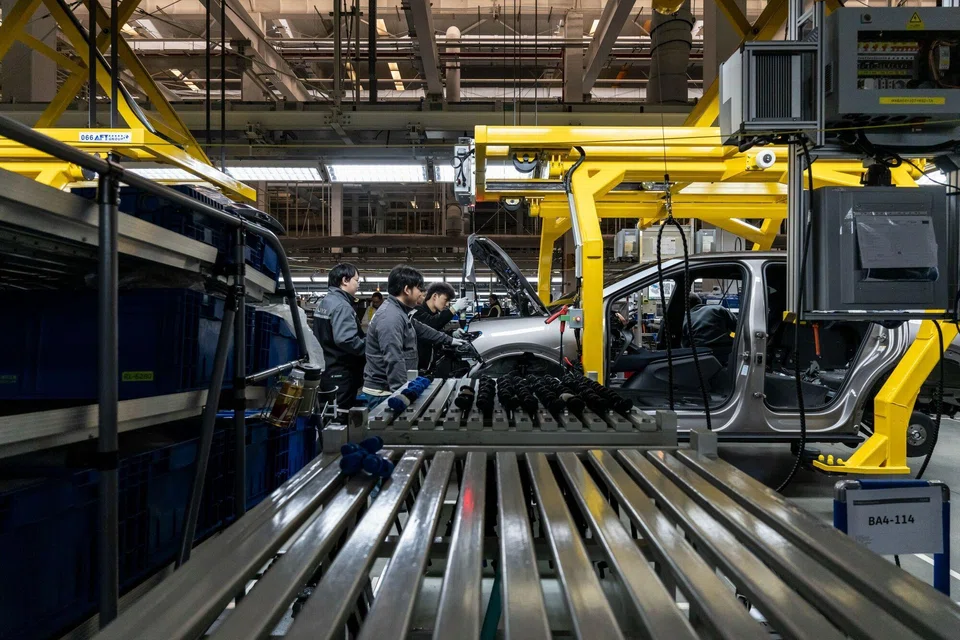
While it did not name the companies it interviewed, it said one “automotive supplier” allowed its Chinese partners to use its plant in South-east Asia – a so-called “factory-in-factory” model. While the Chinese partners brought new technology, the German partner provided the ready-made local facilities.
The report cited another German company, identified as a global logistics provider, whose Chinese partners use its brand recognition in Europe and elsewhere to help them gain access to foreign markets.
Another German company, a global technology supplier, helps Chinese manufacturers meet compliance and regulatory standards for export markets, particularly in advanced driver-assistance systems, the report said.
A principal motivation for the European companies to partner up is to stay competitive in China and abroad. By cooperating with Chinese companies, they can still grow and learn from their partners.
One important aspect is how to operate at so-called “China speed” – the ability of Chinese companies to develop new products three times faster than in Europe.
Most also agree that the window of opportunity for these partnerships is fleeting. European companies believe they have about 18 months before most Chinese firms will learn the ropes by themselves.
Difficult questions may arise
But while European companies might see the benefits of these partnerships, for many politicians in Brussels the spectacle of them helping their Chinese rivals gain global market share might be hard to swallow. This is particularly so when European champions, such as Volkswagen, are cutting tens of thousands of jobs.
In such a highly charged political environment, the headquarters of multinationals in Europe will have to try harder to explain to the public why they must remain engaged with their Chinese partners and rivals.
“Ten years ago, people would never question that what is good for European companies in China is good for Europe,” said Jens Eskelund, president of the European Union Chamber of Commerce in China. “But where we are now, questions are being asked.” FINANCIAL TIMES
TRENDING NOW
Simba admits exceeding spectrum limits amid failed M1 deal; full-year profits surge 277%
Temasek’s Wan Chee Foong to helm PIL, Lars Kastrup to be board adviser
He built the Vingroup empire. Now South-east Asia’s richest man is handing some key roles to his sons
One-third of Singapore-listed firms at risk in severe AI downturn: MAS