

Why the push for a stronger renminbi won’t go away
With the US dollar likely to be soft for a few years, to hold the Chinese currency back would be to allow it to depreciate against other trading partners
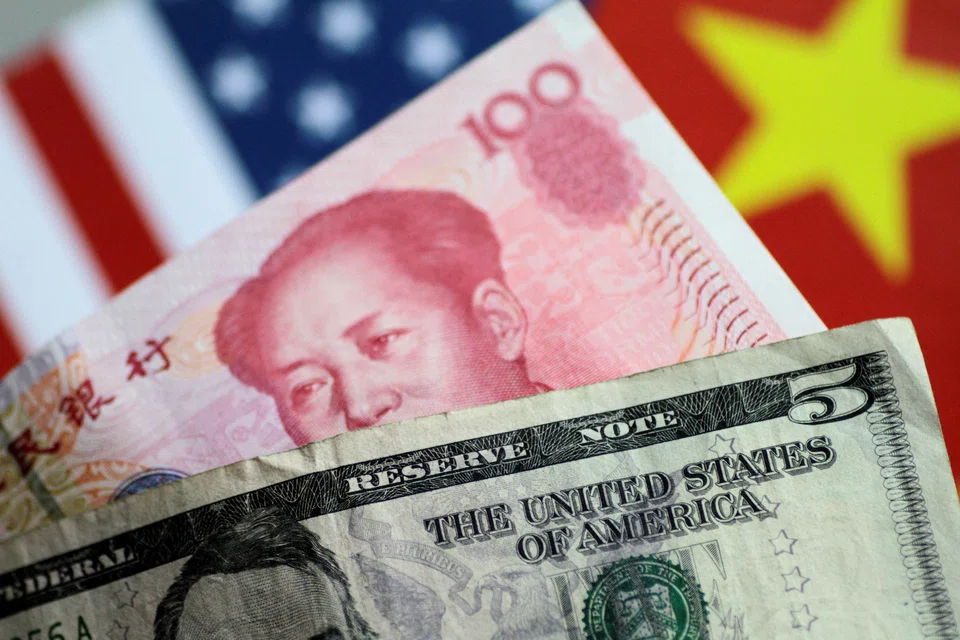
TWO decades after China began allowing its currency to fluctuate, authorities are again standing in the way of an appreciation. It is a reminder that the decision in 2005 to sever the renminbi’s hard peg to the US dollar, important as it was, came with strings attached.
While Beijing never walked away from the foreign exchange market, recent interventions are noteworthy. They suggest a desire to preserve exports made more competitive by a weak currency, and a worry that the domestic economy is softer than official growth numbers suggest.
The problem is that this situation is unlikely to cure itself. Exports rose more than forecast in November, indicated figures released on Monday (Dec 8), and the trade surplus exceeded US$1 trillion for the first time. A raft of data later in the week, by contrast, is projected to point to a lacklustre domestic picture.
Not that the renminbi has suffered in 2025. It is up almost 4 per cent against the US dollar, and on course for the best annual performance in five years. But these gains are middling, considering the greenback is having a less-than-stellar time.
The ringgit, baht and Singapore and Taiwan dollars have done much better. Investors want to take the renminbi higher, but keep encountering resistance from the People’s Bank of China.
One of the main ways for the central bank to signal intentions is through the setting of a reference rate for the currency; dealers try to predict the starting point for the day’s trade.
Last week, the fixing was significantly weaker than forecast. State banks reinforced the go-slow message, buying US dollars to keep a lid on the renminbi.
Beijing recognises the power of markets. Foreign exchange trading has ballooned to US$9.6 trillion a day, compared with just US$1.9 trillion when the long practice of maintaining a value for the renminbi of 8.3 per US dollar ceased in 2005. The greenback traded at around seven yuan on Monday.
It is not a stronger rate per se that repels the government. Rapid moves are anathema, and decisions about the pace and degree of change must always reflect what top officials believe is the overall national interest.
The challenge is how to preserve the export machine, while acknowledging the reasons behind the pressure for appreciation: a rally in local stocks, which draws money into the country; and an easing of trade tensions with the US, which tends to lift emerging markets, generally.
US President Donald Trump has historically moaned that a range of nations, China included, conspire to keep their currencies artificially weak to “rip off” the US.
But in the most recent round of talks between the two countries, the renminbi has not been a sticking point and tariffs have come down from levels that would have crippled the economy.
Washington and Beijing appear content to come to mini-deals every few months to stop the relationship from nosediving. Not allowing any renminbi gains might jeopardise this relative detente.
Chinese President Xi Jinping should go further and let it advance some more. According to two former American officials, the renminbi could be undervalued to the tune of as much as 18 per cent, based on International Monetary Fund estimates.
A number of large banks, including Goldman Sachs, tip advances next year. Prominent Chinese economists, while careful to not be sharply critical in their commentary, see plenty of scope for upward movement.
It may even help the economy – over time – by stimulating local demand. The question will be whether the short-term disruption and difficulties will persuade top policymakers that it is a worthwhile step.
The time has come to let the renminbi run a bit, said Miao Yanliang, chief strategist at China International Capital and a former top economist at the foreign exchange regulator.
The US dollar is likely to be soft for a few years. It is natural for other currencies to rise in that environment; to hold the renminbi back would be to allow it to depreciate against other trading partners.
It is not without risks. China has been skirting deflation and a strong currency could exacerbate the difficulties. Activity could use a boost in other areas: retail sales have been disappointing, along with industrial production and employment, while investment is languishing. By lowering the cost of imports, they could become more attractive to consumers.
The case for rebalancing China’s economy away from exports is a familiar one. It lurks behind many of the calls for appreciation in the 20 years since the hard link was broken. And it was one of the arguments in favour of reforming the trading rules in 2005 – along with heading off protectionist Bills in the US Congress.
Now, there is a trade-barrier fan in the White House. Extracting concessions from China these days is all about getting it to buy more soybeans and allow the West to purchase the rare minerals so critical to modern manufacturing.
Encouraging further renminbi strength, or not standing so vigorously in its path, makes sense. The alternative is a sudden move, with disruption that entails. In 2005, China did just enough to quell the arguments of renminbi bulls. That is not a bad approach to adopt today. The pressure is not going away. BLOOMBERG
TRENDING NOW

Once staunchly pro-China, Malaysian Chinese businesses are now distancing themselves from Beijing

Looking beyond looming CEO succession, should UOB potentially pursue a transformative merger?

Could stablecoins be the future of money?

Grab CEO’s wife Chloe Tong on life with Anthony Tan and finding her purpose

