

Why renewables alone cannot deliver energy security for S-E Asia
Asean countries should go beyond diversification of oil import sources
THE effective closure of the Strait of Hormuz on Feb 28, 2026, disrupted the world’s access to roughly 25 per cent of its daily seaborne oil supply overnight.
After US-Iran peace talks failed to reach a deal on Sunday (Apr 12), US President Donald Trump announced a blockade of Hormuz and threatened to interdict any vessel that had paid Iran’s toll.
For Asean, a region built on open shipping lanes and imported fuel, the shock is rippling from Manila to Bangkok. Recent developments only heighten the urgency of energy security.
Switching to renewables is a long-term solution to reducing the vulnerability of oil and gas dependence, as Singapore’s Ambassador for Climate Action, Ravi Menon, said on Apr 6.
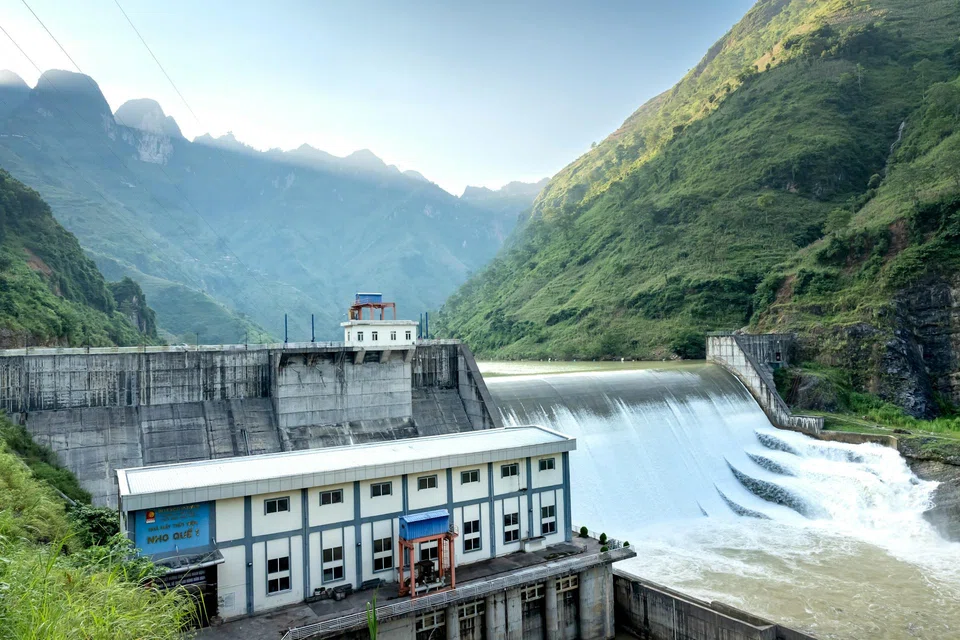
Hydropower and solar are already cost-competitive across much of the region.
Yet, renewables alone are not enough. Pivoting from oil dependence to lithium or polysilicon dependence trades one geopolitical exposure for another.
Energy security requires diversification across fuels, technologies and equipment, backed by stronger regional institutions and coordination.
This crisis should be a catalyst: just as Covid-19 embedded supply chain resilience into trade agreements, Asean must now hardwire energy security into its trade and diplomatic architecture before the next shock hits.
Uneven exposures, shared vulnerabilities
Asean countries’ vulnerability to the oil shock varies sharply.
The Philippines imports all its crude oil, with 98 per cent from the Middle East. It has seen a 76 per cent surge in petrol prices and diesel prices near historic highs.
Vietnam imports half its crude oil, with 88 per cent from the same region. Prices have risen about 19 per cent despite tariff waivers and tax cuts.
Thailand, Indonesia, and Malaysia, while better cushioned by greater import source diversification and domestic production, are nonetheless scrambling to absorb the shock through fiscal support.
The spillover effects of the oil shock are only beginning to show downstream.
Export restrictions, already being implemented in Thailand, a key refining hub, leave Asean countries with little to no domestic refining capabilities – the Philippines, Cambodia – Laos and Myanmar – significantly exposed.
Natural gas supply proves to be relatively more resilient, drawing on Australian liquefied natural gas (LNG) and intra-Asean exporters.
However, Middle Eastern supplies still account for a significant share in South-east Asia. The halt of Qatari LNG production has also compounded the shock.
Singapore especially, a small country reliant on LNG imports, is seeing energy bills rise and business contracts come under pressure. (In 2025, natural gas accounted for 93.1 per cent of Singapore’s fuel mix, with a quarter of the LNG sourced from the Middle East. Petroleum products accounted for 0.3 per cent.)
Can renewables answer the call for energy security?
Renewables buy Asean strategic room to manoeuvre by addressing energy security in the electricity sector.
The region has expanded its ambitions, targeting a 45 per cent renewable energy share of installed capacity by 2030, up from 35 per cent in 2025.
According to recent research by the Asia Competitiveness Institute (ACI), hydropower remains the most cost-effective option in the region. East Malaysian, Indonesian and Vietnamese hydropower projects are the most cost-competitive.
Solar photovoltaic (PV) power follows close behind, with installations in Indonesia, Cambodia and Vietnam leading the way.
Onshore and offshore wind power remains materially more expensive across the region. Policy instruments such as subsidies and carbon pricing, and the economies of scale that come from deployment itself, could further drive down costs.
However, renewables do not directly replace oil consumption in land transportation, marine and aviation fuels, or petrochemicals. Some of Asean’s most energy-intensive industries, like steel manufacturing, are hard to abate, and will remain largely dependent on fossil fuel imports.
New geopolitics, new dependencies?
Using more renewables does not simplify Asean’s geopolitics; it reshapes them.
Solar panels, wind turbines, batteries, and the critical minerals that are key inputs, all have supply chains concentrated around China. The country accounts for roughly 80 to 90 per cent of the world’s solar PV panel manufacturing capacity, over 80 per cent of battery production, and most critical mineral processing.
Diversifying away from Middle Eastern oil could mean deepening dependence on Chinese-manufactured clean energy equipment. This tradeoff carries its own strategic risks.
Similarly, the growing interest in nuclear power, particularly small modular reactors, introduces a new set of supplier dependencies: Russia, China, South Korea, France, and the US each offer distinct reactor technologies tied to distinct geopolitical relationships.
Regional power grid interconnection, essential for trading renewable electricity across Asean’s uneven resource distribution, requires a level of trust and harmonisation that has proved difficult.
The viable path forward
Renewables alone cannot deliver energy security. True energy security requires diversifying fuel, technology and equipment suppliers, coupled with strong regional crisis coordination.
Short-term fixes on the fiscal side will not provide long-term security. Fuel import dependence on a single chokepoint is not sustainable.
Oil imports should widen beyond the Middle East, drawing more on major oil exporters such as the US, Norway, Brazil and Nigeria.
Asean should also build energy supply chain resilience into the rules themselves.
Agreements such as the Indo-Pacific Economic Framework Supply Chain Agreement and the upgraded Asean-China Free Trade Area now include crisis-response and supply chain resilience provisions.
Asean can embed an explicit energy resilience clause that covers emergency coordination, stockpiling, and priority treatment of energy flows during disruptions.
Asean’s energy future must not be left to the whims of geopolitical chance.
This commentary is a product of research conducted at ACI, Lee Kuan Yew School of Public Policy. Liu Jingting is a senior lecturer at James Cook University Singapore. Parag Dass, Huang Yijia and Yan Bowen are researchers at ACI.
This essay is part of New Global Order, a series which explores how the changing world landscape is reshaping business, politics and beyond.
TRENDING NOW

Government to bring forward raising of retirement age, give employers more financial support to create flexi-load jobs

Indonesia stocks suffer worst plunge in nearly 30 years as MSCI proposes standalone status
If Europe goes to war, the fallout will be felt in East Asia
Natural gas to stay for the long haul beyond 2050: Singapore International Energy Week panellists

